






















































The rise of international acts and what it really means for SA talent
11 Dec 2025 - 13:25


If you look at the South African gig calendar over the last few years, you would be forgiven for thinking that we have quietly become a permanent stop on the global touring circuit. Travis Scott at Calabash, Sting at SunBet Arena, Bryan Adams, Foreigner, and a long list of others.

So, the obvious question is: is this good or bad for local talent?
The answer is both. There is only so much disposable income in any market. In a tough economy, if a big international name visits, some fans might spend their budget there and then find that they have limited funds to support local acts. But of course, there are others who will exclusively support local talent. Sub-Saharan Africa has been the world's fastest-growing music region for several years. For every fan who chooses a heritage rock act, thousands might fill FNB Stadium for Kabza De Small or Cassper Nyovest, even before they buy a Travis Scott ticket.
Behind-the-scenes transformation
Where I think the international wave matters most is behind the scenes. Production staff benefit the most because more is being spent on presenting these acts locally. When I first saw Bon Jovi in Johannesburg years ago, the show was good but not great. Two weeks later, I saw the same tour in Los Angeles, and it was like the North Pole versus the South Pole. The American promoter spent so much more on production because they were earning and paying in dollars, not rands.
That gap has been closing. When Sting played here last year, the show was on par with what you would expect in London. A big part of that is the growth of companies like Gearhouse, which is now among the top ten live production companies in the world. And of course, the advanced skills of local crew.
For us at Academy of Sound Engineering (ASE), this shift started long before the recent touring boom. Around 2010, we invested in three high-end Digidesign (now Avid) Profile live mixing consoles. At the time, we were the only institution (of any type) in the country with that equipment. Gearhouse kept receiving riders from international artists that spec’d those consoles and eventually called us to rent them for shows featuring the likes of Bryan Adams, Snow Patrol, 30 Seconds To Mars and U2. We allowed them to use the consoles, but insisted that our students go with.
That was a hard sell at first. The idea of students driving consoles on a U2-level show sounded insane to some. But when it turned out that our students and staff were the ones who actually knew those consoles best, it became a solution for everyone involved. This process proved that South African training could meet international expectations under pressure. It turned into a formal internship pipeline and an excellent long-term relationship between the institutions. Of course, when Gearhouse acquired its own Profile consoles, that became a huge employment opportunity for our students.
International experience
While international acts raise the bar, they also expose who is ready. I have seen what happens when South Africans hustle properly. Years ago, the vocalist of The Diamond Dogs found out that Bruce Springsteen wanted to hear local music in Melville. He got himself into the same club, introduced himself and handed over his CD. The same happened with Jethro Tull, and that local band ended up opening for Tull. The vocalist of The Helicopters once walked up to Billy Gibbons from ZZ Top in a Sandton pub and did the same thing. In both cases, communication and some collaborations followed. Of course, South Africans have by now regularly gone on to make their marks internationally. From Trevor Rabin to Black Coffee, Dave Matthews to Nasty C, from Rebecca Malope to Seether, South African acts have held their own with the best in the world and are now in high demand.
This is where institutions earn their keep. From day one at ASE, the philosophy has been to train students on the gear and standards they will meet on real international stages. That is why we aligned with Avid, became an official Avid Learning Partner, and advanced our curriculum to operator-level Pro Tools and beyond. It is also why we invest in staff who have worked with the likes of Peter Gabriel, Sting, Bruce Springsteen and others, and why we hold formal partnerships with players like Gearhouse, Primedia, Universal Music, CAPASSO, SAMPRA, and SAMRO.
Bright futures
The proof is in where our graduates end up. Many are stars in their own right. Others are to be found at SABC, across Primedia’s many studios, embedded in Gearhouse crews, and even in the middle of the Bahamas, running the main theatre on a Norwegian Cruise Line progressive rock cruise.
So yes, the influx of international acts can crowd an already tight calendar. It can redirect limited entertainment budgets. But treated correctly, it is also a rolling masterclass in how the global industry works.
For South African artists, crews and institutions, the aim is to meet that standard, to use those visits to build relationships and in that way to make sure that next time a world tour comes through, they are involved as the go-to talent.
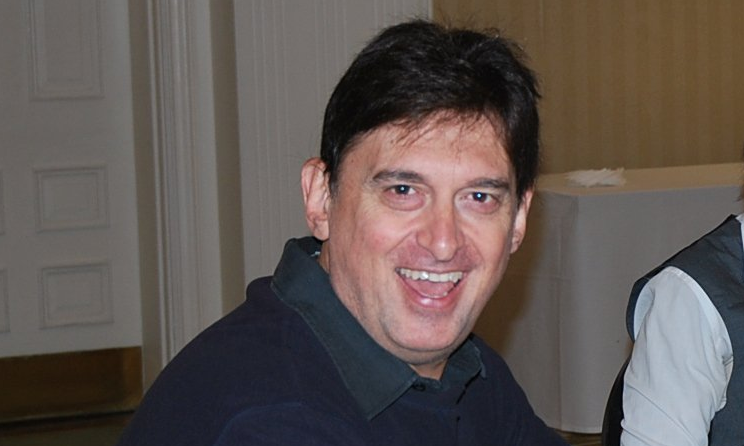
Nick Matzukis is the co-founder and head of music law at the Academy of Sound Engineering in South Africa. Matzukis writes in his personal capacity. The opinions and views expressed herein are solely his own and do not reflect the position or stance of the publication.


Most popular
Gambia: Suntou Susso announce UK tour for ‘The Path of a Griot’
09 Oct 2026

Top amapiano songs of 2026
16 Feb 2026

Top Afrobeats songs of 2026
19 Mar 2026
Open call: 2026 Gender@Work music industry training in Johannesburg
09 Oct 2026

Top Naija songs of 2026
31 Mar 2026
Open call: CANEX Music Business Lab and Songwriting Camp
15 Oct 2026
Disclaimer: Music In Africa provides a platform for musicians and contributors to embed music and videos solely for promotional purposes. If any track or video embedded on this platform violates any copyrights please inform us immediately and we will take it down. Please read our Terms of Use for more.

Subscribe to our monthly Newsletter
Follow us on social media


Please log in to post a comment.