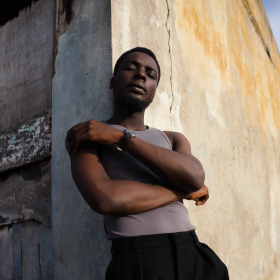
Queen Juli Endee
Bio
Queen Juli Endee is one of Liberia’s most compelling voices in music and social advocacy, known for transforming traditional sound into a vehicle for peace, cultural identity, and social reflection. Her presence in Liberia’s music scene is rooted not in commercial pop formulas but in the deep traditions of Liberian folklore, storytelling, and rhythmic expression that have existed for generations across the country’s diverse communities.
Endee’s path into music was shaped by Liberia’s history. Growing up in a society marked by both rich cultural traditions and political tensions, she found in music a language that could speak to people across divides. Rather than adopt Western modes of protest or entertainment, she turned to indigenous rhythms, folk song structures, and the oral traditions that have long defined Liberian communal life. Her sound draws on call-and-response patterns, ceremonial beats, and lyrical structures that echo a heritage of spoken word, market songs, and ritual performance.
During Liberia’s civil war in the 1990s and early 2000s, Queen Juli Endee’s voice became especially significant. At a time when political speech was dangerous and social cohesion fragile, she used traditional song to address issues of violence, leadership, morality, and communal healing. Instead of making direct political accusations, her lyrics used metaphor, parable, and symbolic imagery rooted in Liberian cultural wisdom. In doing so, she carved a space where music could carry powerful messages about peace, reconciliation, and collective responsibility without abandoning cultural authenticity.
Endee’s concerts and performances often took place in community spaces such as markets, town centers, and cultural festivals, where her audience was not just spectators but participants. Her music was interactive; listeners responded, danced, and engaged, making each performance a form of communal dialogue rather than a staged entertainment event. This approach enhanced her role not just as a singer but as a cultural interlocutor, someone who brings people together to reflect on shared values and shared futures.
Beyond performance, Queen Juli Endee became involved in grassroots organizing. Her work with women’s groups, youth empowerment initiatives, and community reconciliation projects demonstrated her belief that music and social action are inseparable. She founded the Julie Endee Foundation, which has focused on supporting education, leadership development, and healing programs for communities affected by war and displacement. Through the foundation, she organized workshops where young Liberians could learn about their heritage and explore how cultural expression can support peace-building.
Her visual presence on stage also reinforced her cultural mission. Endee often performs in attire inspired by ceremonial dress, using cloth, traditional patterns, and symbolic colors that reflect Liberia’s multiple ethnic identities. These visual choices are intentional, designed to remind audiences of the deep historical roots of her music and the cultural wealth that unifies Liberians beyond political divisions.
Endee’s influence extended beyond Liberia’s borders. She took part in regional cultural exchanges, performing in West African festivals where artists shared music, dance, and storytelling traditions. In these settings, she represented Liberian heritage as a living, evolving form rather than a frozen relic.
Her work also acknowledged the...
Videos
















 Monrovia, Liberia

Sponsored
Take this space