





























































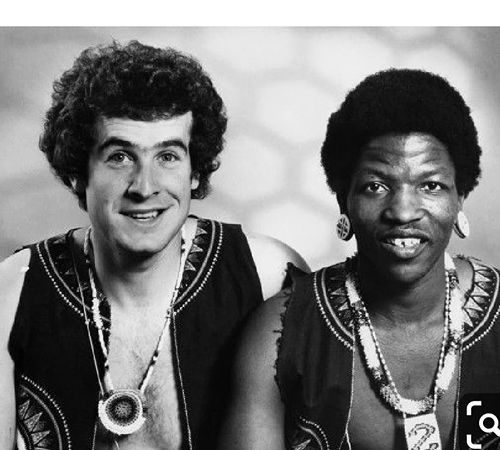
Juluka
Bands /groups

Profile added by Sisi Nkabinde on 19 Jan 2026

BIO
Juluka: The Band That Made South Africa Dance, Think and Change
Before playlists, streaming and social media, there was Juluka, a fearless duo that turned South African music into a soundtrack of resistance, pride and unity. Formed by Johnny Clegg and Sipho Mchunu, Juluka didn’t just make hits, they made history.
The name “Juluka” means “sweat” in isiZulu, taken from a bull owned by Mchunu, and it perfectly captured the grit and hard work behind a band that broke every rule of apartheid. At a time when black and white musicians were not allowed to perform together, Juluka stood on stage side by side, dancing, singing and telling stories that South Africa was not ready to hear but desperately needed.
Their story reads like a movie script. Johnny Clegg, a white teenager obsessed with Zulu music and dance, meets Sipho Mchunu, a young farm worker from Natal, in Johannesburg. A guitar challenge turns into a lifelong friendship. Street corners become their first stages. Word of mouth becomes their marketing strategy. Police arrests become part of the price they pay for telling the truth through music.
In 1976 they dropped their first single, “Uthi Angizule”, and three years later their debut album Universal Men arrived like a cultural earthquake. Suddenly maskanda, mbaqanga, folk and rock were living in the same song. Their second album African Litany gave us “Impi”, a political banger about the Battle of Isandlwana that was banned by radio but exploded underground and later became a national sports anthem.
While South African broadcasters tried to silence them, the world was listening. Juluka toured Europe and North America, becoming global symbols of artistic resistance. They proved that African music was not “traditional and primitive” but modern, powerful and world class.
Juluka didn’t just entertain, they challenged. Their lyrics spoke about identity, freedom and what it meant to be African in a divided country. Johnny Clegg explored life as a white African, while Sipho Mchunu carried the soul of Zulu storytelling and rhythm into every song. Together, they created a sound that felt both ancient and futuristic.
In 1985, the band went their separate ways when Mchunu returned home to his family farm, and Clegg went on to even bigger success with Savuka. But in true legendary fashion, the duo reunited in 1997 for one last album, Crocodile Love (locally released as Ya Vuka Inkunzi), giving fans a final chapter to a story that had already changed South African music forever.
From Universal Men to African Litany, Scatterlings and Work For All, Juluka’s catalogue is packed with timeless classics like Impi, Scatterlings of Africa, African Ideas, Umbaqanga Music and Ibhola Lethu.
Decades later, Juluka is still more than a band. They are a reminder that music can be a weapon, a bridge and a heartbeat for a nation.
Photos
No photos available
Music
Videos

Giyani - Johnny Clegg Live at Mae Sai

Scatterlings Of Africa - Johnny Clegg & Juluka

Kilimanjaro - Johnny Clegg & Juluka

Fever - Johnny Clegg & Juluka

December African Rain - Johnny Clegg & Juluka

Asimbonanga - Johnny Clegg and Nelson Mandela

Umbaqanga Music - Juluka (Live in CapeTown)

Impi - Juluka (Live in CapeTown)

I Call Your Name/Dance - Johnny Clegg & Savuka - Live at Zenith (Paris)

One (Hu)Man One Vote - Johnny Clegg & Savuka - Live at Zenith (Paris)

Asimbonanga - Johnny Clegg & Savuka - Live at Zenith (Paris)

Dela - Johnny Clegg & Savuka - Live at Zenith (Paris)

Siyayilanda - Johnny Clegg & Savuka - Live at Zenith (Paris)

Warsaw 1943 - Johnny Clegg & Savuka - Live at Zenith (Paris)

Scatterlings of Africa - Johnny Clegg & Savuka - Live at Zenith (Paris)
Social Networks and Websites

Disclaimer: Music In Africa provides a platform for musicians and contributors to embed music and videos solely for promotional purposes. If any track or video embedded on this platform violates any copyrights please inform us immediately and we will take it down. Please read our Terms of Use for more.



