Johnny Dyani
Bio
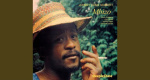
Johnny Dyani was born Johnny Mbizo Dyani on 4 June 1947 he passed on 24 October 1986, he is one of the most vital and expressive voices in South African jazz history, a double bassist, vocalist, and pianist whose artistry carried the emotional weight of a generation in exile. Born in Zeleni Location near King William’s Town and raised in Duncan Village, East London, Dyani came of age in a country on the brink of apartheid, a reality that would profoundly shape both his life and music.
In the early 1960s, Dyani became a key member of The Blue Notes—one of South Africa’s first integrated jazz bands alongside Mongezi Feza, Dudu Pukwana, Nikele Moyake, Chris McGregor, and Louis Moholo-Moholo. In 1964, facing the restrictions of apartheid, the group left South Africa in search of artistic and political freedom, beginning a journey that would position them at the forefront of the European avant-garde jazz movement.
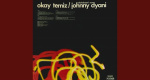
Dyani quickly established himself internationally, touring Argentina in 1966 with Steve Lacy’s quartet and recording the seminal album The Forest and the Zoo alongside Enrico Rava and Moholo. By the early 1970s, he had begun shaping his own musical direction, forming the group Earthquake Power and co-founding Xaba with Feza and Turkish percussionist Okay Temiz. His work during this period reflected a powerful synthesis of free jazz exploration and deeply rooted African musical identity.
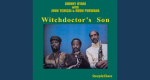
Settling in Copenhagen and later Stockholm, Dyani became a central figure in Europe’s jazz scene, recording extensively under his own name and collaborating with an extraordinary range of artists, including Abdullah Ibrahim, Don Cherry, David Murray, and Mal Waldron. Whether through his resonant bass lines, soulful vocals, or compositional work, Dyani’s music carried a sense of longing, resistance, and spiritual depth.
Johnny Dyani died suddenly in 1986 following a performance in West Berlin, leaving behind a body of work that continues to resonate across generations. His legacy endures as that of a musician who transformed displacement into creativity an artist whose sound spoke not only of exile, but of identity, memory, and belonging.
Videos














Photos


 East London, South Africa

Sponsored
Take this space