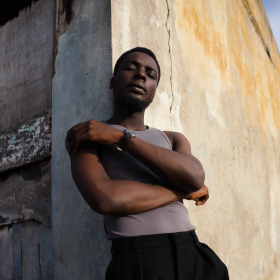
Jean‑Arthur(Sagbohan) Danialou
Bio
Sagbohan Danialou, born Jean‑Arthur Danialou on 14 July 1958 in Cotonou, Benin , is one of the most respected and enduring figures in Beninese music. Over a career spanning more than four decades, he has become known as a leading custodian of traditional rhythms and a major innovator in bringing those traditions into contemporary forms. His work exemplifies the blending of cultural heritage and modern performance that characterizes much of Benin's rich musical history.
Danialou's interest in music began at a young age in Cotonou, where he grew up immersed in the vibrant sounds of southern Benin. The region's cultural life was marked by traditional Vodun festivals, community drumming rituals and folk music that were central to social and spiritual life. Sagbohan Danialou was drawn to these rhythms and traditions, and as a teenager he began studying percussion and traditional songs from surrounding communities. He developed a profound respect for the ceremonial rhythms and cultural meanings embedded in the music of his homeland, and this respect would later define much of his artistic vision.
In the late 1970s, Danialou began performing professionally, initially playing in local ensembles that performed at weddings, cultural festivals and state events. He quickly distinguished himself through his deep knowledge of traditional rhythms and his ability to adapt them to contemporary performance settings. At a time when many African musicians were embracing imported styles like highlife, Afro-Cuban son and funk, Danialou remained committed to preserving and elevating indigenous modes while thoughtfully integrating modern instruments and arrangements.
By the early 1980s, Sagbohan Danialou had formed his own group, which became known for electrifying performances that blended traditional percussion with guitar, bass and horns. His music drew upon Vodun rhythms, including those associated with ceremonial ensembles, and he incorporated call‑and‑response vocals and polyrhythmic patterns that gave his work both cultural depth and broad appeal. Unlike some artists who abandoned local forms in pursuit of international trends, Danialou embraced his cultural heritage as the foundation of his sound, distinguishing him among his peers in the evolving Beninese music scene.
Danialou’s rise coincided with a period in Benin’s cultural life when artists were asserting new identities in the post‑independence era. The nation’s musical landscape was rapidly changing, and musicians were negotiating how to preserve cultural distinctiveness while also engaging with global audiences. In this context, Danialou’s commitment to traditional rhythms and his success in adapting them for contemporary audiences helped position him as a leading cultural figure. His performances were not only popular entertainment but also vehicles for cultural transmission, preserving rhythmic structures and ceremonial forms that might otherwise have been sidelined.
Throughout his career, Danialou collaborated with a wide range of musicians, both within Benin and internationally. While he maintained strong ties to his homeland’s musical traditions, he was not isolated from global currents. He worked with percussionists, horn players and vocalists who shared his interest in fusing traditional African rhythms with modern sensibilities. This blend made his music accessible to both domestic listeners and international audiences interested in...
Videos

















































































 Cotonou, Benin

Sponsored
Take this space