Francois Van Coke
Bio
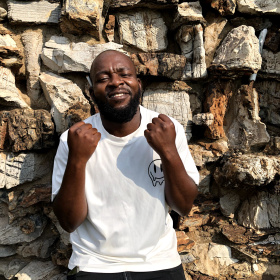
Francois van Coke emerged in the early 2000s as part of a restless generation of Afrikaans musicians determined to shake off the genre’s conservative reputation. Raised in Bellville, he became the unmistakable voice of Fokofpolisiekar, whose arrival coincided with a post-apartheid youth culture hungry for honesty, rebellion and guitars that sounded like they had something urgent to say. The band’s early work, laced with punk attitude and emotional bluntness, unsettled older audiences but electrified students and young listeners who saw themselves reflected in its lyrics. As Fokofpolisiekar matured, its sound shifted towards melodic alternative rock, mirroring the personal growth of its members and their audience. Van Coke later stepped out on his own, crafting a solo career built on confessional songwriting and rugged guitar lines. His lyrics often wrestle with vulnerability, masculinity and pressure, turning private anxieties into public anthems. Beyond music, his work in television and publishing has cemented his role as a cultural commentator rather than just a frontman.
Around the same period, Die Heuwels Fantasties helped usher Afrikaans pop into a more polished, cosmopolitan era. Formed in the mid-2000s, the group fused rock songwriting with electronic textures at a time when digital production was reshaping global pop. Their music spoke to city life, emotional dislocation and nostalgia for lost innocence, giving Afrikaans lyrics a modern, urban setting. They arrived just as Afrikaans radio was opening up to new sonic experiments, and their ability to move between introspection and dancefloor-friendly hooks made them favourites at both festivals and on mainstream playlists. Their success demonstrated that Afrikaans music could sound global without losing its linguistic identity.
While these artists pushed boundaries in rock and pop, Snotkop took a very different route to prominence. Originally known for more serious rap work, he reinvented himself as a pop-rap entertainer whose music leaned into humour, party culture and exaggerated performance. His songs, often dismissed as novelty by critics, found massive audiences who wanted escapism and fun. In doing so, Snotkop highlighted another truth about Afrikaans music: that it thrives not only on depth and rebellion, but also on spectacle and laughter. His career illustrates how Afrikaans pop has room for irony and excess alongside introspection.
By the 2010s, a new generation began to rise through digital platforms rather than traditional record labels. Zaan Sonnekus represents this shift, building an audience through social media, youth radio and online video. His music focuses on emotional storytelling, love and personal growth, wrapped in accessible pop melodies. Sonnekus’s rise reflects how Afrikaans musicians increasingly rely on visibility and relatability rather than industry gatekeepers. His audience is young, connected and comfortable consuming Afrikaans music alongside international pop.
Parallel to this pop evolution, bands such as Rooksein have kept the rock tradition alive by blending classic band structures with contemporary production. Drawing on storytelling and melodic hooks, Rooksein aligns itself with a revivalist spirit that values guitars and narrative without rejecting modern sound design. Their work speaks to listeners who still crave the emotional punch of rock but...
Videos

























 Johannesburg, South Africa

Sponsored
Take this space