















16 avr 2026

Le Rock and Roll Hall of Fame a officialisé, lundi 13 avril 2026, la liste de ses nouveaux...

By Ralph Okobz
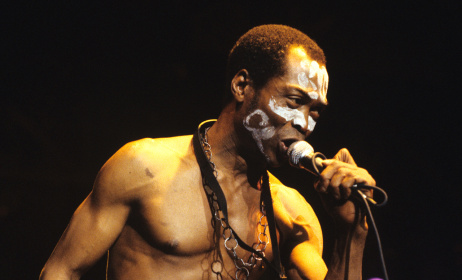
In the pantheon of global music, few figures achieve a status that transcends time. Fela Anikulapo Kuti is not merely a historical figure; he is an atmospheric force. Decades after his physical departure, his sonic and ideological frequency remains as potent and necessary as it was during the height of his Kalakuta Republic.

The 2026 Grammy Awards marked a watershed moment for the continent. As the global music industry gathered to celebrate contemporary hits, the spotlight shifted to the roots of the African sound. Fela Kuti was posthumously awarded the Lifetime Achievement Award, making him the first African artist to receive this specific distinction.
This accolade was more than a trophy; it was a global bow to the architect of a movement. While modern Nigerian stars competed in categories like Best African Music Performance, the presence of the “Abami Eda” loomed large, proving that the foundation he built is what allows today’s superstars to stand so tall.
Born for the extraordinary
Fela’s journey was never destined to be conventional. As documented in Carlos Moore’s seminal biography, Fela: This Bitch of a Life, the Afrobeat pioneer entered the world with a defiant clarity. He did not seek a comfortable life; he sought a liberated one. His mission was twofold: to revolutionise music and to break the shackles of his people. His greatness stems from this rare fusion of creative genius and raw, unfiltered service to humanity. Fela didn’t just play music; he lived a life of “radical vulnerability,” placing his body and his freedom on the line to soundtrack the struggle of the common man.
The architect of Afrobeat
To call Fela a musician is to undershoot the mark. He was a cultural engineer. By weaving together the sophisticated harmonies of Jazz and the rhythmic “pocket” of Funk—elements he mastered during his time in the United States—with the spiritual heartbeat of traditional African percussion, he birthed Afrobeat.
This wasn’t just a new genre; it was a sociopolitical weapon. Across a staggering discography of over 60 albums, Fela documented the soul of a nation. His compositions were long-form journeys that provided a rhythmic sanctuary for the oppressed, offered a scathing critique of neo-colonialism and military dictatorship, and preserved African spirituality and linguistic identity through Pidgin English.
A soundtrack for the ages
The endurance of Fela’s catalogue is startling. In 2026, tracks like ‘Zombie,’ ‘Sorrow’, ‘Tears and Blood’ and ‘International Thief Thief (I.T.T.)’ do not feel like relics; they feel like contemporary reportage. His ability to capture the Nigerian sociopolitical landscape was so precise that his lyrics still mirror the realities of the country nearly 30 years after his passing. For the younger generation, songs like ‘Water No Get Enemy’ and ‘Lady’ remain staples of the cultural diet. Fela’s music possesses a “staying power” that few artists in human history have ever replicated.
Today, the Kuti flame is kept bright by his lineage. His children have all carried the Afrobeat mantle to the Grammy stage, ensuring the genre remains a living, breathing entity. Beyond the family, the global explosion of Afrobeats (the pluralised umbrella term for modern African pop) owes its very nomenclature and rhythmic DNA to Fela Kuti’s music. From Burna Boy to Wizkid, the modern icons of African music consistently cite Fela as their North Star. Fela Anikulapo Kuti’s name will continue to resonate, not just as a Grammy winner or a virtuoso, but as the man who taught a continent how to find its voice and preserve its soul through the rhythm of the drums.
Raphel Okobz is a Grammy-winning publicist. Okobz writes in his personal capacity. The opinions and views expressed herein are solely his own and do not reflect the position or stance of the publication.
Sponsored
Take this space






Commentaires
s'identifier or register to post comments