

















05 avr 2017

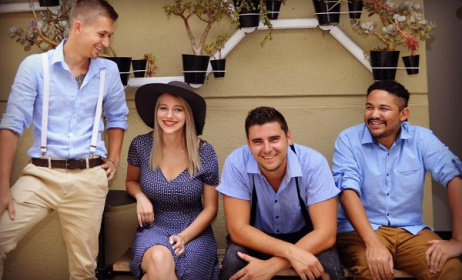
Groupe : Jerry & the Bandits Album : Fiction in Folktale Label / Année : Jerry & the...

By Tshifhiwa Mungoni and Sibongile Kobo
Zimbabwean-born artist manager Malackcean Gwayi has built a career managing a wide range of established and emerging artists across Southern Africa. Known primarily for his work behind the scenes, Gwayi has developed a reputation for long-term artist stewardship grounded in personal relationships, consistent planning and hands-on involvement.

In a recent interview, Gwayi reflected on how his entry into artist management was unplanned and shaped largely by circumstance rather than ambition. Initially working as a music producer and songwriter, he said management emerged as a practical response to the needs of artists around him.
“It wasn’t my dream or my aim,” he said. “I didn’t see myself as an artist manager when I started.”
An unplanned entry into management
Gwayi’s first experience with artist management dates back to around 2013, when he became involved in supporting the career of a musician connected to DJ Oskido’s family. At the time, he did not consider management a long-term career path. However, as his involvement deepened, people within his professional circle began encouraging him to continue.
His breakthrough came in 2020 when he began managing South African artist Freddie Gwala, marking what he describes as his first major management role. “My first big artist played a huge role in showing me that I can do it,” Gwayi said.
That relationship began after a Zimbabwean comedian introduced him to industry contacts, eventually leading to a meeting at Gwala’s home in Soweto. The meeting developed into a lasting professional partnership and solidified Gwayi’s position as a full-time artist manager.
A diverse roster
Gwayi currently manages a large and stylistically diverse group of artists, including Freddie Gwala, Jacqueline, Neo Maphaka (CJB), Tshedi Malaika, Om Alec and Mpho Majiga. His roster also features Martin and Ndolwane Super Sounds, Platform ONE, Bafana Kunene, Tafula, Mini Cooper, Mtharimba, Sphura Thee Level, Masokana, Mazinywensimbi, Mahlalela, as well as Mike Sibanda and The Sons of the Soil.
“There are a lot of artists that I manage,” he said, noting that the diversity of his roster reflects his openness rather than a specific genre preference.
Gwayi said his management approach is not driven by musical style but by personal compatibility and trust. “I don’t choose,” he said. “I can work with an artist for six months without signing. I want us to understand each other.”
Once an artist is signed, he places strong emphasis on visibility, planning and sustained relevance. “You have to believe in the artist first,” he said, adding that this belief translates into what he describes as aggressive and consistent promotion. “Sometimes I don’t sleep. I have to be on social media.”
He plans daily activities for each artist under his management, focusing on introducing new ideas and maintaining momentum throughout the year.
Relationships beyond contracts
Gwayi views artist management as extending beyond contractual obligations. He said personal care and regular communication are central to his work. “It’s not all about managing,” he explained. “It’s about checking on them. Asking them, ‘are you okay?’”
He believes understanding an artist’s personal circumstances allows him to offer more effective guidance. “An artist is not a machine,” he said, adding that emotional and mental wellbeing directly affect performance and career longevity.
This relationship-based approach also applies to his dealings with promoters, sponsors and event organisers. He prioritises regular contact and long-term relationships, which he believes contribute to consistent bookings for his artists.
“We must have a connection,” he said. “I must know your cousin. I must know your mom.” According to Gwayi, many of the artists he works with are familiar with his family, including his mother. “That’s how I work. Like we are a family.”
Beyond South Africa, Gwayi has worked in Botswana, Namibia and Zimbabwe through workshops and collaborations. While he acknowledges differences across markets, he said South Africa currently offers stronger commercial opportunities. “South Africa is doing very well when it comes to the market,” he said.
He also reflected on the historical exploitation of artists in Southern Africa, noting that many musicians from previous generations were disadvantaged by unfair industry practices. This awareness informs his emphasis on transparency, trust and long-term planning.
Through a management style rooted in consistency and personal engagement, Gwayi continues to build sustainable careers for artists across the region, navigating an industry he describes as demanding while seeking to address its long-standing structural challenges.
Sponsored
Take this space
Commentaires
s'identifier or register to post comments