













22 avr 2026
L’essor de l’intelligence artificielle dans la musique franchit un nouveau cap. La plateforme...

The music industry has a long memory when it comes to technological disruption. We have lived through Napster, physical piracy, digital piracy, format changes, internet disruption, downloads, streaming, and every prediction along the way that the industry this time would not survive.
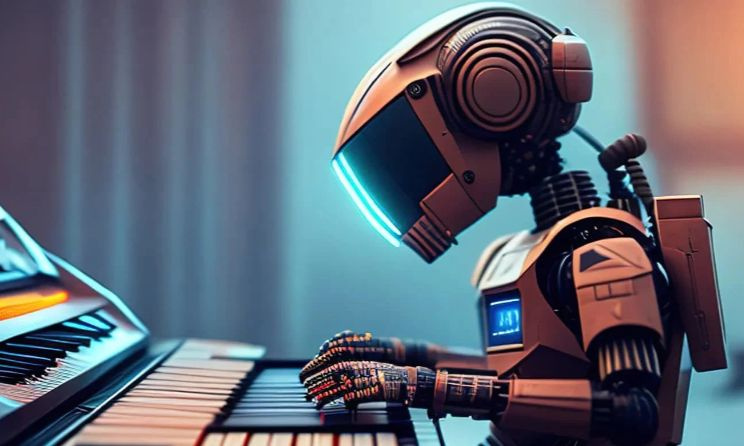
AI is simply the next technological method being used to disrupt the industry. AI platforms are scraping music, lyrics, sound recordings, voices and creative works (thus far without permission) and then producing new outputs that rely on that material. Right now, much of what is happening is copyright infringement by another name.
Understanding copyright
To understand why, we need to go back to the basics of copyright. In South African law, an adaptation occurs when someone takes an existing work, uses it as the basis for a new work, and adds something of their own. But you need the first person's permission for the adaptation to be legal.
This is exactly what AI platforms are doing, hence the serious threat posed by them. Whether a platform claims to be “learning” from those works or copying their ones and zeros directly, the result still relies on protected material. AI is therefore a licensing issue. Piracy, in the form of Napster and other platforms, followed a similar pattern. Eventually, illegal distribution gave way to licensed digital platforms. Streaming was the result, and while not a perfect solution, it played its part in saving the recording industry.
AI is already following a similar path. Lawsuits and consequent negotiations are already under way. If we get the licensing of AI right, it can and will become an important new royalty stream for composers, lyricists, performers, publishers, record companies and other rights holders.
Being cautious
The concern is that these licensing deals may evolve to prioritise corporate interests over fair, creator-first royalty structures, and this is what we must avoid. Collective management organisations (CMO’s) must play a central role in this process. Bodies such as SAMRO and CAPASSO exist to protect creators’ rights and to collect and distribute royalties on their behalf, without acquiring a stake in the user’s business. GEMA’s legal action in Germany against unauthorised AI lyric-scraping was an important case, showing the important role that CMO’s should play in the process.
South Africa must also be careful with copyright reform. The debate over Fair Use (an American concept that gave the AI platforms room to manoeuvre) has been raging in South Africa for years. If a loose American-style fair-use provision were to be introduced into South African law, it would create an open season for AI and other piracy platforms. Our priority at this critical time should be stronger protection, clearer licensing mechanisms, and better enforcement – not the opposite.
Copyright is not the only issue. AI also raises questions of personality rights and passing off. If a platform generates a song that sounds like Ed Sheeran, Drake, Kanye West, or any other artist, the problem is not only whether it scraped musical works. It may also be exploiting that artist’s voice, name, likeness, or reputation. It may also be about misleading the public.
Detecting AI
For AI licensing to work, we need detection systems that can identify when AI has used protected works, label AI-generated outputs, trace the original rights holders, collect the money, and distribute it correctly. Some labels have reportedly been moving toward patenting systems for tracking, tracing, and labelling AI-derived works. Interestingly, French streaming platform Deezer has developed an effective AI detection system that prevents unauthorised AI ‘slop’ from being streamed on the platform. This is a positive step because fraud is being prevented and artists are being protected.
For artists, my advice is simple. Understand your rights, especially copyright. Deal with this properly in your contracts. Support efforts to regulate AI properly. Push for mechanisms such as private copy levies, stronger copyright protection, effective licensing, and proper royalty distribution. The issue of your creative work being used without payment should become part of a lawful royalty ecosystem. And when you choose to use AI, use it as a tool, use it responsibly and respect the copyrights of others as you would expect them to respect yours.
Do not think that AI will disappear. It will not, but it will become more regulated and controlled, with ‘walled garden’ and other restrictions. Musicians should learn to use it where properly in a way that supports production, workflow, experimentation. And above all, quality. That is the true tester. We survived drum machines. We survived Auto-Tune. We are already surviving AI.
The human connection
Using AI as a production tool is one thing. Using it to ‘compose’ music is quite another. Feeding on other people’s work without permission is unsustainable and is a trend that will reach its end very soon. Music is not just data. It is a human connection. Listeners can often feel when something is fake, even if they cannot explain why. AI may become faster, cleaner, and more convincing over time, but it will still need the human creative work that came before it. And it will need to be legal.
That is why licensing matters. Done properly, AI could become the next major royalty stream for creators. In South Africa, one practical mechanism could be a private copy levy: a small charge added to devices (think smartphones) capable of copying or storing creative works or using AI models, with the proceeds distributed back to the creative industries. I believe such a levy could raise as much as R1.6 billion a year. In a music market of roughly R2.5 billion, that would be a huge structural shift in how creators are compensated. This could be the best thing that ever happened to the music industry.
Nick Matzukis is the co-founder and head of music law at the Academy of Sound Engineering in South Africa. Matzukis writes in his personal capacity. The opinions and views expressed herein are solely his own and do not reflect the position or stance of the publication.
Sponsored
Take this space


Commentaires
s'identifier or register to post comments