














13 juin 2026

Alors que les musiques ouest-africaines poursuivent leur expansion sur les marchés internationaux,...

By Tshifhiwa Mungoni and Sibongile Kobo
Born in Mpumalanga and now based in Katlehong, Vusi Khoza is an independent South African musician whose work centres on emotion, storytelling and lived experience. His path reflects both the structural challenges facing emerging artists and the persistence required to sustain a career without major industry backing.
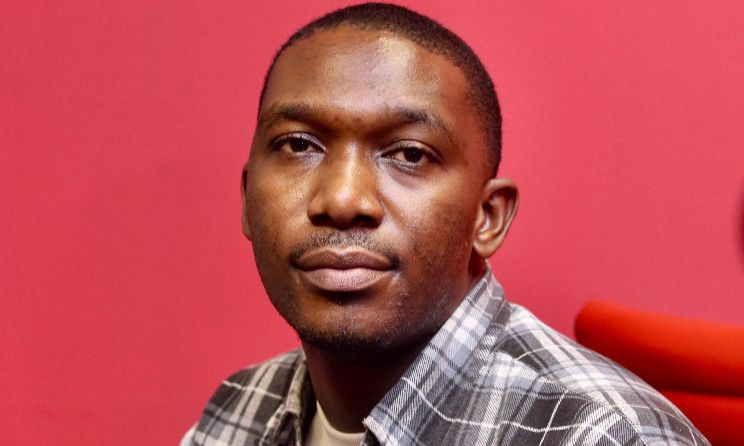
Khoza began making music in 2017 but committed to it professionally in 2022. Since then, he has relied largely on small live performances while navigating the realities of working independently. Securing bookings and building visibility remain ongoing challenges. “The struggle is in getting gigs and being popular in the industry,” he says, noting the difficulty of marketing himself effectively without a dedicated team.
Although he manages most aspects of his career independently, collaboration plays a role in his creative process. He has worked with fellow singer Sane Matla on several tracks and partners with producers on beat production, while retaining control over his artistic direction. He also values mentorship, citing his mentor–mentee relationship with Yonela Nana on the song ‘Injabulo’ as an important part of his development.
Writing about home, love and distance
Khoza’s music is characterised by reflective songwriting and emotional depth. One of his notable tracks, ‘Emakhaya’, draws on the experience of being away from home. Originally from Mpumalanga, he has not returned in two years. “So on that song, ‘Emakhaya’, it’s that thing of missing home,” he explains.
While not strictly autobiographical, the song reflects broader social realities. Khoza references the common South African experience of people leaving their families behind to seek work elsewhere. “It’s not really that I have someone back home, but rather I know a lot of people who do,” he says.
Love is a recurring theme in his work, particularly within his R&B-influenced sound. He describes it as a universal subject that resonates widely. His songwriting combines personal reflection with observation of the experiences of others. “I look at my personal situation and also at what other people are going through,” he says.
Khoza’s musical foundation is rooted in classical training. He began as an opera singer and choir member, identifying as a bass while aspiring to sing in a higher register. He cites the late Luther Vandross as an early influence. “My favourite artist was the late Luther Vandross. I always wanted to sing in his range,” he says.
Over time, his sound has incorporated R&B and neo-soul elements, with artists such as Giveon influencing his vocal style. More recently, he has drawn inspiration from local genres including Amapiano and 3-Step, blending international and South African influences. “I gained more technique from singing Giveon’s songs, and from listening to amapiano and 3-Step from here at home,” he says.
He maintains a disciplined approach to vocal practice, describing singing as a daily routine necessary to preserve range and technique.
Themes of relationships and motivation
Khoza views music not only as self-expression but also as a means of encouragement. His songs address relationship challenges such as infidelity, conflict and emotional strain, aiming to offer reflection rather than judgement. “I want people to feel motivated,” he says. “To know that even if the situation is bad, it can get better.”
Describing himself as an introvert, he says his writing process is shaped by observation. “I survive day by day. I’m always indoors, but I look at situations happening outside so that I can get motivated to write.”
Currently completing an internship towards his Music Performance degree, Khoza is working on new material. His forthcoming projects include an amapiano EP and a separate 3-Step EP, alongside collaborative releases. “A lot of people are approaching me to work with them,” he says. “If someone comes with a proposal, I’m in.”
He writes when inspired rather than to a fixed schedule. “I don’t want to force it. If there’s a situation, I write about what I saw and research it so my fans can also understand it,” he explains. As an independent artist, he takes steps to protect his work, documenting recording sessions and formalising agreements with collaborators where possible.
Reflecting on his career, Khoza identifies focus as the lesson he would share with his younger self. “If I had started earlier and focused the way I do now, I would have been far,” he says. “So focus.”
As he continues to develop his craft, Khoza remains committed to building a body of work grounded in storytelling, reflection and personal experience.
Sponsored
Take this space




Commentaires
s'identifier or register to post comments