











07 avr 2020

Les spécialistes du numérique et artistes du monde entier, sont invités à soumettre leurs idées,...

The National Arts Festival will return to Makhanda from 25 June to 5 July 2026, presenting a programme that spans theatre, dance, visual art, music and performance, with works exploring artificial intelligence, indigenous knowledge systems, political memory and questions of identity.
Organisers said the programme brings together artists from South Africa and abroad and reflects contemporary debates around technology, culture and society. Across the line-up, works engage themes including decolonial futures, archival memory, and the impact of digital technologies on human experience.
The festival’s curated strand focusing on indigenous wisdom features several new works interrogating colonial histories and contemporary identity.
Jason Jacobs, the 2026 Standard Bank Young Artist for Theatre, presents Kraal, a two-part production staged in both theatre and a traditional matjieshut. The work examines the legacy of the dop system and draws on the cultural knowledge of the Kamiesberge region.
Jacobs described the production as “a ritual of restoration where fragments of memory and shame are tenderly gathered and forged toward healing.”
Visual artist Bronwyn Katz, also a 2026 Standard Bank Young Artist recipient, presents Ta a-b kobab ada kāxu-da, ti khoe-du'e, a material-based exploration of Khoi language and heritage using metal structures, organic materials and circuit-like installations.
Moya Michael presents It’s Like a Finger Pointing a Way to the Moon, a dance work developed in collaboration with Namibian language custodians. The piece explores language preservation and disappearance as a cultural strategy.
Albert Ibokwe Khoza’s performance work Dear Museum! The Truth of the Matter it Seems Was Better When We Were Not Telling the Truth will have its South African premiere after opening in Berlin. The piece reflects on ethnographic museums and questions representation and institutional memory.
Music, spirituality and collective performance
Music programming includes performances that span jazz, choral traditions and contemporary fusion.
Ndumiso Manana will present Pulchritudinous: The Beauty of the Journey, tracing his musical development across multiple albums and collaborations.
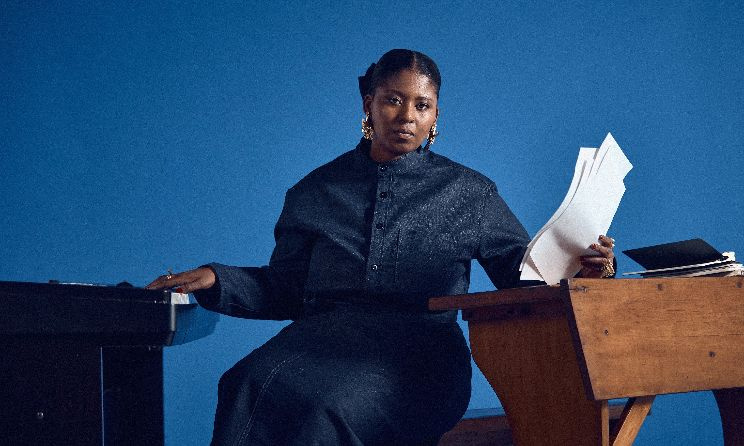
Gabi Motuba will present The Sounds of a Black Girl, a vocal-focused jazz performance informed by improvisation and spiritual practice.
Motuba said: “Jazz exists in my philosophy. It is my way of life and my style. Drawing on the Zen proverb ‘the finger pointing to the moon is not the moon’, I frame jazz as threshold rather than limit.”
Other highlights include the Soweto String Quartet marking 30 years of recording, as well as the Masicule Combined choral performance and the IGWIJO Competition, which celebrates communal singing traditions.
Political memory and artistic freedom
The festival will also feature works engaging with censorship, resistance and historical trauma.
The Gabrielle Goliath Tribunal, facilitated by TheatreDuo & Co, examines censorship in contemporary South Africa and broader pressures affecting artistic freedom, including institutional and corporate constraints.
The organisers said the work responds to the exclusion of artist Gabrielle Goliath from South Africa’s representation at the Venice Biennale.
A statement from TheatreDuo & Co said: “When the structures that suppress an artist’s truth are laid bare, remaining on the fence is complicity. Goliath’s story demands we move beyond observation and take a clear position against institutional silencing.”
The Market Theatre Foundation will stage The Cry of Winnie Mandela, directed by Momo Matsunyane, which draws on Njabulo Ndebele’s novel of the same name and follows women navigating absence and waiting during apartheid.
Other works in this strand include Motlalepula Phukubje’s visual art project I Hope This Finds You Well, which revisits the legacy of the Imvaba Arts Association, and Brent Meistre’s autobiographical film SAFE HOUSE, which explores fragmented childhood memories set against apartheid-era policing in Makhanda (formerly Grahamstown).
Lee-Ché Janecke presents MAJAIVAN: A movement story of the life of Lee-Ché Janecke, an autobiographical dance work reflecting on identity, masculinity and artistic development.
AI, digital culture and performance
Technology and artificial intelligence form a major thread in the 2026 programme.
Darkroom Contemporary presents autoplay, described as Africa’s first AI-informed opera, in which generative AI produces music in real time while audience interaction influences performance outcomes.
Canadian company Guilty by Association will stage 2021, a hybrid theatre and digital work exploring grief and virtual reconstruction through video game aesthetics.
UK artist Louise Orwin’s FAMEHUNGRY examines social media culture through live performance integrated with TikTok Live, focusing on visibility, labour and digital identity.
The MTN x UJ New Contemporaries Award Exhibition, titled Holding sp(l)ace for the in____between, curated by Amogelang Maledu, features work by four South African artists exploring Black feminist theories of refusal through installation, sound and sculpture.
Sponsored
Take this space
Commentaires
s'identifier or register to post comments