
















25 Feb 2026
La SACEM a conclu un partenariat qualifié d’historique avec la Emirates Music Rights Association (...

Sacem distributed €1.502 billion (about $1.69 billion) to authors, composers and publishers in 2025, a 9% increase compared with the previous year, as growth from international digital platforms continued to exceed domestic performance.

The Paris-based collecting society said it paid royalties to 663 000 rights holders globally over the year, according to results published on 6 May.
International collections rose 13% to €845 million ($954m), driven primarily by digital platforms and overseas markets. Revenue collected within France was broadly stable at €859 million ($970m), slightly up from €852 million in 2024, with live performance cited as a supporting factor.
Overall revenue increased 21% year on year to €1.804 billion, compared with €1.487 billion in 2024.
Sacem said the figures reflect the continued dominance of streaming and global distribution in music consumption. The organisation stated that industry growth is “increasingly built on international expansion and digital initiatives”.
The company noted that around 40% of streaming royalties for its members are now collected directly from international markets.
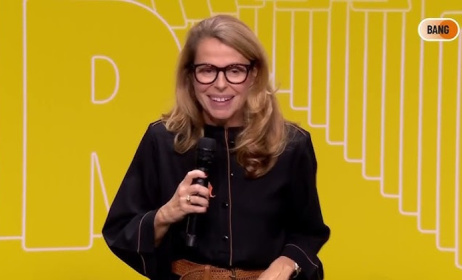
Chief executive Cécile Rap-Veber said the results reflected both strategic investment and structural change in the industry.
“Our performance in 2025 is proof that the strategy we have adopted is a sound one, based not only on digital and international expansion, but even more so on the role we play in fostering creativity throughout France,” she said.
She added that technological investment had been central to operational improvements, pointing to systems designed to process large volumes of data more efficiently. “This momentum stems from major technological investments, such as the URights platform, which enable us to process ever-increasing volumes of data with greater speed, reliability and transparency,” she said.
Sacem also reported growth in its membership base, with around 13,500 new members joining in 2025. Of these, 27% were under 25, bringing total membership to just over 251,000. Approximately 12% of members are now based outside France.
The organisation said it also invested €17.8 million in cultural initiatives during the year, supporting festivals, live performances in smaller venues, and music education and outreach programmes in schools, care homes and correctional facilities.
Chairman Patrick Sigwalt said Sacem’s mandate had remained consistent over its long history. “Since its creation, its mission has never wavered: to protect creators, foster musical diversity and support all those who bring music to life across the country,” he said.
He added that the organisation had expanded significantly in scope. “Over 175 years, Sacem has grown in scale: from a society supporting around a hundred creators in France, it has become a global player in over 180 markets, remunerating 663,000 creators and publishers worldwide,” he said.
Sigwalt also highlighted Sacem’s role in local cultural funding, including support for small venues and municipal events, particularly in communities facing budget constraints.
The organisation’s results come amid broader comparisons with other major collecting societies. In 2025, the US-based ASCAP reported revenues of $1.945 billion, up 6%, while Germany’s GEMA recorded €1.34 billion, a 0.4% increase.
Sacem said its expense-to-revenue ratio stood at 9.8%, which it described as among the lowest globally. It added that operational efficiencies had reduced online royalty fees to 7% from 2026 and shortened distribution timelines.
The company also expanded its management of physical format rights across Europe, with Sony Music Entertainment, Warner Music Group and BMG joining Universal Music Group in mandating Sacem to administer their European rights.
Looking ahead, Rap-Veber identified artificial intelligence as a key challenge for the sector.
“Just as we did with streaming platforms over fifteen years ago, we have set our sights on partnering with AI providers to ensure a fair and protective framework for creators,” she said. “And 2026 will be a pivotal year in this regard, driven by ongoing legislative developments.”
Sacem said it has also contributed to industry discussions on AI copyright standards and participated in international policy forums, as collecting societies adapt to rapid technological change in the music sector.
Sponsored
Take this space








Commentaires
s'identifier or register to post comments