
















08 mai 2026
Le Africa Forward Summit 2026 ne réunira pas uniquement des chefs d’État, des leaders économiques...

TikTok has convened its third annual Sub-Saharan Africa Safer Internet Summit in Nairobi, bringing together government officials, regulators, industry stakeholders and online safety organisations to discuss digital safety and artificial intelligence (AI) governance.
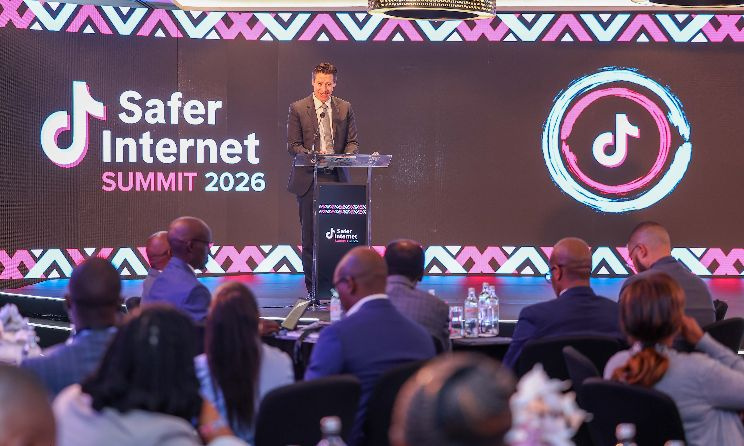
The two-day summit, held under the theme Safer Together: Innovation and Safety, marked an expansion of the initiative, which began in Ghana in 2024 and was hosted in Cape Town in 2025. The event focused on strengthening collaboration across the region to address emerging online safety challenges.
Tokunbo Ibrahim, TikTok’s Head of Government Relations and Public Policy for Sub-Saharan Africa, said the summit aimed to develop collective responses to digital risks.
“As we host the third annual Safer Internet Summit here in Kenya, our mission is clear: to share learnings, insights, tackle common challenges and collaboratively advance actionable solutions that protect citizens online,” he said.
Discussions at the summit included the platform’s trust and safety measures, protection of young users, and policy frameworks for responsible AI governance. Delegates also examined the role of partnerships between policymakers, technology companies and content creators in improving digital safety.
Kenya’s cabinet secretary for Information, Communication and Technology, William Kabogo, said the gathering reflected a broader commitment to building a secure digital environment.
“As we embrace the opportunities of the digital era, we must protect our people by advancing digital innovation, responsible AI governance, and strong regional partnerships,” he said.
A key announcement at the summit was an additional $200,000 in advertising credits to support organisations in Sub-Saharan Africa working on AI media literacy. The funding builds on TikTok’s previously launched $2 million AI Literacy Fund, introduced in November 2025.
The company highlighted ongoing partnerships with regional organisations, including Kenya-based Mtoto News, Africa Check, and the Centre for Journalism Innovation and Development (CJID), aimed at improving public understanding of AI and combating misinformation.
TikTok global head of partnerships, elections and market integrity, Valiant Richey said local partnerships were central to these efforts.
“We are partnering with trusted local organisations that communities already know and rely on, because their expertise and deep local connections are essential to making AI literacy programmes truly impactful,” he said.
TikTok also outlined its approach to AI transparency and content moderation, including requirements for labelling AI-generated content, the use of detection technologies, and collaboration with global standards initiatives. The company said advances in automated moderation, alongside human oversight, have improved its ability to detect and remove harmful content.
According to its latest enforcement report for the third quarter of 2025, TikTok removed more than 14 million videos across Sub-Saharan Africa, with the majority identified through automated systems.
The summit concluded with participating stakeholders committing to continue collaboration on digital safety initiatives and policy development across the region.
Contributers: Goitmang Kemp and Lebogang Masilela
Sponsored
Take this space





Commentaires
s'identifier or register to post comments