














18 Feb 2019

Découvrez les 11 meilleurs albums africains 2018 selon le magazine britannique Songlines

Perched on the 13th floor of 73 Juta Street in Braamfontein, Hugh’s Jazz Club offers more than live performances. Opened in partnership with the Hugh Masekela Heritage Foundation, the venue operates as a self-sustaining ecosystem combining performance space, archival preservation, and funding for emerging artists.

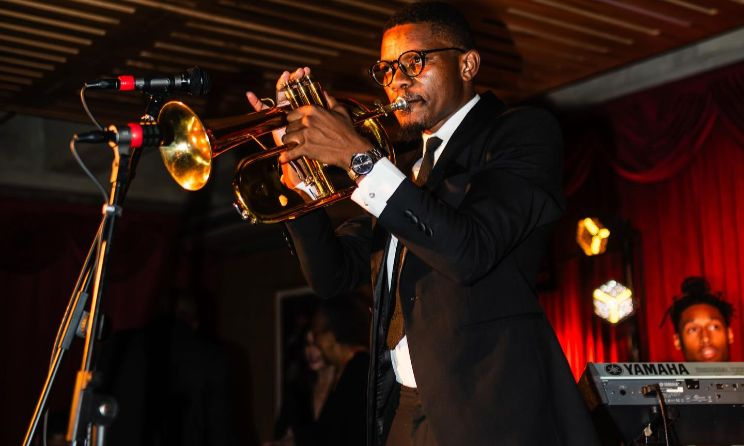
Named after South African jazz legend Hugh Masekela (1939–2018), the club honours the flugelhornist, trumpeter, and singer whose fusion of jazz with traditional African styles created a globally recognised Afro-jazz sound.
Hugh’s operates on a selective schedule, opening only on Thursdays from 18:00 to midnight. There are no midweek events, dinner sets, or Sunday sessions. The club prioritises acoustics and sightlines over capacity, creating an environment designed to enhance the musical experience. Even the food and drink menus are tailored to the pace of a performance.
What sets Hugh’s apart from other jazz venues is its curatorial approach. Programming is led by the Hugh Masekela Heritage Foundation rather than a promoter or booker. The Foundation selects performers, shapes each programme, and determines the narrative of every evening. Recent performances have paired emerging musicians, such as drummer Tumi Mogorosi, with artists who performed alongside Masekela, fostering an intergenerational dialogue rather than a retrospective of standards.
“We are not building a museum,” said a representative from the Foundation. “Bra Hugh was not a fixed thing. He moved, he changed, he collaborated across generations and continents. The music has to do the same.”
The club also operates a reinvestment model. A percentage of every ticket sale is channelled back into the Foundation to support archival work, educational initiatives, and artist development. This approach ensures that commercial success directly contributes to preserving Masekela’s legacy and supporting the next generation of musicians.
Across Africa, many estates face similar challenges: maintaining a musician’s legacy while generating sustainable income. Hugh’s model offers a potential blueprint. By linking live performances with ongoing support for artists and preservation work, it demonstrates a way to monetise heritage without commodifying it. Cities such as Lagos, Nairobi, Accra, and Dakar could adapt this model for other foundational figures in African music, provided there is sufficient cultural traffic, suitable venues, and an engaged estate.
Hugh’s Jazz Club is open Thursdays, 6pm to 12am, at Level 13, 73 Juta Street, Braamfontein. Tickets are available via Quicket and frequently sell out in advance.
Click here to find more about Hugh’s Jazz Club.
Sponsored
Take this space


Commentaires
s'identifier or register to post comments