















22 avr 2026
L’essor de l’intelligence artificielle dans la musique franchit un nouveau cap. La plateforme...

By Dr Sheldon Rocha Leal
It is difficult for education to keep pace with an industry, like the entertainment sector, that is constantly evolving. Academic institutions are built on stability, accreditation cycles, and long-term planning. The entertainment sector, by contrast, is constantly rewriting its rules of engagement. New platforms emerge, consumer trends shift, technology reshapes production, and business models continuously evolve before a textbook can be printed.
Where many institutions fall behind is not in intent but in structure. It is difficult for any academic system to constantly reinvent itself without losing coherence. Yet refusing to evolve is not an option. The solution is not to blindly chase every trend, but to identify meaningful industry shifts, dissect them, and thoughtfully weave them into programmes so that graduates can step into real workplaces without being disoriented.
Buzz words abound
Artificial intelligence is the current lightning rod in this conversation and it’s something with which many industries are grappling. Students are already using AI tools, whether institutions approve or not. Fighting it is counterproductive. The more constructive response is to teach critical engagement. Higher education has always been about developing the ability to analyse, question, and understand. If students use systems blindly, without grasping how they function or how they influence society, the result is shallow. Therefore, if they critically engaged with their discipline, AI becomes an amplifier.
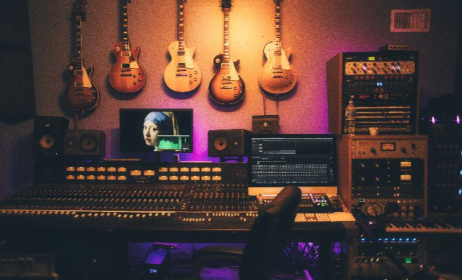
The incorporation of concepts such as AI is not a new phenomenon in the entertainment technology sector. The industry has always experimented with a variety of artificial interventions. Autotune, for example, has been embedded in music production tools for decades. Academy of Sound Engineering has long engaged with emerging tools at the point of their adoption, long before they become mainstream. Our lecturers are encouraged to explore new technologies in practice, and then bring that thinking into the classroom, which gives us a technological and educational edge. Often, the tools themselves are not immediately installed in teaching spaces, but the concepts behind them are already shaping how students learn. When technologies mature, they surface overtly in curricula. This keeps education aligned with industry realities without triggering trend-driven chaos. Another secret to maintaining an educationally innovative ecosystem, especially in a field such as audio technology is the employment of lecturers who are active practitioners in the field. This means that they are constantly engaging at the forefront of the sector. This is knowledge from which our students benefit.
Comprehension first
The danger in chasing trends is forgetting foundational principles. In audio, digital production makes little sense without understanding analogue origins. If students do not grasp the fundamentals of sound, signal flow, acoustics, and musical structure, they cannot evaluate the outputs of advanced systems. AI has, in many ways, intensified the need for deep foundational knowledge and critical engagement with the fundamentals of audio production. Without mastery, technology only produces surface-level work. In creative fields, depth is everything. Human experience remains the differentiator that machines cannot replicate.
My own relationship with Academy of Sound Engineering illustrates how radically the sector has changed. I was part of the first cohort of students before the Academy formally existed, when it was still under the Allenby Group. Looking at what we studied and comparing it with what students engage with now is like comparing a moped to a Lamborghini. Twenty-six years ago, you bought music on CDs from a store. Today, music lives in the cloud, with hundreds of thousands of tracks uploaded to streaming platforms daily. The Academy’s offerings have transformed just as dramatically, precisely because of the nature of the industry.
Global opportunities
Another reality students must understand is scale. The entertainment industry is not a niche pursuit. It is a multi-trillion-dollar global giant spanning music, film, television, advertising, fashion, gaming, and sport. Music is pervasive and feeds into all of these spaces. It plays in every broadcast, retail environment, stadium, fashion show, and every screen. That ubiquity translates into enormous earning potential for those with the right skills.
South Africa is well-positioned within this landscape. The local music industry has rebounded from the collapse caused by the download revolution between 1999 and 2015. Since the rise of streaming and the formalisation of industry structures, growth has been continuous and consistent. Africa is now among the fastest-growing music economies in the world, and South Africa leads that development on the continent. International attention has followed, helped by South African artists breaking onto global stages. That interest creates opportunity, but only for talent that is properly prepared.
This is where educational institutions carry responsibility. Our role is not simply to transfer technical knowledge. It is to build creative ecosystems that stimulate exploration, collaboration, and confidence. When students are given space to experiment freely, they engage more critically with what they learn. They begin creating work that exceeds what any lecturer could directly teach, as they apply principles at a higher level through their own discovery.
The entertainment industry will continue to evolve. The question for education is whether it grows with it or becomes a mausoleum of outdated knowledge.
Dr Sheldon Rocha Leal is a registrar at the Academy of Sound Engineering. The opinions and views expressed herein are solely his own and do not reflect the position or stance of the publication.
Sponsored
Take this space




Commentaires
s'identifier or register to post comments