







































NEFCISA
NEFCISA

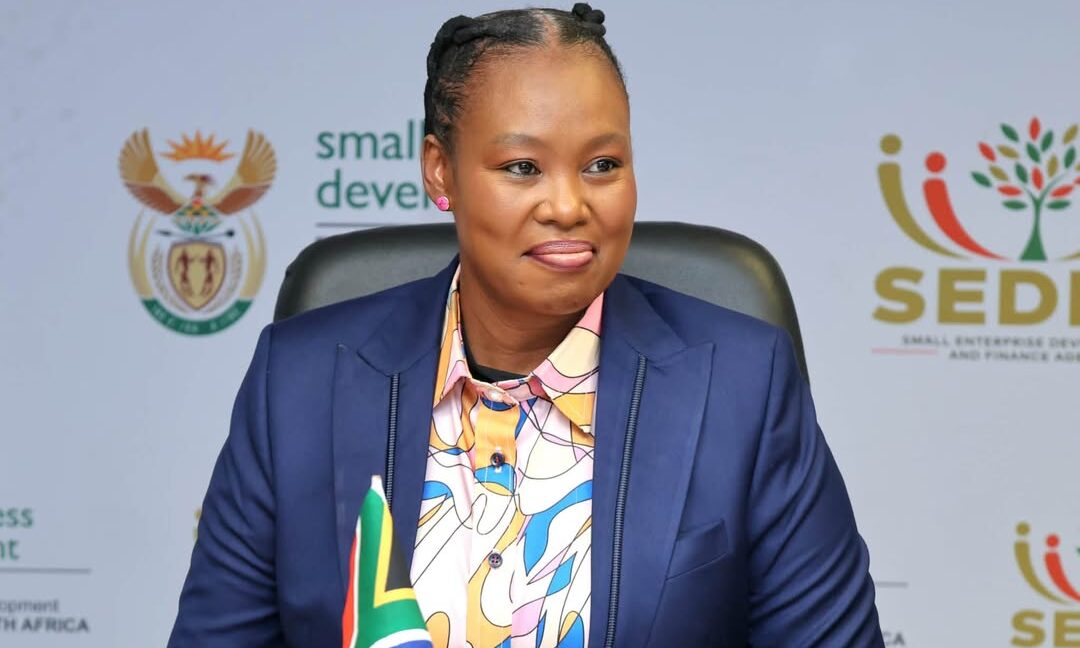
The Music In Africa Foundation (MIAF) is proud to announce its partnership with the Industrial Development Corporation (IDC) as a Strategic Implementing Partner (SIP) for its Social Employment Fund (SEF). Through this collaboration, MIAF is launching a new national programme designed to create jobs, address skills gaps, and strengthen South Africa’s creative industries — in line with the SEF’s overarching goal to generate work for the common good and build community value through employment, social contribution, and inclusive economic participation. Operating under the banner NEFCISA (National Employment Facility for Creative Industries in South Africa), the initiative will recruit and train participants, match them with host organisations, and place a minimum of 1 000 workers across the country. Key Objectives: Support employment and entrepreneurship in the creative industries. Offer skills development and training programmes. Foster partnerships between public and private creative sectors. Promote South African creativity at both provincial and national levels Foster community development through social contribution.

ACCES
ACCES

ACCES has stamped its authority as Africa’s leading music trade event. At the 2019 edition in Accra, the conference brought together more than 1 200 delegates from about 50 countries on the continent and beyond. The conference also hosted 76 showcasing artists from Africa and the diaspora, who got to perform for an influential audience at two top live venues in the Ghanaian capital. Apart from live showcases, the event features panel discussions, presentations, exhibitions, pitch sessions, Q&A sessions with prominent musicians and visits to key music industry hubs in the host city. Many of these activities will be planned for ACCES 2021, with the ACCES team already exploring a tailor-made programme that will cater for the specific needs of the local music industry amid the pandemic. ACCES is organised by the Music In Africa Foundation, a non-profit and pan-African organisation, in partnership with Siemens Stiftung and Goethe-Institut.

Gender@Work
Gender@Work

Music In Africa Gender @ Work is a three-year training programme aimed at upskilling and increasing the participation of female professionals in the African music sector. Launched by the Music In Africa Foundation (MIAF) in April 2019, the programme is connected to the MIAF’s ACCES music conference – a pan-African event held in a different African country every year. This connection enables the programme to reach new participants in a different African country every year. The programme marks the beginning of a more concerted effort by the Foundation to support the participation and inclusion of women in all facets of its programmes and the music sector in Africa as a whole. Over the three years, the programme will aim to address gender imbalances in the sector through training, lobbying, facilitating knowledge exchange and dialogues that foster the interest of women. The broader objectives of the programme are to: Provide industry training for women on critical music industry skills, focusing on: Stage management Electronic music production and recording Music business management Technical knowledge Provide an opportunity for both professional and aspiring women to benefit from the Music In Africa network and its broad range of activities in 2019, 2020 and 2021. Provide a solution-based platform in the form of a round table at ACCES with a view to identify challenges, discuss opportunities and lobby for the interests of female practitioners. Offer participants the opportunity to benefit from programmes offered by MIAF’s partners. Increase access to educational materials. Integrate participants in the broader ACCES programme to maximise experience and exposure to the industry. Record and present training materials on the www.musicinafrica.net, including but not limited to tutorials, templates and other best-practice materials. Communicate women-based themes that support the initiatives and messages of the programme. MAIN TRAINING ACTIVITIES Training in first country (Ghana): In the first year, participants will be trained on all aspects of stage management by a team of experienced stage managers from 10 to 17 November 2019. The programme will offer robust classroom training as well as practical, hands-on training in which participants will also be given the opportunity to manage various aspects of the ACCES performance programme. Training in second country: The second training iteration will take place at ACCES 2020 when the programme will diversify its course to include music production lessons and training on other music business topics. A round-table platform will also be introduced to coincide with the ACCES programme. Training in third country: The third training iteration will take place at ACCES 2021 in a different country, offering an advanced course. HOW DO YOU GET INVOLVED?  As a participant, facilitator or trainer: The programme enrolls up to 12 trainees every year. All opportunities are advertised publicly on this website, and will be added to this page. Please keep checking this page for new calls (below under UPDATES & CURRENT OPPORTUNITIES). As a partner Please contact Claire Metais at claire@musicinafrica.net. APPLY The call for applications for 2020 will be announced soon. The Music In Africa Gender @ Work programme is made possible with the support of the Prince Claus Fund, Siemens Stiftung and Goethe-Institut.

Sound Connects Fund
Sound Connects Fund

For cultural and creative practitioners and organisations operating in southern Africa, access to funding remains a major challenge. The COVID-19 pandemic has also had a massive impact on government policy, spending and the economy in general, and has seen spending on culture being moved further down the list of priorities. Further, the cultural and creative industries repeatedly cite four main areas where investment is needed for growth, which are increased visibility, mobility including access to new markets, finance and support structures.

Instrument Building And Repair Project

Experience the Vibrations African Instruments Exhibition online in 3D

Features

Agidigbo: One musical instrument and two songs

13 Apr 2018 - 09:34

cc-img flag-img

A few years ago, I witnessed an agidigbo gig at a buruku joint in my village. It was my first time seeing the instrument and listening to the music.

Fatai Rolling Dollar (right). Photo: Jide Odukoya

I was awestruck by the performance of the agidigbo player, who was also the singer. Baba Sedieku deftly played the agidigbo and sang some funny, sarcastic and moral numbers. He enlivened the burukutu joint with his sonorous voice, which blended with the rumbling sound of the agidigbo instrument.

Agidigbo is a traditional Yoruba instrument not known by many. But those into old Yoruba music and thos who have been to a palmwine or burukutu joint would know what the instrument is. The music is what the ancient Yoruba folk used as entertainment and relaxation after a hectic day in the fields.

Basically folkloric in form and delivery, agidigbo usually preaches goodness, love and peace. For the instrument to produce a polyrhythmic sound, it is accompanied by shekere, maracas, tambourine, and drums. The late Fatai Rolling Dollars was an agidigbo maestro but was well known for the guitar.

The name of the subgenre has appeared in two different songs in relatively recent times. Both Lagbaja and Reminisce have a song titled 'Agidigbo'. Lagbaja's 'Agidigbo' is off his third studio album We Before Me. Reminisce's 'Agidigbo' is off his sophomore album Alaga Ibile.

Lagabja’s use leans on the cultural and traditional uses of the instrument. It entertains and preaches morals. Lagbaja opens the song with an agidigbo riff, just like earlier players of the instrument did. “Lowe lowe lami lulu Agidigbo / Ologbon lo mi a gbo / Omoran lo mi a ye / Te ‘ti e sile ko ko gbon o,' (We beat the agidigbo drum in a proverbial manner / Only the wise would hear / Only those who know words would understand / So listen and learn.)

On the second verse, the agidigbo serves as the lead singer while Lagbaja and his backup singers repeat what the agidigbo says. The instrument warns philanderers to desist from promiscuity or else they would court trouble. “Ana ogbe kan opelenge / Oni ogbe kan fati bom bom / Ojo ojo kan nbo / Osi ma gbe jombo.” (Yesterday you took home a svelte lady / Today you’re taking home a thick-bodied one / A day is coming that you’ll court trouble.)

Also, at times, the agidigbo player or singer passes a subtle shot at someone who couldn’t decipher the coded language of the music. In the middle of the second verse, after Lagbaja admonishes the philanderers to desist from their amorous act, he warns the listeners: “Gbo gbo o un ko loriki / So ra e.” (Mind you / Everything is not praise singing.)

Unlike his socially relevant and critically acclaimed ‘Ponmile’, Reminisce's 'Agidigbo', though rich in instruments, is inferior lyrically. The song is in the same category with his recent offering, the shaku-shaku-influenced ‘Problem’.

His ‘Agidigbo’ is only titular and more highlife than juju. The song is an ode to oloshos (sex workers) and is laden with Reminisce's inveterate sexual innuendos and ribald lyrics. Throughout the song, Reminisce emphasises that “prostitution isn’t a crime and larceny is what spoils a child”. The song is fatuous. It’s a mishmash of gibberish. Ise lemi se / Owo lemi pa / E le re yin o.” (You guys are working / And you’re making money / So you can’t be tired.)

Where Lagbaja warns philanderers to desist from womanising, Reminisce does the contrary. He urges a young man who patronises sex workers to carry on because the young man is “working and earning money, so he can’t be tired”.

Both songs show the disparity between old and modern Nigerian pop. Reminisce’s ‘Agidigbo’ validates the sentiments of older Nigerian acts. Modern Nigerian pop glorify sex with music videos bordering soft porn. But the older-generation acts are not prudes. Some of their lyrics also boast of vulgarity. ‘Baby Jowo’ by Sir Victor Olaiya has some sexual innuendos, while Fuji act Abbas Akande Obesere thrived on vulgarism.

In a world where old music is being recycled and old musical instruments are employed by modern artists, agidigbo (music and instrument) might find their way back to mainstream music, just as the Igbo genre ogene, a street sound from the eastern part of the country, found its way into Nigeria pop. When the day comes that a mainstream Yoruba artist includes the agidigbo sound in his or her music, older folks would hope it is Lagbaja's path that is followed.

Please log in to post a comment.

Most popular

Disclaimer: Music In Africa provides a platform for musicians and contributors to embed music and videos solely for promotional purposes. If any track or video embedded on this platform violates any copyrights please inform us immediately and we will take it down. Please read our Terms of Use for more.

newsletter banner

Subscribe to our monthly Newsletter

Follow us on social media