






































NEFCISA
NEFCISA

The Music In Africa Foundation (MIAF) is proud of its partnership with the Industrial Development Corporation (IDC) as a Strategic Implementing Partner (SIP) for its Social Employment Fund (SEF). Through this collaboration, MIAF is running a national programme that is creating jobs, addressing skills gaps, and strengthening South Africa's creative industries — in line with the SEF's overarching goal to generate work for the common good and build community value through employment, social contribution, and inclusive economic participation. Operating under the banner NEFCISA (National Employment Facility for Creative Industries in South Africa), the initiative is recruiting and training participants, matching them with host organisations, and has already placed 1 500 workers across the country — surpassing its original target of 1 000. NEFCISA is delivered through a network of 20 host organisations spanning five provinces, who are actively hosting participants and contributing to work for the common good across South Africa's creative and cultural industries. Key Objectives: Support employment and entrepreneurship in the creative industries. Offer skills development and training programmes. Foster partnerships between public and private creative sectors. Promote South African creativity at both provincial and national levels Foster community development through social contribution.

ACCES
ACCES

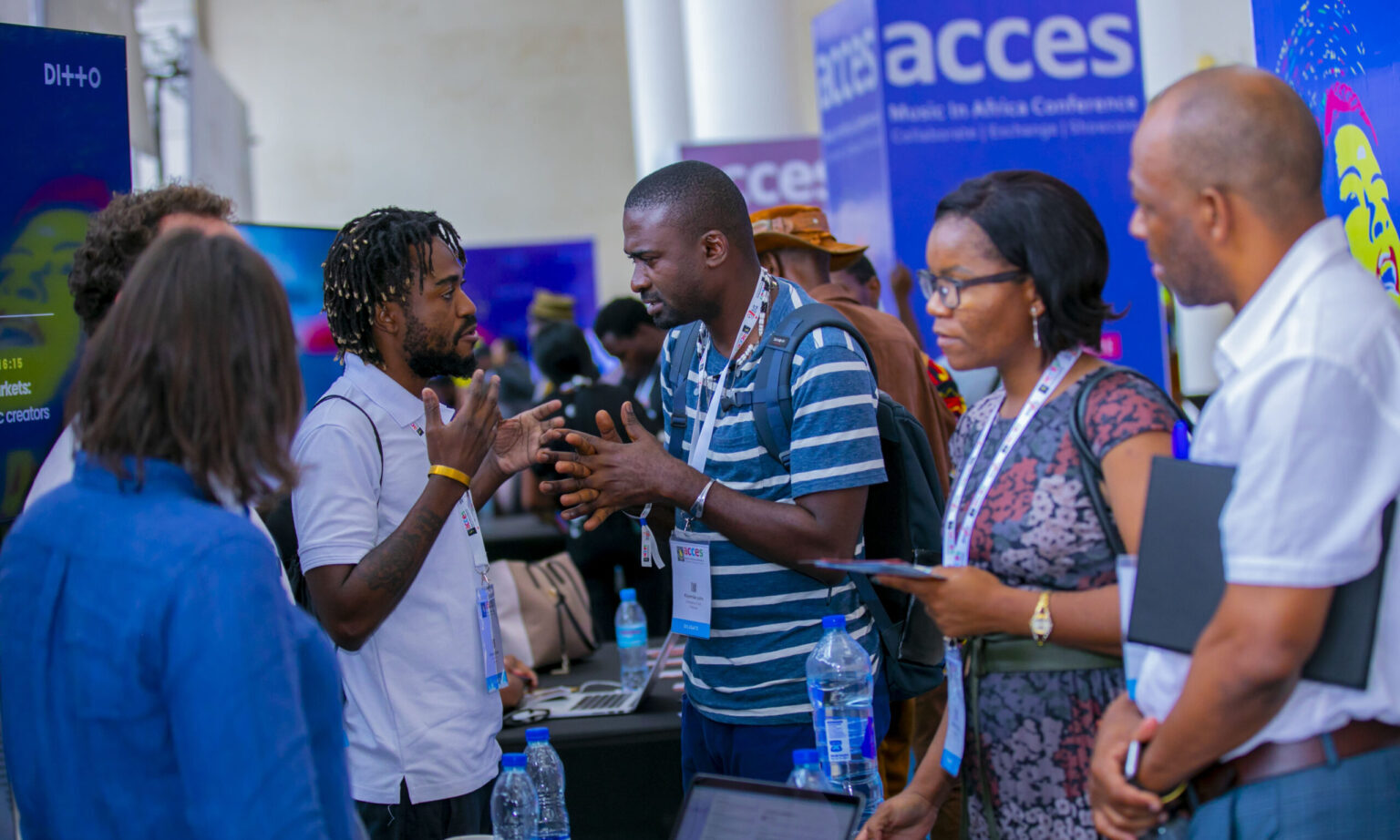
ACCES Conference and Showcase Festival is Africa's leading music industry gathering, bringing together the people shaping the future of the continent's music business. Artists, entrepreneurs, executives, investors, policymakers and cultural leaders from across Africa and around the world come to ACCES to build partnerships, exchange ideas, discover talent and create new business opportunities. Since its launch in 2017, ACCES has become the continent's premier platform for professional exchange and music market development. Combining a high-level conference with a curated showcase festival, networking, exhibitions and industry programmes, ACCES offers a unique space where creativity meets business and where African music connects with the global industry.

Gender@Work
Gender@Work

Music In Africa Gender @ Work is a three-year training programme aimed at upskilling and increasing the participation of female professionals in the African music sector. Launched by the Music In Africa Foundation (MIAF) in April 2019, the programme is connected to the MIAF’s ACCES music conference – a pan-African event held in a different African country every year. This connection enables the programme to reach new participants in a different African country every year. The programme marks the beginning of a more concerted effort by the Foundation to support the participation and inclusion of women in all facets of its programmes and the music sector in Africa as a whole. Over the three years, the programme will aim to address gender imbalances in the sector through training, lobbying, facilitating knowledge exchange and dialogues that foster the interest of women. The broader objectives of the programme are to: Provide industry training for women on critical music industry skills, focusing on: Stage management Electronic music production and recording Music business management Technical knowledge Provide an opportunity for both professional and aspiring women to benefit from the Music In Africa network and its broad range of activities in 2019, 2020 and 2021. Provide a solution-based platform in the form of a round table at ACCES with a view to identify challenges, discuss opportunities and lobby for the interests of female practitioners. Offer participants the opportunity to benefit from programmes offered by MIAF’s partners. Increase access to educational materials. Integrate participants in the broader ACCES programme to maximise experience and exposure to the industry. Record and present training materials on the www.musicinafrica.net, including but not limited to tutorials, templates and other best-practice materials. Communicate women-based themes that support the initiatives and messages of the programme. MAIN TRAINING ACTIVITIES Training in first country (Ghana): In the first year, participants will be trained on all aspects of stage management by a team of experienced stage managers from 10 to 17 November 2019. The programme will offer robust classroom training as well as practical, hands-on training in which participants will also be given the opportunity to manage various aspects of the ACCES performance programme. Training in second country: The second training iteration will take place at ACCES 2020 when the programme will diversify its course to include music production lessons and training on other music business topics. A round-table platform will also be introduced to coincide with the ACCES programme. Training in third country: The third training iteration will take place at ACCES 2021 in a different country, offering an advanced course. HOW DO YOU GET INVOLVED?  As a participant, facilitator or trainer: The programme enrolls up to 12 trainees every year. All opportunities are advertised publicly on this website, and will be added to this page. Please keep checking this page for new calls (below under UPDATES & CURRENT OPPORTUNITIES). As a partner Please contact Claire Metais at [email protected]. APPLY The call for applications for 2020 will be announced soon. The Music In Africa Gender @ Work programme is made possible with the support of the Prince Claus Fund, Siemens Stiftung and Goethe-Institut.

Sound Connects Fund
Sound Connects Fund

For cultural and creative practitioners and organisations operating in southern Africa, access to funding remains a major challenge. The COVID-19 pandemic has also had a massive impact on government policy, spending and the economy in general, and has seen spending on culture being moved further down the list of priorities. Further, the cultural and creative industries repeatedly cite four main areas where investment is needed for growth, which are increased visibility, mobility including access to new markets, finance and support structures.

Instrument Building And Repair Project

Experience the Vibrations African Instruments Exhibition online in 3D

banner image

Sénégal : Le Ministère de la Culture renforce son soutien aux acteurs culturels

Home/Non classé/Sénégal : Le Ministère de la Culture renforce son soutien aux acteurs culturels

Cette annonce, faite à travers une circulaire officielle, marque une volonté affirmée de structurer davantage le secteur culturel et d’en optimiser les ressources budgétaires.

Ce dispositif, qui s’inscrit dans les orientations du Président de la République et du Premier ministre, pourrait jouer un rôle crucial dans le dynamisme du secteur.  « Cet accompagnement est essentiel pour nous permettre de concrétiser des projets d’envergure et de faire rayonner la culture sénégalaise à l’international », souligne Awa Diop, promotrice d’un festival de danse contemporaine à Dakar.

Pour les artistes et organisateurs d’événements, ce soutien institutionnel représente une opportunité précieuse, notamment dans un contexte où le financement de la culture repose encore largement sur des initiatives privées et des partenariats extérieurs.

Les porteurs de projets devront toutefois s’adapter aux délais rigoureux imposés par le ministère :

  • Pour les activités du premier semestre 2025 (jusqu’en juin), les dossiers doivent être déposés avant le 21 février 2025 à 12 heures.
  • Pour les projets du second semestre, les demandes doivent être soumises entre le 1er et le 15 juin 2025 à 12 heures.

Cette exigence soulève des préoccupations parmi les acteurs culturels, notamment ceux issus des régions éloignées de Dakar. « Préparer un dossier complet en si peu de temps, avec un budget détaillé et des justificatifs précis, c’est un vrai défi », confie Mamadou Ba, organisateur d’un festival de musique traditionnelle à Saint-Louis.

Ce programme témoigne d’un effort des pouvoirs publics pour structurer davantage le secteur, en intégrant des critères précis de sélection et en valorisant l’impact économique, social et touristique des projets. Toutefois, certains observateurs estiment que des mécanismes plus inclusifs devraient être mis en place pour garantir un accès équitable aux financements.

«  L’État doit aussi penser à accompagner les jeunes structures qui manquent de moyens pour monter des dossiers solides. Sinon, seules les grandes organisations bénéficieront réellement de ces aides », alerte Ousmane Diallo, consultant en gestion culturelle.

Malgré ces défis, cette initiative marque une avancée dans la reconnaissance du rôle stratégique de la culture dans le développement du Sénégal. Les prochaines semaines permettront d’évaluer son impact réel sur le terrain, en attendant la publication des projets retenus par le ministère.

newsletter banner

Subscribe to our monthly Newsletter

Follow us on social media