

















































By Ibrahima Wane
This text provides an overview of the role of women in Senegalese music.
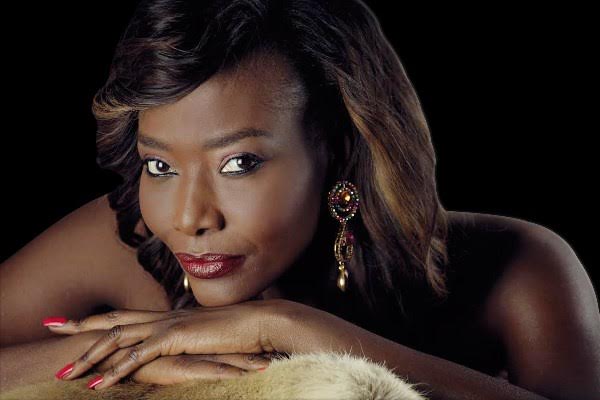
Women’s voices have long been heard in the melodies of folk groups singing at cultural gatherings and festive events in Senegal. Their songs also featured in plays performed during the colonial era. However, female artists only attained professional status at the turn of independence.
One of the legends of this ascent remains Aminata Fall, a native of the city of Saint-Louis, where she made her debut in Star Jazz, one of the most prestigious groups at the time, which represented Senegal at the eighth World Festival of Youth and Students in Helsinki, Finland in 1962. She grabbed the attention of music with a repertoire of famous covers like ‘Great Gettin’ Up in the Morning’ by American gospel singer Mahalia Jackson, as well as original songs in Wolof.
She broadened her audience upon arriving in Dakar and joined the community of the Daniel Sorano National Theatre, whereas a versatile artist she performed for the dramatic troupe and the National Instrumental Ensemble, alongside other iconic Senegalese figures like Fambaye Issa Diop and Khar Mbaye Madiaga. Aminata Fall impressed audiences with her eclectic talent, which saw her perform at jam sessions with jazz, blues and rock stars touring Dakar, such as Sybil Thomas, Clifford Jordan and Roy Haynes.
This period of sparkle also saw the rise of Mada Thiam, a Dakar-based singer. The path of this promising artist, who gained her reputation by performing at folk ceremonies and traditional wrestling sessions, crossed that of Bira Gueye, a saxophonist and songwriter, a former member of the African Lyre and Harlem Jazz groups,who sang at various social gatherings of the urban elite in the 1950s. Out of this duo, called Galeyabé, was born a successful anthem called ‘Festival’,which was used for first World Festival of Black Arts (FESMAN), which took place in Dakar in 1966. In the aftermath of this event, which propelled the group to the front of the stage, the orchestra benefitted from the material support of President Leopold Sedar Senghor, thus encouraging an attempt to ‘Africanize' music.
These pioneers were gradually joined by other female talents. Ouza Diallo set up a quartet of singers and formed the group Ouza and the Ouzettes upon returning from a trip to Abidjan, Ivory Coast. The originality of this approach inspired the production company Disques Griots, giving them the idea of having some young voices sing along with the traditional lyrics of the National Daniel Sorano Theatre Ensemble.The voices of female artists such as Fatou Samb Thiam, Fatou Sakho, Khady Diouf and Fatou Talla Ndiaye were frequently heard alongside the Ensemble. This experience led to an album in 1977 as Ouza et les 4 femmes dans le vent (Ouza and Four Women in the Wind). This re-arrangement of popular Wolof, Mandinka and Serere songs was a pleasant surprise for music lovers. Ouza Diallo later renewed this form of collaboration by working with a new generation of singers at every stage of her career, such as Ouza et les filles branchées (Ouza and the Trendy Girls), Ouza and the Ndiagamares, etc.
At the same time, the female stars were also highlighted by the musicians of Xalam ,which as part of the search for an African music both authentic and open, joined forces with some of their peers,resulting in workshops with Dooley Mboolo (La Force de l’Unité). The vocal section of this ‘big band’ was composed of Fanta Sakho, Aminata Fall and Jacqueline Fortez. For three years they participated in research and experimentation that resulted in several live concerts in Dakar.
The following decade saw the singers take a decisive step by acceding to leading status. Kine Lam was one of the singers who posed an inaugural act in this ‘coming of age’. She left the traditional ensemble to set up the group Kàggu (‘library’ in Wolof) in the late 1980s with the support of seasoned musicians like Cheikh Tidiane Tall (former member of Xalam and Sahel) and Yahya Fall from Number One de Dakar, another flagship orchestra in the 1970s. This initiative began a cycle marked by the continuous arrival of new productions on the market, labelled ‘tradi-modern’ by the local press.
The decade 1990-2000 saw singers like DaroMbaye, Ndèye Mbaye, Madiodo Gningue and Soda Mama Fall, among others, release their own records that combined the two existing modes: the Lyric Traditional Ensemble and orchestras.
The diva Yandé CodouSene, whose songs for nearly a quarter of the century embellished the rallies of President Leopold Sedar Senghor, joined the movement. Her talent was solicited by several figures in the music industry, including Youssou N’Dour, who with her produced Gainde: Voices From the Heart Of Africa, Wasis Diop, who collaborated with her on the album No sant, and Awadi, who gave her a privileged position on Presidents d’Afrique.
The next wave of impression followed different paths. The challenges being encountered by the Ensemble Lyrique Traditionnel was perceptible in these new ways. The company of the Daniel Sorano National Theatre folded, after three decades of independence, an essential platform for visibility and national clout, which also created opportunities to perform abroad.
Guewel Fatou, Fatou Laobe and other new stars of this period chose, after having made their first mark in the folkloric troupes, to integrate orchestras in order to fully engage in professional careers. This period was embodied by divas like Coumba Gawlo, who took her first steps into the protective arms of musical heavyweights like Baaba Maal, Viviane N'Dour, also seasoned by years of singing for the Super Etoile in the shadows of Youssou N'Dour, and Ma Sané, who was introduced and promoted by her elders in the group Wa Flash.
These women, as shown by those profiles above, tend to sing. The pianist Aminata Nar Fall is one exception to this rule. At the end of her studies in architecture and music in France, in the early 1980s she set up the group Xalis (‘money’ in Wolof), which offers a mix of African music, jazz and soul known as ‘world music’. After releasing the album Nao she returned to France.She came to reconnect with the Senegalese public through performances in Dakar in the 1990s and at the St. Louis Jazz Festival in 2001.
The guitar seems favoured by women interested in instruments. Cecile Sow played the guitar for the group ARRA (African Roots Reggae Ambassadors) before devoting herself to journalism. Thioro Sarr played the same role for orchestraJahanor. She released a solo album in 1999 and has since been pursuing her career in France.
The 1990s also saw the emergence of an all-female musical group, the Seck Sisters, consisting of the step-sisters of Coumba Gawlo under the initiative and supervision of their father and lyricist Laye Bamba Seck. The orchestra did not survive, however, due to the emigration of its members. Two members of the Seck Sisters attempted solo careers in Europe, but these were short-lived.
More persistent and fortunate are the singers and guitarists Adiouza, daughter of Ouza Diallo, Shula Ndiaye, leader of Ramatou Band, and Marema, winner of the prestigious RFI Discoveries Award in 2014. These three female stars have grabbed a place in Senegal’scontemporary music scene and enrich it with their unique sensitivity and skill.


Most popular

Top amapiano songs of 2026
16 Feb 2026

Top Afrobeats songs of 2026
19 Mar 2026
Open call: Goethe-Institut grants for Southern African creatives
08 Sep 2026
AFRIMA 2026: All the winners
12 Jan 2026

Top Naija songs of 2026
31 Mar 2026

Sun-El Musician confirmed for ACCES 2026 in Joburg
15 Sep 2026

Call For Applications : ACCES seeks a UK-based performer
10 Sep 2026
Disclaimer: Music In Africa provides a platform for musicians and contributors to embed music and videos solely for promotional purposes. If any track or video embedded on this platform violates any copyrights please inform us immediately and we will take it down. Please read our Terms of Use for more.

Subscribe to our monthly Newsletter
Follow us on social media


Please log in to post a comment.