
































NEFCISA
NEFCISA

The Music In Africa Foundation (MIAF) is proud of its partnership with the Industrial Development Corporation (IDC) as a Strategic Implementing Partner (SIP) for its Social Employment Fund (SEF). Through this collaboration, MIAF is running a national programme that is creating jobs, addressing skills gaps, and strengthening South Africa's creative industries — in line with the SEF's overarching goal to generate work for the common good and build community value through employment, social contribution, and inclusive economic participation. Operating under the banner NEFCISA (National Employment Facility for Creative Industries in South Africa), the initiative is recruiting and training participants, matching them with host organisations, and has already placed 1 500 workers across the country — surpassing its original target of 1 000. NEFCISA is delivered through a network of 20 host organisations spanning five provinces, who are actively hosting participants and contributing to work for the common good across South Africa's creative and cultural industries. Key Objectives: Support employment and entrepreneurship in the creative industries. Offer skills development and training programmes. Foster partnerships between public and private creative sectors. Promote South African creativity at both provincial and national levels Foster community development through social contribution.

ACCES
ACCES

ACCES Conference and Showcase Festival is Africa's leading music industry gathering, bringing together the people shaping the future of the continent's music business. Artists, entrepreneurs, executives, investors, policymakers and cultural leaders from across Africa and around the world come to ACCES to build partnerships, exchange ideas, discover talent and create new business opportunities. Since its launch in 2017, ACCES has become the continent's premier platform for professional exchange and music market development. Combining a high-level conference with a curated showcase festival, networking, exhibitions and industry programmes, ACCES offers a unique space where creativity meets business and where African music connects with the global industry.

Gender@Work
Gender@Work

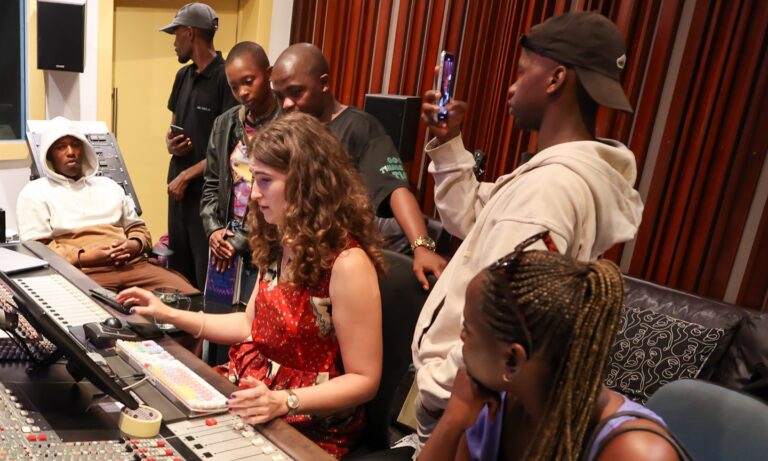
Music In Africa Gender @ Work is a three-year training programme aimed at upskilling and increasing the participation of female professionals in the African music sector. Launched by the Music In Africa Foundation (MIAF) in April 2019, the programme is connected to the MIAF’s ACCES music conference – a pan-African event held in a different African country every year. This connection enables the programme to reach new participants in a different African country every year. The programme marks the beginning of a more concerted effort by the Foundation to support the participation and inclusion of women in all facets of its programmes and the music sector in Africa as a whole. Over the three years, the programme will aim to address gender imbalances in the sector through training, lobbying, facilitating knowledge exchange and dialogues that foster the interest of women. The broader objectives of the programme are to: Provide industry training for women on critical music industry skills, focusing on: Stage management Electronic music production and recording Music business management Technical knowledge Provide an opportunity for both professional and aspiring women to benefit from the Music In Africa network and its broad range of activities in 2019, 2020 and 2021. Provide a solution-based platform in the form of a round table at ACCES with a view to identify challenges, discuss opportunities and lobby for the interests of female practitioners. Offer participants the opportunity to benefit from programmes offered by MIAF’s partners. Increase access to educational materials. Integrate participants in the broader ACCES programme to maximise experience and exposure to the industry. Record and present training materials on the www.musicinafrica.net, including but not limited to tutorials, templates and other best-practice materials. Communicate women-based themes that support the initiatives and messages of the programme. MAIN TRAINING ACTIVITIES Training in first country (Ghana): In the first year, participants will be trained on all aspects of stage management by a team of experienced stage managers from 10 to 17 November 2019. The programme will offer robust classroom training as well as practical, hands-on training in which participants will also be given the opportunity to manage various aspects of the ACCES performance programme. Training in second country: The second training iteration will take place at ACCES 2020 when the programme will diversify its course to include music production lessons and training on other music business topics. A round-table platform will also be introduced to coincide with the ACCES programme. Training in third country: The third training iteration will take place at ACCES 2021 in a different country, offering an advanced course. HOW DO YOU GET INVOLVED?  As a participant, facilitator or trainer: The programme enrolls up to 12 trainees every year. All opportunities are advertised publicly on this website, and will be added to this page. Please keep checking this page for new calls (below under UPDATES & CURRENT OPPORTUNITIES). As a partner Please contact Claire Metais at [email protected]. APPLY The call for applications for 2020 will be announced soon. The Music In Africa Gender @ Work programme is made possible with the support of the Prince Claus Fund, Siemens Stiftung and Goethe-Institut.

Sound Connects Fund
Sound Connects Fund

For cultural and creative practitioners and organisations operating in southern Africa, access to funding remains a major challenge. The COVID-19 pandemic has also had a massive impact on government policy, spending and the economy in general, and has seen spending on culture being moved further down the list of priorities. Further, the cultural and creative industries repeatedly cite four main areas where investment is needed for growth, which are increased visibility, mobility including access to new markets, finance and support structures.

Instrument Building And Repair Project

Experience the Vibrations African Instruments Exhibition online in 3D

Features

Three takeaways from Stevie Wonder’s plan to ditch the US for Ghana
01 Mar 2021 - 18:43

cc-img flag-img

“I wanna see this nation smile again,” Stevie Wonder told Oprah Winfrey calmly and matter-of-factly in a recent interview. “And I want to see it before I move to Ghana because I’m going to do that.”
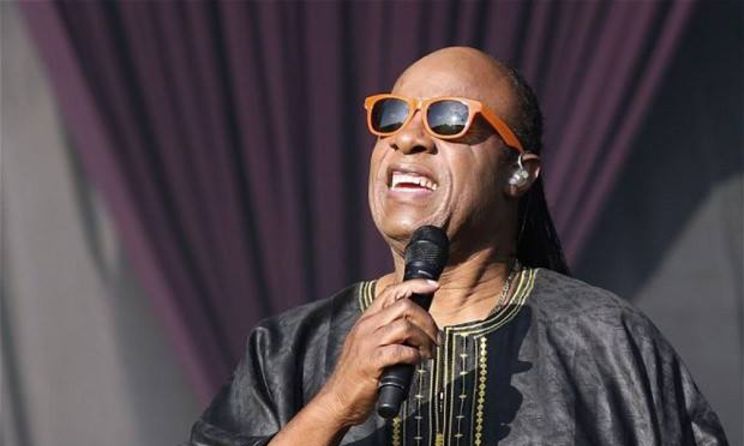
Stevie Wonder.

“You’re going to permanently move to Ghana?” Winfrey asked the famous singer-songwriter and producer, to make doubly sure.

“I am,” Wonder replied with the same conviction. “I don’t want to see my children’s children’s children have to say, ‘Oh please’, like me. ‘Please respect me, please know that I am important, please value me.’ What is that?”

A Michigan native, Wonder learned to play the piano, drums and harmonica by his ninth birthday and signed to Motown Records in 1961. The musician is the recipient of 25 Grammy Awards who’s behind global hits, including ‘I Just Called to Say I Love You’ and ‘You Are the Sunshine of My Life’, among others.

Wonder's announcement of his plan to relocate has been greeted with open arms, at least in Africa. It also reiterates a longstanding desire of Wonder who, as far back as 1994, had ambitions to relocate to West Africa. The yearning was spurred by his perception that Ghana had “more of a sense of community” than the US.

Here are three implications of Wonder’s plans to immigrate:

African solidarity against racial injustice

The premise of Wonder’s decision is distressing. Although the US is branded as the land of the free and the home of the brave, it is constantly criticised for its approach to civil rights and racism, particularly against communities of colour.

To Wonder, the idea of having to see his kids begging for validation as a result of their complexion, in a country that is supposed to be home, is no longer acceptable.

Ghana has positioned itself as a leading African ally constantly showing solidarity with African-Americans who experience racism and other forms of injustice. Following George Floyd’s death in May last year, for instance, a memorial was held in Accra. President Nana Akufo-Addo also condemned Floyd’s killing. “We stand with our kith and kin in America in these difficult and trying times, and we hope that the unfortunate, tragic death of George Floyd will inspire a lasting change in how America confronts head-on the problems of hate and racism,” Akufo-Addo said.

To the African diaspora, such gestures about Ghana, which Wonder has lent his eyes to since 1994, offer a sense of belonging and identity and perhaps holds valuable lessons for racism and the broader conversation on basic civil rights.

More publicity for the Beyond the Return campaign

Wonder’s relocation heeds Ghana’s call to its diaspora to return home, a campaign that started in 2019 under the banner Year of Return, and served as a commemoration for the 400 years since the first enslaved Africans arrived in the US.

Following the Year of Return, the country attracted about 1.5 million tourists and realised a significant boost to its economy. Its tourism ministry has also launched Beyond the Return, a 10-year initiative that will highlight the nation as a global tourism and foreign investment destination.

A key component to the success of both initiatives has been the exodus of global celebrities, notably US rappers T.I and Ludacris, television presenter Steve Harvey and Barbados Prime Minister Mia Mottley.

Since gaining its independence in 1957, Ghana has welcomed African-American such as Martin Luther King Jr, W.E.B Du Bois, Maya Angelou, Muhammad Ali, Malcolm X and Barack Obama, among others, creating the perception that the country is a beacon of emancipation.

Because of his stature, Wonder’s announcement recasts the spotlight on Ghana as the bastion of repatriation among the black race and a giant leap forward in the campaign for Beyond the Return, which has taken a hit due to COVID-19.

Increase value in the creative sector

Apart from publicity, Wonder’s immigration plans have implications for the country’s thriving creative sector, which the country enjoys and Wonder can attest to, having worked with Ghanaian multi-instrumentalist, record producer and bandleader Kwame Yeboah.

From highlife through to Afrobeats and contemporary sounds, Ghana has served as an important point of pilgrimage for musicians across the globe. Wonder’s arrival will spark Ghana’s latest creative renaissance, from his expected musical collaborations with local artists, media and speaking engagements, among others.

A powerful brand like Wonder will bring massive gains to the country's economy, as Fela and Drake have done for their native countries of Nigeria and Canada.

Please log in to post a comment.

Most popular

Disclaimer: Music In Africa provides a platform for musicians and contributors to embed music and videos solely for promotional purposes. If any track or video embedded on this platform violates any copyrights please inform us immediately and we will take it down. Please read our Terms of Use for more.

newsletter banner

Subscribe to our monthly Newsletter

Follow us on social media