
















































SA’s hidden jazz history is being restored album by album
30 Apr 2023 - 08:02


By Gwen Ansell
It’s fitting that Johannesburg is among 12 cities featured in the 2023 UNESCO International Jazz Day, themed “jazz journey around the world”. The day, established in 2011 to celebrate the role of jazz in “uniting peoples across the globe”, is now marked annually on 30 April in close to 200 nations. It would have been hosted by Cape Town in 2020 had COVID-19 not intervened.
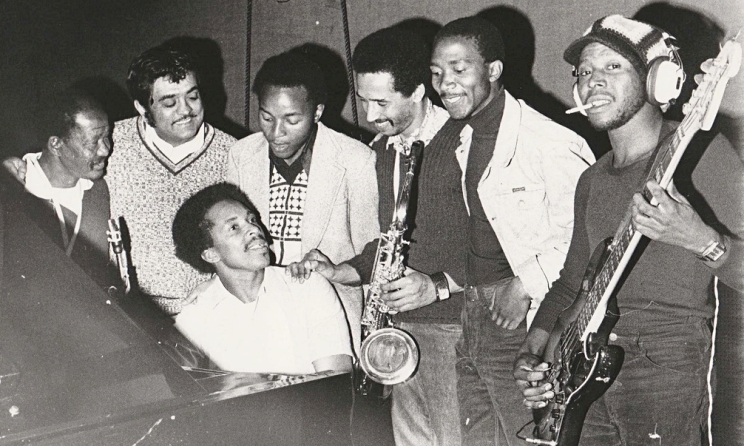
Even so, many jazz lovers elsewhere may be aware of the long history and uniqueness of South Africa’s jazz legacy through only a few names – Miriam Makeba, Abdullah Ibrahim, Hugh Masekela – who were driven out by apartheid to find world stages. Uncovering, documenting and showcasing more of the creativity that fought to flower inside the country remains a work in progress.
For writer and filmmaker Calum MacNaughton of Cape Town-based Sharp-Flat Music, it’s vital work. He’s the archivist and curator of the historic As-Shams record label archive. MacNaughton told me, in an interview as part of my ongoing research into South African jazz histories, that he wants access to the archive not only for musicology researchers but “enthusiasts and budding musicians in frivolous conversation late into the night”.
As-Shams has a 60-year history as South Africa’s first black-owned record label, founded by music producer Rashid Vally out of a corner of his father’s Koh-i-Noor general store in central Johannesburg. As-Shams was responsible for an eclectic array of releases from the teenage township pop of The Beaters (who became Harari) to the iconic, implicitly subversive Mannenberg (Is Where its Happening) of Abdullah Ibrahim (then Dollar Brand).
As part of opening access, As-Shams recently released the first volume of a planned series of archival compilations covering the label’s history. As-Shams Archive Vol. 1: South African Jazz, Funk & Soul 1975-1982 contains 10 tracks, 10 original compositions and 10 ensembles. More than 90 minutes of music spans eight deeply repressive apartheid years. Yet, in those years artists of the calibre of pianists Lionel Pillay, Tete Mbambisa and Pat Matshikiza, saxophonists Kippie Moeketsi, Basil ‘Manenberg’ Coetzee and Mike Makhalemele, and vocalist Sathima Bea Benjamin were making original, innovative music.
The album
The compilation unites tracks from various albums As-Shams has already remastered and reissued, predominantly since 2020. But curating its contents, says MacNaughton, provided the opportunity for a fresh approach, to shape new sequences reflecting professional networks and shared thematic concerns.
For example: “On the vinyl edition Side A is dedicated to the remarkable connection between Moeketsi and Matshikiza. Dick Khoza [, as leader, is heard] on the heels of his performance with Mbambisa’s big band Black Disco’s Night Express and Pillay’s Deeper In Black are thematically linked. And the compilation closes with Benjamin’s music, which ties everything together with a spiritual thread.”
There’s also what he calls an “11th hidden track”: artwork on the vinyl from South African painter and graphic artist Hargreaves Ntukwana, often the label’s cover artist of choice.
This restructuring works: tracks have a wholly new impact when heard in fresh company, rather than embedded in their original albums. By avoiding the “obvious” choices – often the title tracks – the collection conveys the collective music making of a community and an era, rather than fondly remembered jazz hits.
Restoring the archive
Yet the process of recovering what MacNaughton counts as “some of South Africa’s most important cultural artefacts of the 20th Century”, wasn’t without problems. Despite fears about degradation, the tapes had not been damaged by constant moving.
Rather, the problem was getting the history right, revealing the meticulous detective work that restoring South Africa’s hidden musical history demands. Though most tapes had been carefully annotated, recording engineers sometimes did not name all players, and occasionally the paper record of names was absent. Just one example from the compilation was McNaughton being “presented the challenge of identifying which of the three bassists and two drummers who share the album credit appear on the specific track. I reached out to bassist Lionel Beukes, who spent a weekend listening to the track only to conclude that he couldn’t say for certain.
In other cases, artists remained unidentified because of contractual commitments to other labels, or the imprint faced restrictions because of conflicting licensing and distribution deals.
Perhaps the most complex detection trail surrounded another As-Shams re-release: Pillay’s Shrimp Boats. That first appeared in 1987 when As-Shams resurrected its Mandla imprint to issue out-of-print titles. Multiple tracks were brought together to round out the length of an album, not all the performer credits travelled with them and the cover artwork omitted Pillay in favour of Coetzee.
By pure happenstance, this writer played the resulting album to the late Robbie Jansen in Botswana in the late 1980s. “Hey,” the saxophonist said, “that’s me playing saxophone on ‘Birdland’! I always wondered what happened to that session …” Yet Jansen was not named on the sleeve. When I communicated this to MacNaughton after the 2022 rerelease, he contacted everybody still living he could find who might have memories to confirm the attribution. Having confirmed it, the label put new information online.
MacNaughton is extremely sensitive about the responsibilities of any reissue – not only to artists, but also to music historians and the truth.
Why this matters
MacNaughton is still digging through the archives. A second compilation in preparation features, among others, guitarist Themba Mokoena, ’70s fusion group Spirits Rejoice and saxophonist Winston ‘Mankunku’ Ngozi. Full releases are planned for forgotten sessions by Mbambisa and Moeketsi.
Restoring these masterworks to the public domain can change our conversations about South African jazz. Instead of isolated stars, we hear a community at work: the rich musical conversations disrupting what has sometimes been characterised as a silent cultural period under apartheid. Conversing with each other, with overseas jazz and with tradition, those players made the music what it is today.
Gwen Ansell is an associate of the Gordon Institute for Business Science at the University of Pretoria. This article first appeared on The Conversation.


Most popular
Call For Applications : ACCES seeks a UK-based performer
10 Sep 2026

Top amapiano songs of 2026
16 Feb 2026

Top Afrobeats songs of 2026
19 Mar 2026
AFRIMA 2026: All the winners
12 Jan 2026

Open call: Goethe-Institut grants for Southern African creatives
08 Sep 2026
Open call: Ernst von Siemens Music Foundation 2026 funding programmes
04 Sep 2026
Open call: FAME Week Africa, Pressure Cooker Studios songwriting camp
09 Sep 2026
Disclaimer: Music In Africa provides a platform for musicians and contributors to embed music and videos solely for promotional purposes. If any track or video embedded on this platform violates any copyrights please inform us immediately and we will take it down. Please read our Terms of Use for more.

Subscribe to our monthly Newsletter
Follow us on social media


Please log in to post a comment.