


































NEFCISA
NEFCISA

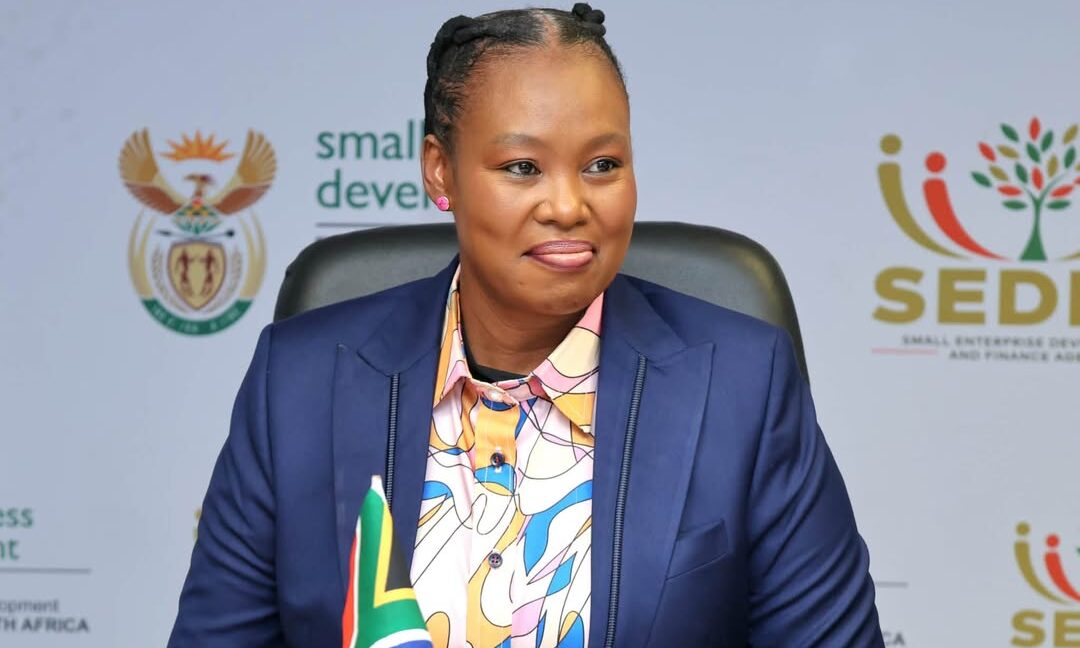
The Music In Africa Foundation (MIAF) is proud to announce its partnership with the Industrial Development Corporation (IDC) as a Strategic Implementing Partner (SIP) for its Social Employment Fund (SEF). Through this collaboration, MIAF is launching a new national programme designed to create jobs, address skills gaps, and strengthen South Africa’s creative industries — in line with the SEF’s overarching goal to generate work for the common good and build community value through employment, social contribution, and inclusive economic participation. Operating under the banner NEFCISA (National Employment Facility for Creative Industries in South Africa), the initiative will recruit and train participants, match them with host organisations, and place a minimum of 1 000 workers across the country. Key Objectives: Support employment and entrepreneurship in the creative industries. Offer skills development and training programmes. Foster partnerships between public and private creative sectors. Promote South African creativity at both provincial and national levels Foster community development through social contribution.

ACCES
ACCES

ACCES has stamped its authority as Africa’s leading music trade event. At the 2019 edition in Accra, the conference brought together more than 1 200 delegates from about 50 countries on the continent and beyond. The conference also hosted 76 showcasing artists from Africa and the diaspora, who got to perform for an influential audience at two top live venues in the Ghanaian capital. Apart from live showcases, the event features panel discussions, presentations, exhibitions, pitch sessions, Q&A sessions with prominent musicians and visits to key music industry hubs in the host city. Many of these activities will be planned for ACCES 2021, with the ACCES team already exploring a tailor-made programme that will cater for the specific needs of the local music industry amid the pandemic. ACCES is organised by the Music In Africa Foundation, a non-profit and pan-African organisation, in partnership with Siemens Stiftung and Goethe-Institut.

Gender@Work
Gender@Work

Music In Africa Gender @ Work is a three-year training programme aimed at upskilling and increasing the participation of female professionals in the African music sector. Launched by the Music In Africa Foundation (MIAF) in April 2019, the programme is connected to the MIAF’s ACCES music conference – a pan-African event held in a different African country every year. This connection enables the programme to reach new participants in a different African country every year. The programme marks the beginning of a more concerted effort by the Foundation to support the participation and inclusion of women in all facets of its programmes and the music sector in Africa as a whole. Over the three years, the programme will aim to address gender imbalances in the sector through training, lobbying, facilitating knowledge exchange and dialogues that foster the interest of women. The broader objectives of the programme are to: Provide industry training for women on critical music industry skills, focusing on: Stage management Electronic music production and recording Music business management Technical knowledge Provide an opportunity for both professional and aspiring women to benefit from the Music In Africa network and its broad range of activities in 2019, 2020 and 2021. Provide a solution-based platform in the form of a round table at ACCES with a view to identify challenges, discuss opportunities and lobby for the interests of female practitioners. Offer participants the opportunity to benefit from programmes offered by MIAF’s partners. Increase access to educational materials. Integrate participants in the broader ACCES programme to maximise experience and exposure to the industry. Record and present training materials on the www.musicinafrica.net, including but not limited to tutorials, templates and other best-practice materials. Communicate women-based themes that support the initiatives and messages of the programme. MAIN TRAINING ACTIVITIES Training in first country (Ghana): In the first year, participants will be trained on all aspects of stage management by a team of experienced stage managers from 10 to 17 November 2019. The programme will offer robust classroom training as well as practical, hands-on training in which participants will also be given the opportunity to manage various aspects of the ACCES performance programme. Training in second country: The second training iteration will take place at ACCES 2020 when the programme will diversify its course to include music production lessons and training on other music business topics. A round-table platform will also be introduced to coincide with the ACCES programme. Training in third country: The third training iteration will take place at ACCES 2021 in a different country, offering an advanced course. HOW DO YOU GET INVOLVED?  As a participant, facilitator or trainer: The programme enrolls up to 12 trainees every year. All opportunities are advertised publicly on this website, and will be added to this page. Please keep checking this page for new calls (below under UPDATES & CURRENT OPPORTUNITIES). As a partner Please contact Claire Metais at claire@musicinafrica.net. APPLY The call for applications for 2020 will be announced soon. The Music In Africa Gender @ Work programme is made possible with the support of the Prince Claus Fund, Siemens Stiftung and Goethe-Institut.

Sound Connects Fund
Sound Connects Fund

For cultural and creative practitioners and organisations operating in southern Africa, access to funding remains a major challenge. The COVID-19 pandemic has also had a massive impact on government policy, spending and the economy in general, and has seen spending on culture being moved further down the list of priorities. Further, the cultural and creative industries repeatedly cite four main areas where investment is needed for growth, which are increased visibility, mobility including access to new markets, finance and support structures.

Instrument Building And Repair Project

Experience the Vibrations African Instruments Exhibition online in 3D

News

SA music bodies, artists march against Copyright Amendment Bill in Joburg

29 Aug 2019 - 16:38

cc-img flag-img

The Trade Union for Musicians of South Africa (TUMSA) and the Music Publishers Association of South Africa (MASA) led a peaceful demonstration in Johannesburg yesterday, which was intended to implore President Cyril Ramaphosa not to sign the contentious Copyright Amendment Bill into law.

Protesters, led by Gabi Le Roux and David Alexander, marching against the Copyright Amendment Bill in Johannesburg, South Africa, on 28 August. Photos: Music In Africa

The two bodies marched with a low turnout of protesters from Mary Fitzgerald Square in Newtown to the Gauteng sport, arts, culture and recreation MEC's offices in the CBD where they handed a memorandum that will be submitted to Ramaphosa.

The Copyright Amendment Bill has been on Ramaphosa's desk for more than a year and critics say signing it into law will tip the scales for creators of musical works, among others, while giving users, including big multinational streaming companies, free content.

MASA’s Marc Rantseli called on Wednesday's protestors to sign the memorandum, which was handed over to sport, arts, culture and recreation head of department Monica Newton, who assured the marchers that the document would make its way to the presidency.

“We will expedite its process as soon as we can. Obviously there are protocols to be followed but we will certainly make sure that we submit it as soon as possible,” she told Music In Africa.

Part of the memorandum reads: “The creative sector supports the positive intentions of the bill as detailed in the preamble. It is our wish that the president grants the creative sector a much-needed voice in the process in order to ensure that unintended consequences are mitigated.”

The demonstration also comprised members and staff of the Southern African Music Rights Organisation (SAMRO), the Composers, Authors and Publishers Association (CAPASSO), Sheer Publishing, the Coalition for Effective Copyright, South African Creative Practitioners in Unity as well as a number of artists.

MASA vice-president Marc Ranseli said the bill had the potential to further hurt the precarious creative sector.

“In the late 1980s, the music industry was generating a tune of R3bn [$200m] and it went down to about R600m in 2006,” he said. “Those are big numbers and our problem is that as the industry is plummeting. Don't let the Copyright Amendment Bill make it worse by allowing corporates to do what they want with our works. We will carry on with the protests even if the bill is signed into law.”

Ranseli also blamed South Africa's political class for turning a blind eye on the arts industry. “It actually shows that the support that we need from people in power is not enough and it’s unfortunate that the industry, especially music, did a lot of work for them to be in power.”

TUMSA’s Gabi Le Roux said the bill was flawed in its fundamental understanding of copyright. “It’s important that I point out the biggest flaw of the bill, which introduced the notion of fair use. This clearly favours the users at the cost of the creators. In the old way of proving exceptions to certain copyright usages, they were clearly defined and listed. Instead of making the list longer, they've made things vaguer and reliant on case law, which we don’t really have in South Africa as opposed to the US where they have extensive case law that one can refer to in specific cases where copyright is infringed."

Commenting on the march's low turnout of about 50 people, Le Roux said: "People become apathetic if you say the same thing to them for a year – particularly musicians who have been deprived for so long.”

MASA general secretary Mbongeni Ndlovu said the bill abandoned every good intention for the creative industry. He said MASA's biggest concern was Section 12 of the bill, "which talks about the general exceptional cases of copyright such as the right to use the work without having the obligation to pay and without asking for permission. So those exceptional cases are for educational purposes, news reporting, personal use or private or for non-commercial use.”

Sheer Publishing founder and managing director David Alexander agreed with Ndlovu, saying the bill was not fit for purpose. “We believe that as publishers, writers, artists and record labels, our livelihood will be negatively affected if this bill is signed into law. We understand that the government’s intention is to provide for a legislative environment that is strong to protect local creators, but this is not that," Alexander said.

Also in attendance was renowned South African writer and theatre producer Mbongeni Ngema, who said the bill's consultative process was found wanting.

“I come from KwaZulu-Natal [KZN], even though I live in Johannesburg. We all know that the drivers of the music industry in this country are from KZN, but people in that province were never consulted about the Copyright Amendment Bill and this will affect their lives. I am personally not worried about how this bill will impact me but I am worried about the coming generations after I am gone. How will they view me?”

Please log in to post a comment.

Most popular

Disclaimer: Music In Africa provides a platform for musicians and contributors to embed music and videos solely for promotional purposes. If any track or video embedded on this platform violates any copyrights please inform us immediately and we will take it down. Please read our Terms of Use for more.

newsletter banner

Subscribe to our monthly Newsletter

Follow us on social media