







































NEFCISA
NEFCISA

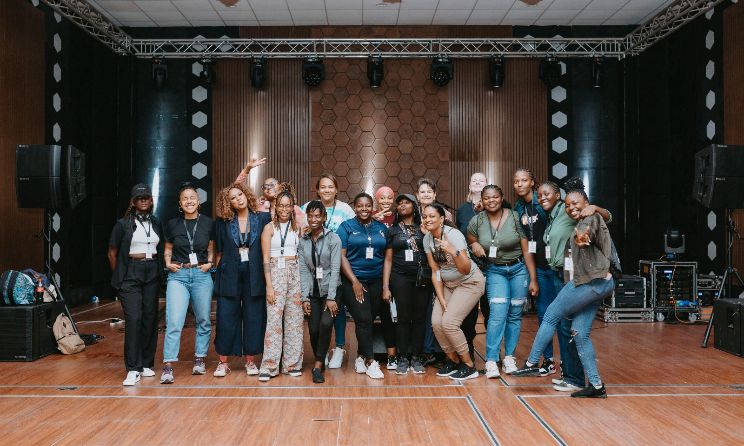
The Music In Africa Foundation (MIAF) is proud of its partnership with the Industrial Development Corporation (IDC) as a Strategic Implementing Partner (SIP) for its Social Employment Fund (SEF). Through this collaboration, MIAF is running a national programme that is creating jobs, addressing skills gaps, and strengthening South Africa's creative industries — in line with the SEF's overarching goal to generate work for the common good and build community value through employment, social contribution, and inclusive economic participation. Operating under the banner NEFCISA (National Employment Facility for Creative Industries in South Africa), the initiative is recruiting and training participants, matching them with host organisations, and has already placed 1 500 workers across the country — surpassing its original target of 1 000. NEFCISA is delivered through a network of 20 host organisations spanning five provinces, who are actively hosting participants and contributing to work for the common good across South Africa's creative and cultural industries. Key Objectives: Support employment and entrepreneurship in the creative industries. Offer skills development and training programmes. Foster partnerships between public and private creative sectors. Promote South African creativity at both provincial and national levels Foster community development through social contribution.

ACCES
ACCES

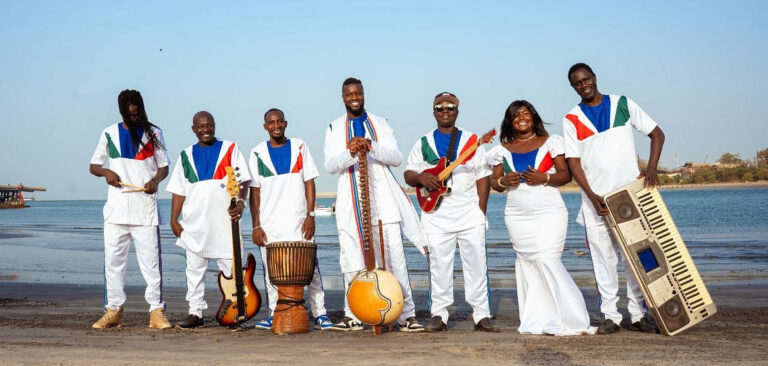
ACCES Conference and Showcase Festival is Africa's leading music industry gathering, bringing together the people shaping the future of the continent's music business. Artists, entrepreneurs, executives, investors, policymakers and cultural leaders from across Africa and around the world come to ACCES to build partnerships, exchange ideas, discover talent and create new business opportunities. Since its launch in 2017, ACCES has become the continent's premier platform for professional exchange and music market development. Combining a high-level conference with a curated showcase festival, networking, exhibitions and industry programmes, ACCES offers a unique space where creativity meets business and where African music connects with the global industry.

Gender@Work
Gender@Work

Music In Africa Gender @ Work is a three-year training programme aimed at upskilling and increasing the participation of female professionals in the African music sector. Launched by the Music In Africa Foundation (MIAF) in April 2019, the programme is connected to the MIAF’s ACCES music conference – a pan-African event held in a different African country every year. This connection enables the programme to reach new participants in a different African country every year. The programme marks the beginning of a more concerted effort by the Foundation to support the participation and inclusion of women in all facets of its programmes and the music sector in Africa as a whole. Over the three years, the programme will aim to address gender imbalances in the sector through training, lobbying, facilitating knowledge exchange and dialogues that foster the interest of women. The broader objectives of the programme are to: Provide industry training for women on critical music industry skills, focusing on: Stage management Electronic music production and recording Music business management Technical knowledge Provide an opportunity for both professional and aspiring women to benefit from the Music In Africa network and its broad range of activities in 2019, 2020 and 2021. Provide a solution-based platform in the form of a round table at ACCES with a view to identify challenges, discuss opportunities and lobby for the interests of female practitioners. Offer participants the opportunity to benefit from programmes offered by MIAF’s partners. Increase access to educational materials. Integrate participants in the broader ACCES programme to maximise experience and exposure to the industry. Record and present training materials on the www.musicinafrica.net, including but not limited to tutorials, templates and other best-practice materials. Communicate women-based themes that support the initiatives and messages of the programme. MAIN TRAINING ACTIVITIES Training in first country (Ghana): In the first year, participants will be trained on all aspects of stage management by a team of experienced stage managers from 10 to 17 November 2019. The programme will offer robust classroom training as well as practical, hands-on training in which participants will also be given the opportunity to manage various aspects of the ACCES performance programme. Training in second country: The second training iteration will take place at ACCES 2020 when the programme will diversify its course to include music production lessons and training on other music business topics. A round-table platform will also be introduced to coincide with the ACCES programme. Training in third country: The third training iteration will take place at ACCES 2021 in a different country, offering an advanced course. HOW DO YOU GET INVOLVED?  As a participant, facilitator or trainer: The programme enrolls up to 12 trainees every year. All opportunities are advertised publicly on this website, and will be added to this page. Please keep checking this page for new calls (below under UPDATES & CURRENT OPPORTUNITIES). As a partner Please contact Claire Metais at [email protected]. APPLY The call for applications for 2020 will be announced soon. The Music In Africa Gender @ Work programme is made possible with the support of the Prince Claus Fund, Siemens Stiftung and Goethe-Institut.

Sound Connects Fund
Sound Connects Fund

For cultural and creative practitioners and organisations operating in southern Africa, access to funding remains a major challenge. The COVID-19 pandemic has also had a massive impact on government policy, spending and the economy in general, and has seen spending on culture being moved further down the list of priorities. Further, the cultural and creative industries repeatedly cite four main areas where investment is needed for growth, which are increased visibility, mobility including access to new markets, finance and support structures.

Instrument Building And Repair Project

Experience the Vibrations African Instruments Exhibition online in 3D

Features

Nnamani Music Group is recruiting the architects of Africa’s next wave
17 Oct 2025 - 08:16

cc-img flag-img

A new generation of African music entrepreneurs is building the foundations of a sustainable creative economy beyond the limelight.

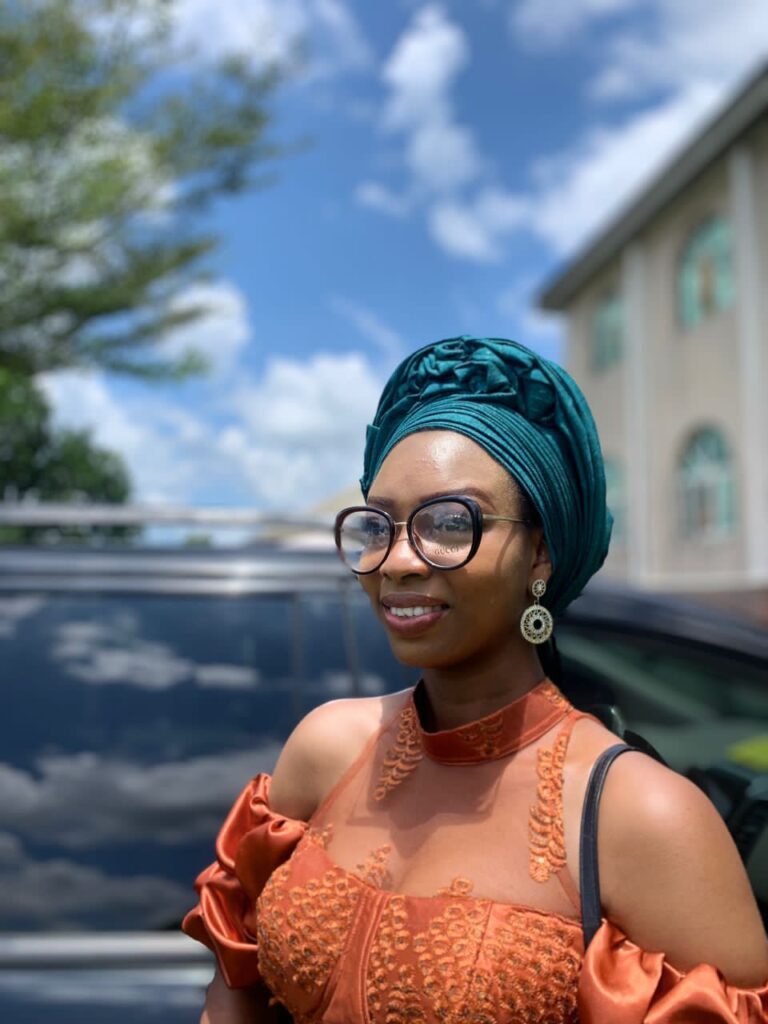
Nnamani Music Group co-founder Johnel Nnamani.

In Africa, a new generation of music entrepreneurs is tackling one of the industry’s most urgent problems: building a sustainable middle class for artists beyond the headline acts. Their work is less glamorous than a sold-out arena show but far more critical for the future.

In the global music business, Africa is no longer an emerging market; it is a power centre. The ascent of Afrobeats and amapiano has been meteoric, a cultural and commercial phenomenon that has reshaped festival line-ups and global pop charts. Yet beneath the success stories of superstars like Tyla, Burna Boy and Tems lies a more complex reality. For thousands of independent artists in Africa and beyond, the gold rush has created a formidable gap between creative output and financial viability.

This is the infrastructure deficit: a space where global streaming platforms are ubiquitous, but the foundational mechanics of the music business remain opaque and inaccessible.

It is in this gap that a new class of industry architects is quietly at work. Among them is Nnamani Music Group (NMG), a Lagos-based company whose model is a direct response to this systemic flaw. The company’s inception stemmed from its founders – siblings Johnel and Nnamani Grace Odi – observing a recurring scenario: immensely talented artists uploading music directly online, their work effectively unmonetised due to unregistered copyrights, missing metadata and a fundamental lack of business structure.

What began as an informal effort to assist peers has since formalised into a multi-faceted music company offering publishing administration, licensing, distribution and artist management. NMG’s model is emblematic of a wider, necessary shift in the African music ecosystem. It eschews the rigid, long-term “360 deals” historically favoured by major labels in favour of flexible, service-based partnerships. This allows creators to engage the company for specific needs – be it global publishing registration or digital distribution – granting them a degree of autonomy rarely seen in a market where leverage has traditionally been scarce.

This work is unfolding against a backdrop of explosive yet precarious growth. In 2024, Nigerian artists collectively earned an estimated ₦58 billion (approximately $37 million) from Spotify alone – a figure that more than doubled from the previous year. Crucially, industry analysts note that independent artists accounted for well over half of that revenue. The paradox, however, lies in the unforgiving economics of streaming. With per-stream payouts often hovering at fractions of a cent, raw volume is not enough to sustain a career.

This reality informs NMG’s strategic focus on publishing and synchronisation – the placement of music in film, television and advertising. These revenue streams are where meaningful income is often generated, transforming a song from a simple digital file into a working intellectual property asset. Its catalogue, which includes collaborations with international acts such as Daine Steele and Jessie Hillel, is being built with this global licensing potential in mind.

This foundational approach has begun to draw external validation. In early 2025, co-founder Nnamani Grace Odi was featured by the Recording Academy as one of the key “Women Shaping African Music”. Such recognition is a nod less to commercial hits and more to the crucial, behind-the-scenes work of industry building. It underscores the company’s core philosophy: that the region’s artists do not require saving by foreign entities but rather need access to robust, transparent and locally owned infrastructure to achieve self-sufficiency.

Of course, the challenges are immense. Operating independently involves navigating inconsistent legal frameworks and intense competition for visibility in a saturated digital market. Yet NMG’s deliberate focus on what can be termed “the unglamorous essentials” – accurate royalty accounting, clear contracts and equitable splits – has earned it a reputation for stability in a notoriously volatile business.

As the global spotlight on Afrobeats intensifies, the narrative is shifting. The story is no longer just about the artists who break through, but about the ecosystem being constructed to support the ones who will come next. Companies like Nnamani Music Group represent the second, more critical phase of this musical revolution: the transition from a scene into a self-sustaining industry.

The future of African music is being secured not just on festival stages, but in offices where metadata is meticulously entered and publishing rights are diligently protected. It is the slow, essential work of ensuring the boom does not lead to a bust.

Esther Oluoma is an experienced writer from Nigeria. The views expressed in this article are hers and do not necessarily reflect the views of the publication.

Editing by Ano Shumba.

Please log in to post a comment.

Most popular

Disclaimer: Music In Africa provides a platform for musicians and contributors to embed music and videos solely for promotional purposes. If any track or video embedded on this platform violates any copyrights please inform us immediately and we will take it down. Please read our Terms of Use for more.

newsletter banner

Subscribe to our monthly Newsletter

Follow us on social media