



























































Navigating copyright and generative AI in the Kenyan music industry: opportunities, challenges and legal pathways
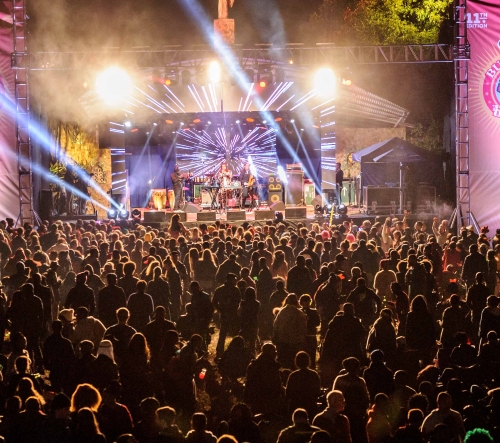
14 May 2025 - 08:47


By Daniel Mwathe and Ariana Issaias, Partners, Sahara Ali and Wilson Waithaka, Associates, Bowmans Kenya
Nowhere is the intersection of artificial intelligence and intellectual property more vibrant and urgent than in Kenya’s music industry. As generative AI technologies reshape how music is composed, produce, and consumed, critical questions arise around the ownership and protection of such creations under Kenyan copyright law.
Kenya’s music industry: evolution and legal framework
Kenya’s music industry has evolved significantly since the first recording studio was established in Nairobi in the 1930s. This led to the emergence of popular genres such as benga and later genge and gengetone, reflecting a fusion of traditional and modern musical influences.
According to the Kenya Anti-Counterfeit Authority, the music industry contributes 5.3% to the country’s GDP and supports over 250,000 jobs. It comprises a vibrant ecosystem of creators (singers, songwriters, composers and producers), rights holders (record labels, music publishers and independent artists), collective management organisations (like MCSK, PAVRISK and KAMP), digital platforms (e.g., Mdundo, Boomplay, Spotify, etc.), promoters, marketers and regulatory agencies, such as the Kenya Copyright Board (KECOBO).
The legal foundation is based on Kenya’s Copyright Act (Cap 130), 2001, which was enacted following Kenya’s ratification of the Berne Convention. The Copyright Act provides for the protection of various works, including musical compositions, sound recordings, and audiovisual works, and grants exclusive rights to reproduction, adaptation, distribution, and communication of such works to the public.
Technological advancements and opportunities presented by generative AI
Kenya's music industry has been fuelled by cultural innovation, technological growth and shifting socio-economic dynamics. Advances like the internet, mobile connectivity and digital platforms have democratised music production and distribution.
Recently, generative AI tools have emerged, allowing users to create beats, lyrics and full songs with little musical background. By using machine learning models trained on existing music datasets, these technologies lower barriers for emerging artists, enabling cost-effective, high-quality music production, genre-blending and rapid content creation, thus fostering new levels of creative expression and competitiveness.
The AI/KE Report 2024, produced by Creative Garage in collaboration with the Mozilla Foundation, highlights the transformative opportunities AI presents for Kenya’s creative sector. This report revealed that most Kenyan creatives are familiar with AI, with a huge percentage of the respondents using a total of 55 AI tools, with the most cited across the survey being ChatGPT, Google Gemini, Canva, Google Translate and Midjourney, which are writing, translation, image generation and presentation tools and chatbots.
These generative AI tools enable artists, especially those with limited resources, to efficiently produce, master and distribute music. They bridge the skills gap and promote inclusivity by empowering youth, women and marginalised creatives and supporting real-time composition, genre experimentation and cross-border collaboration. These innovations are expanding artistic boundaries, encouraging cultural exchange and unlocking new monetisation opportunities through digital licensing and global music platforms, positioning Kenya’s music industry for greater resilience and global competitiveness.
Challenges and risks: copyright implications of generative AI
Despite its potential, generative AI is like a double-edged sword, posing various threats to the creative industry, including copyright risks. The essence of protecting intellectual property rights, such as copyright, is to enable rights holders to exploit the economic benefits of their works, which in turn contributes to the growth of the economy at large. However, generative AI has raised the following key concerns:
Authorship and ownership: Under Kenyan law, copyright may only vest in human authors who arrange for the creation of a work. Therefore, AI-generated works are only protectable if there is identifiable human authorship.
Infringement in training data (Input phase): Many generative AI models, such as Suno, Boomy, and Aiva among others, which allow users to generate beats, lyrics and even entire songs with little to no musical background, are trained on large datasets of copyrighted music often without the authorisation from the relevant rights holders, which raises concerns of reproduction and derivative infringement under the Copyright Act.
Output mimicry and voice cloning (Output phase): AI-generated music may imitate existing works or replicate an artist’s voice, potentially violating both copyright and privacy rights.
Liability: Developers and platforms deploying AI tools may be held liable for distributing infringing material. The Kenyan Copyright Act provides limited clarity on the attribution and responsibility for infringement as it does not contemplate infringement by AI tools.
Fair dealing ambiguities: Fair dealing provisions in Kenya’s Copyright Act are not clearly suited for commercial AI training contexts, leaving uncertainty around legitimate uses of copyrighted data.
Global precedents and local implications
The 2024 lawsuits filed by Universal Music Group, Sony Music Entertainment and Warner Music Group against AI music platforms Suno and Udio underscore growing global tension around the unauthorised use of copyrighted recordings in AI training.
In the UK, there has been a public backlash against weak copyright protections for musicians using AI-generated tools, leading to calls for stricter IP regulation. Recently, more than 1 000 musicians in the UK released a silent album in protest of the UK government's planned changes to copyright law, which they argue would make it easier for AI companies to train models using copyrighted work without a licence.
Lastly, the Guangzhou Internet Court in China issued the first ruling involving copyright infringement and generative AI in which it found that output produced by the generative AI tool infringed the copyright for Japanese superhero Ultraman and found the AI provider liable for the infringing output.
Kenya can learn from these developments as it navigates its digital transformation. The country’s 2025–2030 National AI Strategy rightly emphasises ethical AI deployment, transparency and inclusive innovation to aid in the development of Kenya’s creative industry, which is one of the key sectors prioritised by the strategy. However, there is an urgent need to align IP frameworks with AI governance principles.
Policy recommendations for Kenya
To future-proof Kenya’s copyright regime and support the growth of its music industry, we recommend the following crucial steps to ensure Kenya’s creative sector remains competitive:
- Amend the Copyright Act to introduce explicit provisions addressing AI-generated works, including human authorship requirements, ownership and originality standards, which have been determined by courts in the US and the UK;
- Establish AI-creativity guidelines through KECOBO that distinguish between AI-assisted and AI-generated works;
- Strengthen infringement provisions to address unauthorised use of copyrighted works in AI training datasets, informed by global litigation trends. Despite the introduction of the Draft Copyright and Related Rights Bill, 2025, aimed at repealing and re-enacting the Copyright Act, it does not contemplate infringement by, or legal liability arising from, the use of copyright-protected works to train generative AI tools, as well as infringing output generated by these AI tools. This leaves a critical gap in protecting rights holders and addressing emerging risks in the digital creative economy;
- Develop a licensing framework for AI training to ensure rights holders are compensated when their works are used to train or commercialise AI models; and Build institutional capacity at KECOBO to audit and respond to AI-related copyright violations.
Generative AI is transforming Kenya’s music industry, offering unprecedented creative possibilities while posing serious legal and ethical dilemmas. The time is ripe for Kenya to modernise its copyright framework in line with its AI Strategy, protect its creators, and lead the continent in shaping a responsible AI-powered future.


Most popular

Gambia: Suntou Susso announce UK tour for ‘The Path of a Griot’
09 Oct 2026

Top amapiano songs of 2026
16 Feb 2026
Open call: 2026 Gender@Work music industry training in Johannesburg
09 Oct 2026

Top Afrobeats songs of 2026
19 Mar 2026

Top Naija songs of 2026
31 Mar 2026
Call for applications: ACCES 2026 Emerging Artist Spotlight Competition
01 Oct 2026
Disclaimer: Music In Africa provides a platform for musicians and contributors to embed music and videos solely for promotional purposes. If any track or video embedded on this platform violates any copyrights please inform us immediately and we will take it down. Please read our Terms of Use for more.

Subscribe to our monthly Newsletter
Follow us on social media


Please log in to post a comment.