

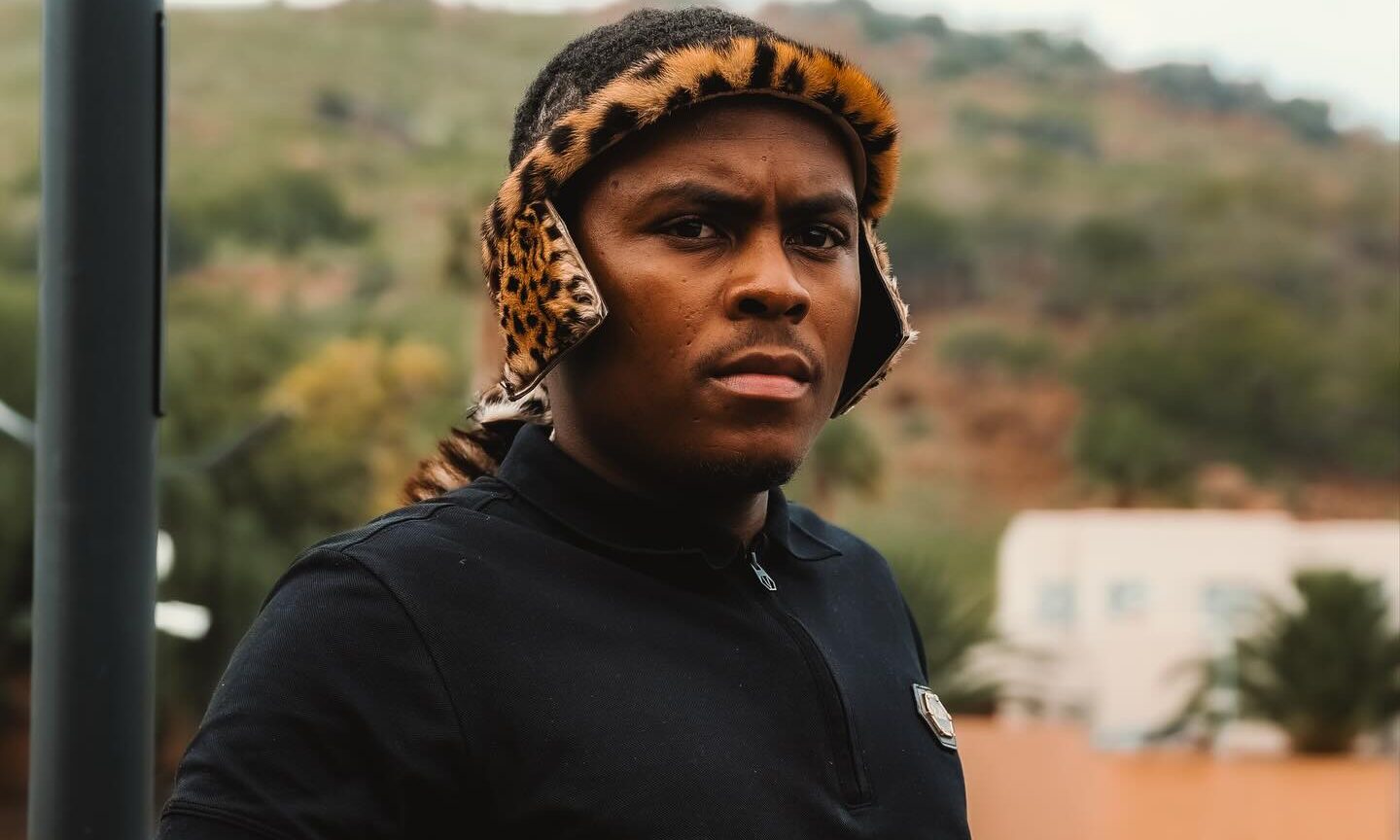













































I arranged to meet with Smiso Zwane in one of Maboneng District’s popular coffee shops, but when I arrived, there was no sign of the prolific rapper - and his phone was turned off. I began to get worried and strolled anxiously up and down Fox Street, looking for the easily recognizable figure. Suddenly I spotted him, deep in conversation with a collaborator of his. Smiso told me to wait a few minutes so he could wrap up his business, and soon after we started our interview. After ordering a drink, the Sunglass-masked wordsmith explained that the purpose of his meeting was to discuss his “next big project”. I nodded curiously and sat forward to listen. If I had to describe Smiso’s demeanor in one word it would be: aloof.
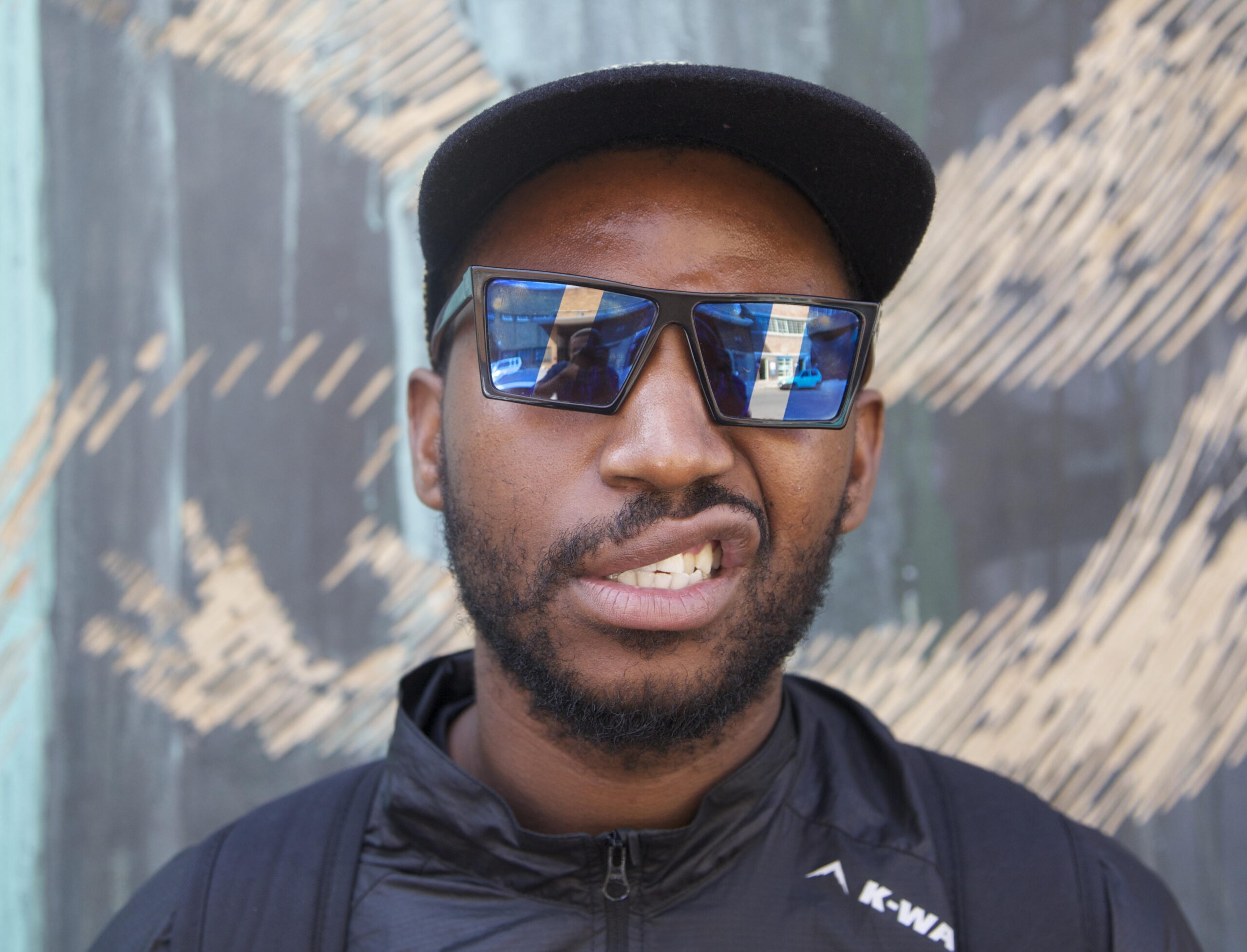
The “Primus Stove” virtuoso rarely divulges any information about his art, but when he does – he’s insightful and sincere. At 30 years, he has not only established himself as a rapper, but also a Producer, DJ, and Fashion Contributor. Smiso grew up in Durban, and later moved to Johannesburg. He started his rapping career at the age of 24 after hearing DJ Shadow’s seminal debut album, Endtroducing. Smiso said he would “often start freestyling” over DJ Shadow’s instrumental tracks, and that he drew lyrical influence from prominent Hip - Hop pioneers like Madlib and MF Doom. His two big creative outlets - Okmalumkoolkat and Dirty Paraffin, are household names in the South African Hip-Hop community. Smiso and I discussed music, South African culture, and a children’s radio show.
What is your affiliation with the fashion industry?
Smiso: I used to have this remix project called “Okmalumkoolkat’s Cool Hunting Club” where I would work with denim which was something I was really interested in at the time. I would use denim jackets, denim dungarees, and denim hats to come up with designs. It was just a way to get my ideas out. I haven’t done one in about a year, so I wouldn’t really consider myself a fashion designer.
Do you believe fashion influences your artistic expression?
Smiso: The whole thing is one. Me, how I speak, how I cut my hair, how I dress, the music - everything is kinda connected. It’s like that old argument – “Oh this guy makes art and music” when it’s really all the same thing for me.
Many people look at your music and see different personas. Would you say Okmalumkoolkat is an alter ego of yours?
Smiso: Yeah, Okmalumkoolkat is one of the alter egos. I’ve got a few. There’s International Pantsula, who’s this guy flying around the world, experimenting with global concepts and styles. I’ve got Dr. Kataza who’s this kinda “kill everything” total destruction-like character. Then there’s Future Mfana, who’s this futuristic guy with Saber Zulu fighting sticks -almost like an Afro-Science Fiction character. Okmalumkoolkat is really just me, back when I used to dance like crazy in the 90s. When I was all about girls and being a player. And although my lifestyle isn’t really like that anymore, I still write as this character, to express one of those unlikely stereotypes in South African society. Considering no one’s really doing that at the moment, it’s a great way to let it all out.
Your live shows are sometimes considered as performance art (particularly with Dirty Paraffin) – do you find it difficult to perform these shows in a nightclub-like environment?
Smiso: I feel like Dirty Paraffin’s never said “no” to a show. We’ve played in some of the worst venues and the better ones. Our ideas still come through when we perform, but I think it would be a good idea if galleries in the country allow us to play there and express this new approach to live Hip - Hop. But I guess it’s up to us to push these ideas to get it done.
What is your interpretation of South African Hip – Hop culture?
Smiso: For me, the South African Hip –Hop culture is still kinda being influenced by the Babalas of 90s hip hop, like what’s going on in the moment in America. What I’m doing is not a watered down version of hip hop, its Primus Stove music - just like what kids in Jamaica are doing with Dancehall. I think more artists in South Africa should express their true selves and not take too much from what they’re hearing overseas.
Do you believe blending western influence with your African identity allows you to best express yourself?
Smiso: I’d say so. For me, my main focus when I rap is on content. Especially when I rap as one of my “personas”. A lot of cats on the scene like Spoek Mathambo represent what’s really going on in South Africa lyrically, and that’s what matters. The best way for me to express myself is to convey to people what’s going on in the country.
Does it feel like a lot of South African artists are trying to escape their African identity and pursue a more Western approach?
Smiso: South Africa’s a crazy place, man. It seems to me like the youth; township, town, and suburban kids don’t want to be here. The way we dress, the things we buy, the way we party, the music we make, all has to do with escapism. And everybody’s too scared to talk about it you know? You’ve got to face reality, and that’s what Okmalumkoolkat’s all about.
You seem to collaborate a lot with other artists spanning across various genres, do you feel that collaboration is important as a musician?
Smiso: Definitely. I collaborated with Sibot on his EP and the final product was amazing for us. Simon [Sibot] and I are good friends. We were just hanging out in Cape Town one day and he called me over to do this track. Simon’s a perfectionist, so that strictness working with him really taught me a lot about his workflow.
Where does the name Okmalumkoolkat come from?
Smiso: Yeah well, basically my favourite DJ on Ukhozi FM used to have this show for kids, like young kids, toddlers. There used to be shout outs for the kids, and the DJ would play tracks for them or whatever. That was really unique for me because I’d never heard anything like it. So, if I’m making music and talking to these kids - like the youth. I’m the “Okmalumkoolkat” to them in these times you know? Sorta something I feel and they can relate to.
Who are some of your favourite artists in the South African music scene right now?
Smiso: I’ve got a bunch. Most kids that are doing all the Gqom sounds out of Durban, Infinity Boys, D Squared, Desire, DJ Socks (“the God of Gqom”). Aero Manyelo, he’s got a crazy sound.
Tell me more about your future plans?
Smiso: I’ve got a bunch of releases coming up; there’s the Boyzn Bucks mixtape. I’ve got two EPs coming out for Okmalumkoolkat but the project’s called Holy Oxygen with my friends from Austria - The Clonius and Cid Rim. And then I’ve got the Dirty Paraffin album which is probably gonna drop next year.
Great thank you, that’s it for the interview. Any last comments for the blog?
Smiso: Shout out to DJ Okapi, for exposing me to more African artists and their backgrounds. Shout out to Spoek, all my Joburg people, yeah.
Listen to Okmalumkoolkat’s latest release through The Fader titled “Internet Jetset Zuper” via Soundcloud: https://soundcloud.com/fadermedia/okmalumkoolkat-internet-jetset
Also be sure to check out Smiso’s Tumblr for information, music, and show dates: http://okmalume.tumblr.com/
Interview by Adrian Martens


Most popular

Top amapiano songs of 2026
16 Feb 2026

Top Naija songs of 2026
31 Mar 2026

Top Afrobeats songs of 2026
19 Mar 2026
Open call: Goethe-Institut grants for Southern African creatives
08 Sep 2026

AFRIMA 2026: All the winners
12 Jan 2026
Open call: 2026 Afro Pepites Show for artists
16 Sep 2026
Open call: MTN One TV African film and television projects
16 Sep 2026
Disclaimer: Music In Africa provides a platform for musicians and contributors to embed music and videos solely for promotional purposes. If any track or video embedded on this platform violates any copyrights please inform us immediately and we will take it down. Please read our Terms of Use for more.

Subscribe to our monthly Newsletter
Follow us on social media


Please log in to post a comment.