










































Fuse ODG talks Afrobeats, Damian Marley and Ghana’s racial politics
06 Dec 2018 - 09:51


Fuse ODG is impressed and surprised by the quality of his just concluded Skype interview.
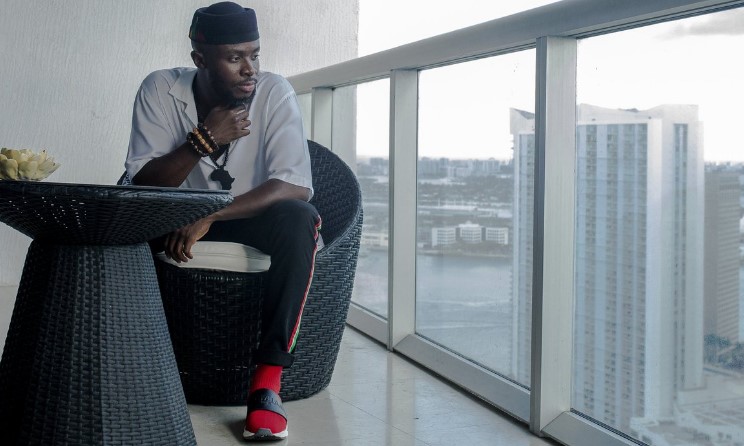
He had been anxious that the network would fail during his interview with a Jamaican outfit. Before the Jamaicans, he had an in-studio interview with broadcaster Abeiku Santana, and before that, he had a session with Andy Dosty of Hitz FM. Ours, which happens about 7pm, is his final one for the day.
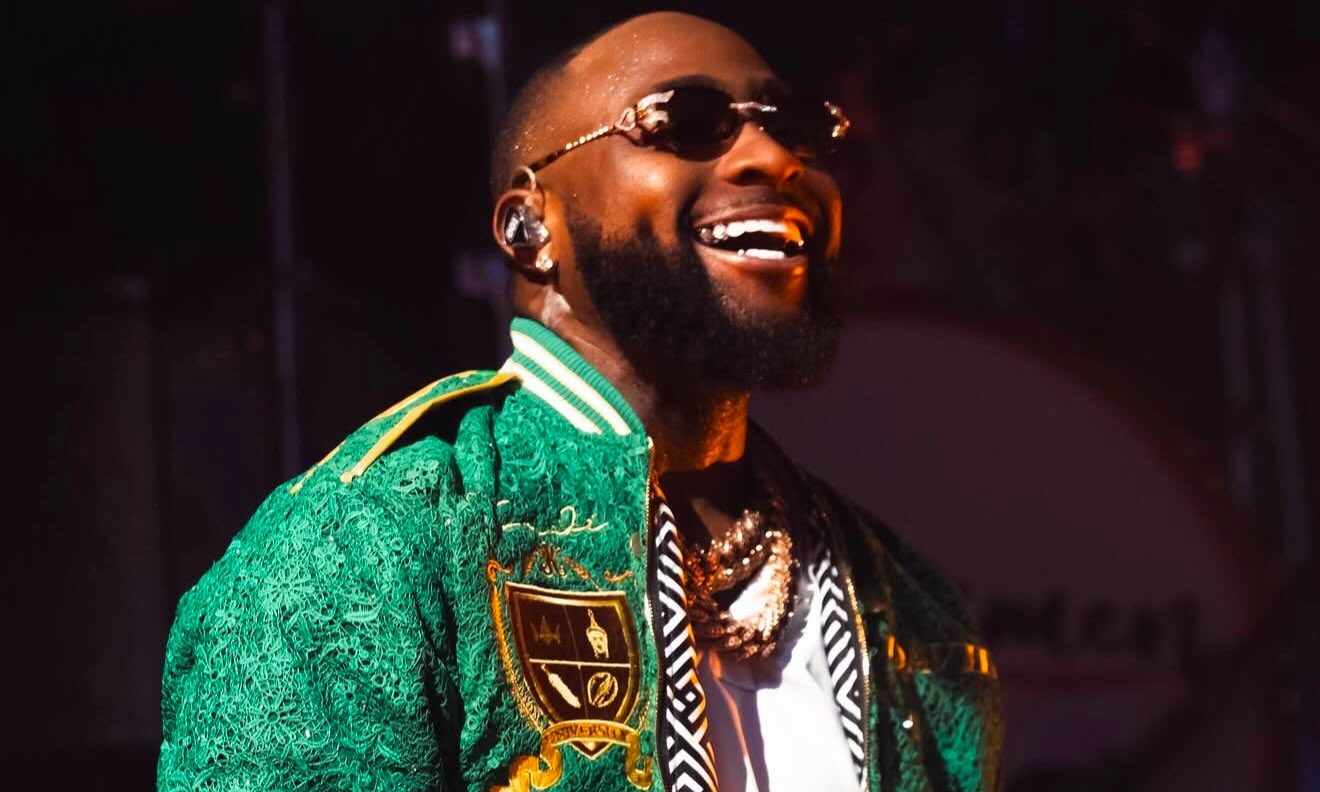
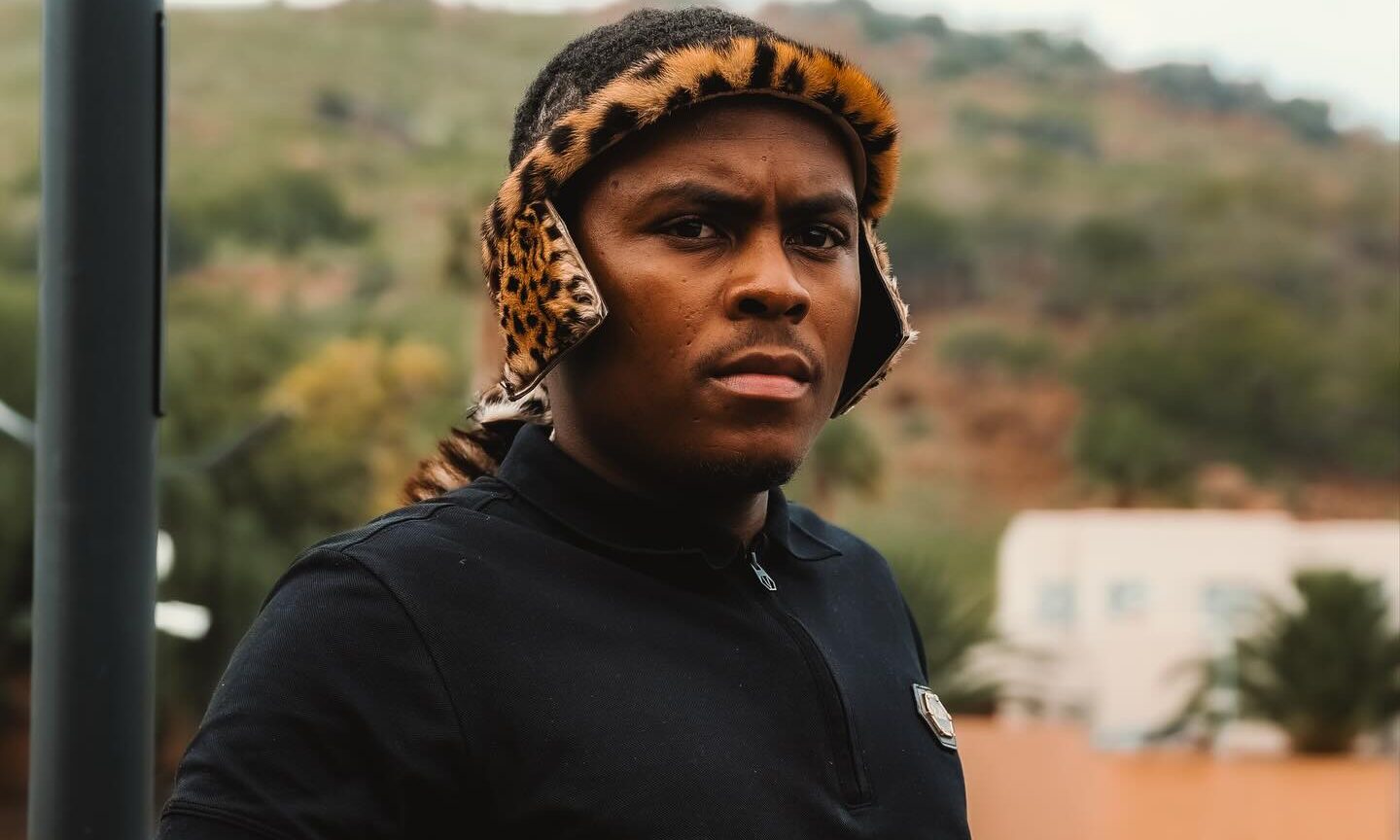
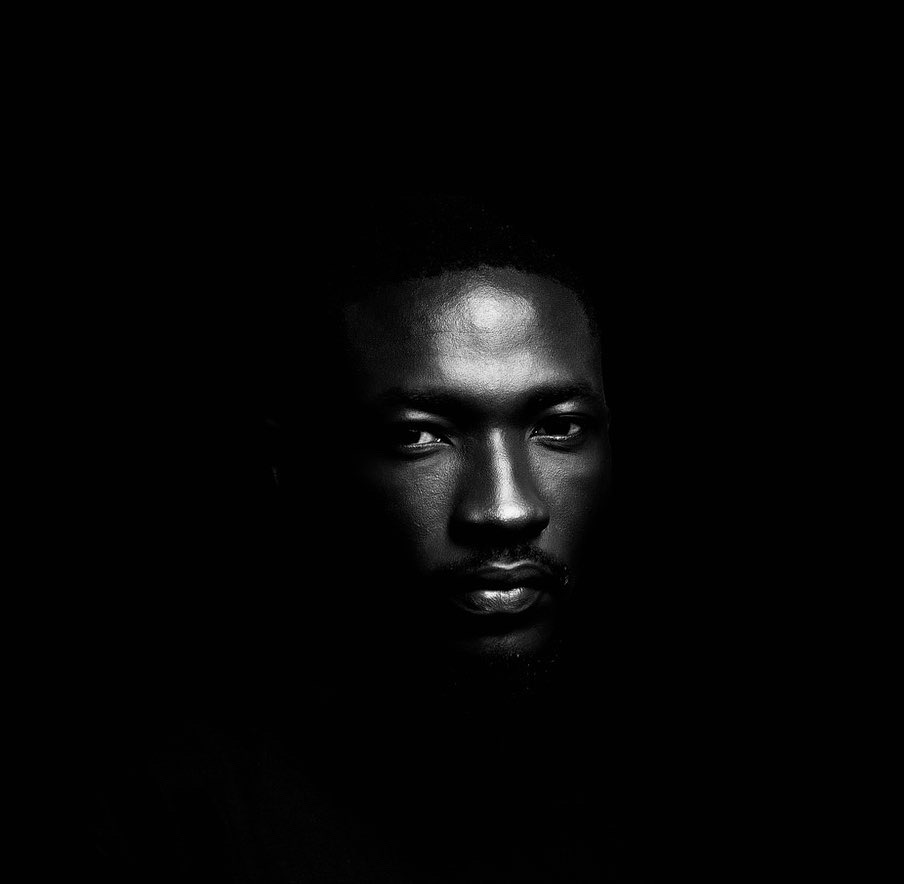
This evening, he looks like a really cool monk: in an all-black ensemble comprising a bam hat labeled “New Africa Nation”, a kaftan, jeans, sneakers, and a miniature map of Africa hanging down his neck. He adjusts in his seat and signals his readiness.
Since the start of his career, Fuse, known to his parents as Nana Richard Abiona, and who grew up in South London, has had to constantly explain—or rather, defend—his identity. 'Bra Fie', his recent single featuring reggae star Damian Marley, attempts to bring an end to never-ending inquiries regarding his identity. Nevertheless, it seems insufficient to a cross-section of Ghanafo, who criticise him as not being 'Ghanaian enough' per the 'Ghananometer' they invented.
“Me fri Kumasi, ɛnti you can’t come and talk to me about being Ghanaian,” he shoots back at skeptics, in immaculate Twi, and then in English. It is his approach throughout the conversation. Fuse emphasises that it is here in Ghana where the sunshine is everlasting, and where he can have waakye, his beloved rice and beans meal for breakfast, that he feels most at home.
Fuse holds a number of top laurels including a Ghana Music Award and a MOBO (Music of Black Origin) prize, and is famed for 'Antenna', a 2013 UK Singles Chart-placing number. Its predecessor, 'Azonto', was pivotal in popularising Afrobeats internationally.
Afrobeats is employed as the label for a wide variety of sounds from Africa and the diaspora, leading many to dismiss it. I am keen on finding out Fuse's definition, and what elements must exist in a song bearing that tag, an explanation I intend to subsequently cite with the intellectual snootiness of a scholar.
But even Fuse’s definition doesn’t offer me the specificity I long for. He narrows Afrobeats down though, to a template of percussion work and an inner antenna for the African pulse. “Of course, we have our percussions, we have our vibes," he says. "But it’s hard to pin Afrobeats down because it’s not just one sound.
"So, a lot of times, I hear a song and I can just feel that it’s Afrobeats, because I know where they get the inspiration from. We need to learn how to just know that Afrobeats is not just one thing; it’s different vibes. I make Afrobeats in different ways. Some people might not even see it as Afrobeats, but it’s Afrobeats because it’s inspired by Africa.”
Vibes: an ever-present jargon in the speech of Afrobeats specialists. No definition may truly suffice for Afrobeats, due to the many rivulets linked to the sound, but Afrobeats will always reveal itself via a vibe. If you feel it, you’ll know. How does one achieve the vibe? Originality for sure, and the unique Ghana baptism, which is the psychic root of the sound. (Mr Eazi alluded to Ghana's contribution in a 2017 conversation with me on the topic.)
Bob Marley has the reggae vibe. ET Mensah is highlife. Fela is Afrobeat. In their respective spaces, they are supreme custodians. I can’t hear Bob Marley doing highlife. I don’t see Amakye Dede freestyling over hip hop instrumentals, and so, for many, Fuse must remain in the genre, to retain the purity of the sound, and be referenced like Marley or Mensah. But he tells me that he feels no such pressure, because of the sonic capacity of Afrobeats.
“That’s the beauty of Afrobeats. There’s vibes that’s very slow, but it’s still Afrobeats, and then there’s vibes that’s very fast, but it’s still Afrobeats. So, the world of Afrobeats is enough excitement for an artist for a lifetime…I love the fact that I can dive into so many different worlds, but with Afro as the heartbeat of the music."
Next, he addresses allegations that he has facilitated a kind of 'azonto appropriation'. Fuse is not only accused of mining sounds from these parts—never mind that his Ghanaian heritage is provable—but he's also likened to a scrupulous collaborator during an alien invasion, guiding the foreigners by hand, to the location of hidden treasures.
This charge, albeit uninformed and misguided, might have stemmed from the fact that he’s constantly actively bringing new people to the Afrobeats sound, sometimes, even getting them to sing in his native Twi—as was the case with popstar Ed Sheeran on 'Boa Me' and the Grammy-winning 'Bibia Be Ye Ye'. Other high-profile acts he's been associated with are Wyclef Jean, Elephant Man, Sean Paul, Ed Sheeran and Major Lazer—all of whom have received various doses of Afrobeats baptism. Fuse brushes off the accusation.
“The word appropriation is used if you’re taking something and it’s just benefiting you. I’ve been working in Ghana way before my music blew up. I didn’t even know azonto was going to blow up like that. I was making other songs, but because now I have a song that has blown up, people are just, you know, looking for anything negative, but I’m a proud Ghanaian. Mefri Kumasi, enti I know sɛɛ you can’t come and talk to me about being Ghanaian. I lived in Ashtown [short for the suburb Ashanti New Town], so I’ve been in the hood. I didn’t just pop out of nowhere. It might look like it, but I’ve been working for a long time. I’m someone who’s very passionate about the country, so to me, it was a blessing from God that I was very much inspired by Ghana and my music took off the way it’s taken off."
In my estimation, the African artist is typically an angry man—not when he’s delivering Afropop: professing love to a woman, or gushing over her desirable curvature—but when he’s engaging in social commentary. And this goes as far back as Fela, father of fury. Why is the African musician so angry? Even Fuse, usually soft-spoken and measured, leaks anger when he’s discussing race, an extra exuberance in the African’s hospitality towards a white man, or adverts glorifying light skin tones over the brown of the black woman.
“It’s only fury if you perceive the passion as fury,” Fuse says. “Everybody has the right to express whatever they want to express. Social media has given us a platform to be able to speak out about how we feel. So, everybody has their freedom of speech, and you can express it how you want to express it."
Fuse’s passion to correct erroneous narratives about the African and his value among the races have led him to also build a school in Akosombo, pen children’s literature highlighting African heroes, and roll out the Nana dolls complete with complexion and hair texture of the African, and named after iconic African women like Yaa Asantewaa, the fearless Ejisu queen mother, and Funmilayo Ransome-Kuti, who bore Fela. He considers it of supreme importance to repair young kids’ perceptions about their identity as Africans early, even though he also targets adults.
Growing up, he, like fellow Ghanaian Christian boys, lived with the fear that by questioning anything in the Bible, he ran the risk of lunacy: “wo bɛbo dam. Embisa questions bebree.”
“It’s okay for a son to ask questions of his father. So, it’s time for us—and I’m not saying rebelling against the elders—but more importantly, focus on the young ones, because it’s easier to teach a child when they’re growing up—they’re like a foam, they’re soaking up everything you teach them. We try our best to teach the older ones to unlearn what they’ve learnt, so they can relearn, but it’s best for us to focus on the young ones because they’re the future; they’re the ones who are going to grow up and run the country. They’re the ones who are going to travel across the world. We need to put measures in place for them to love who they are. We need to put measures in place to let them know that they are not inferior. They’re on the same level and even higher than any other race.”
Fuse’s approach sounds both laudable and troubling to me. Laudable that he’s keen on building for kids a better experience than he met growing up. “Sometimes I say that it’s a miracle that our parents raised us [the way they did], but some of us are woke, because our parents were miseducated in such a dangerous way that it’s a miracle that some of us are actually woke and speaking against their traditional misconceptions of the white man and the black man."
Troubling because he sees little prospect in an adult’s ability to change—like the woman in the front seat of the trotro I boarded to work earlier in the day, dark-skinned and crowned with faux dreadlocks more out of convenience than as a beauty decision. The woman, whose face I couldn’t properly see from the back row of the bus, was the loudest of the three people engaged in an argument. The other two were men. As all of them spoke simultaneously, their voices were muffled in one another, but a line by the woman shot past the other passengers in the car, straight to me. “A white person’s witchcraft is unmatched. It’s extremely useful. For us Africans, even in your progress, another envies you.” She smiled a sagacious smile after, like she had just uttered profound philosophy. I boiled with disgust. How would this woman, definitely over 30 and ignorance about her own history, raise her kids progressively?
“ɛyɛ me ya sɛɛ wo bɛ ka sɛɛ obroni wɔ nyansa sen obibini,” Fuse laments, blaming the woman's comments partly on a longstanding culture of what constitutes respect.
“You know, growing up nu, a sɛ if you question an older person, it’s like you’re disrespecting them. So sometimes, I still get caught up in our culture of respecting our elders and keep quiet. But we’re now adults, and at some point, we have to speak up, because it doesn’t make sense to say that a white man possesses better intellectual equipment than the African. It’s time to question it. Why is it that you’re speaking like that? It’s the way you’ve been conditioned.”
A major reason he’s back home is to promote 'Bra Fie', a joint that lends itself both as a protest against marginalisation based on race, and a clarion call for the diaspora to return to their heritage. It is taken off Fuse’s forthcoming album, his sophomore, New Africa Nation, an audacious enterprise to rebrand the continent. Wouldn’t one want to know the conversations that ensued between Fuse and Damian Marley, distant relatives and descendants of a powerful ancestry?
“The dialogue that Damian and I went through before making the song is a lot to even go through," he says, "but essentially we both agreed that it’s time for us to work together as Africa and the Caribbean—of course, we are all Africans. It’s time for us to work together because, you know, there are so many things that have been put in place to block us from the motherland and taken to another land, you know, from the Americas to the Caribbean, to Europe. So many things stopping us from uniting. We’re using the music. It’s time for us to use music as a way to unite."
To conclude our discussion, we revisit at my request the looming dystopian future of a Ghana where parents still socialise their kids into an inferiority complex about their potential simply based on their skin color. Fuse categorises parents into those his age (in the neighborhood of 30), and then “parents parents”, referring to guardians his parents’ age. He notes that the approach for each demographic should be unique. Many young parents are gradually buying into the philosophy of the 'New Africa Nation'. With “parents parents”, however, it will take several years worth of convincing.
But ultimately, questions have to be asked. Why did our ancestors embrace a white Jesus, and oppression, and a skewed educational system? By all means, Fuse says, listen but it is “also cool to ask questions".
"When you’re born as a baby, everybody is looking after you, and then you get to a certain level where you feel like you’re independent, and then you get to a level where you don’t want your mum to hold your hand to cross the road. And then they [parents] get to a level where we have to hold their hands to cross the road. It’s time for us to hold their hands to cross the road. That is the education part.”


Most popular

Top Naija songs of 2026
31 Mar 2026

Top amapiano songs of 2026
16 Feb 2026

Top Afrobeats songs of 2026
19 Mar 2026
AFRIMA 2026: All the winners
12 Jan 2026
Open call: MTN One TV African film and television projects
16 Sep 2026
Open call: Goethe-Institut grants for Southern African creatives
08 Sep 2026
Disclaimer: Music In Africa provides a platform for musicians and contributors to embed music and videos solely for promotional purposes. If any track or video embedded on this platform violates any copyrights please inform us immediately and we will take it down. Please read our Terms of Use for more.

Subscribe to our monthly Newsletter
Follow us on social media


Please log in to post a comment.