
































NEFCISA
NEFCISA

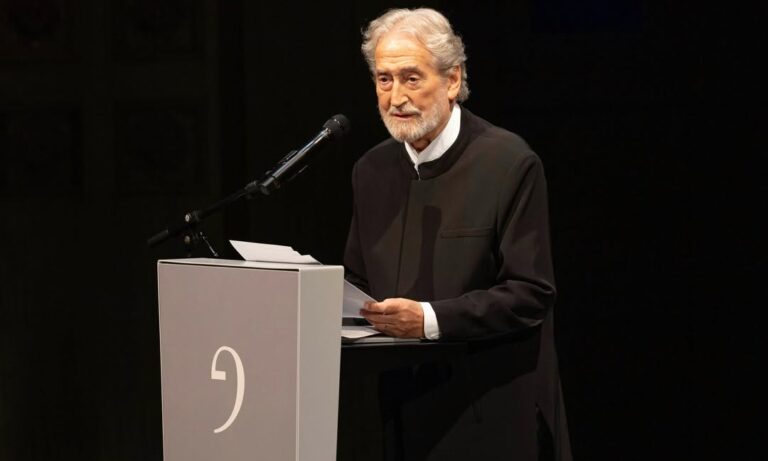
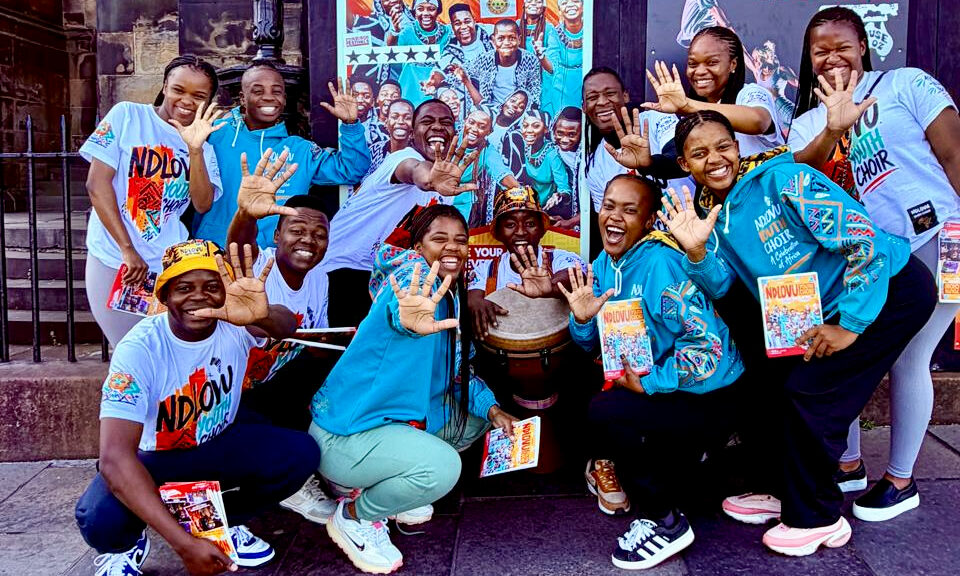
The Music In Africa Foundation (MIAF) is proud of its partnership with the Industrial Development Corporation (IDC) as a Strategic Implementing Partner (SIP) for its Social Employment Fund (SEF). Through this collaboration, MIAF is running a national programme that is creating jobs, addressing skills gaps, and strengthening South Africa's creative industries — in line with the SEF's overarching goal to generate work for the common good and build community value through employment, social contribution, and inclusive economic participation. Operating under the banner NEFCISA (National Employment Facility for Creative Industries in South Africa), the initiative is recruiting and training participants, matching them with host organisations, and has already placed 1 500 workers across the country — surpassing its original target of 1 000. NEFCISA is delivered through a network of 20 host organisations spanning five provinces, who are actively hosting participants and contributing to work for the common good across South Africa's creative and cultural industries. Key Objectives: Support employment and entrepreneurship in the creative industries. Offer skills development and training programmes. Foster partnerships between public and private creative sectors. Promote South African creativity at both provincial and national levels Foster community development through social contribution.

ACCES
ACCES

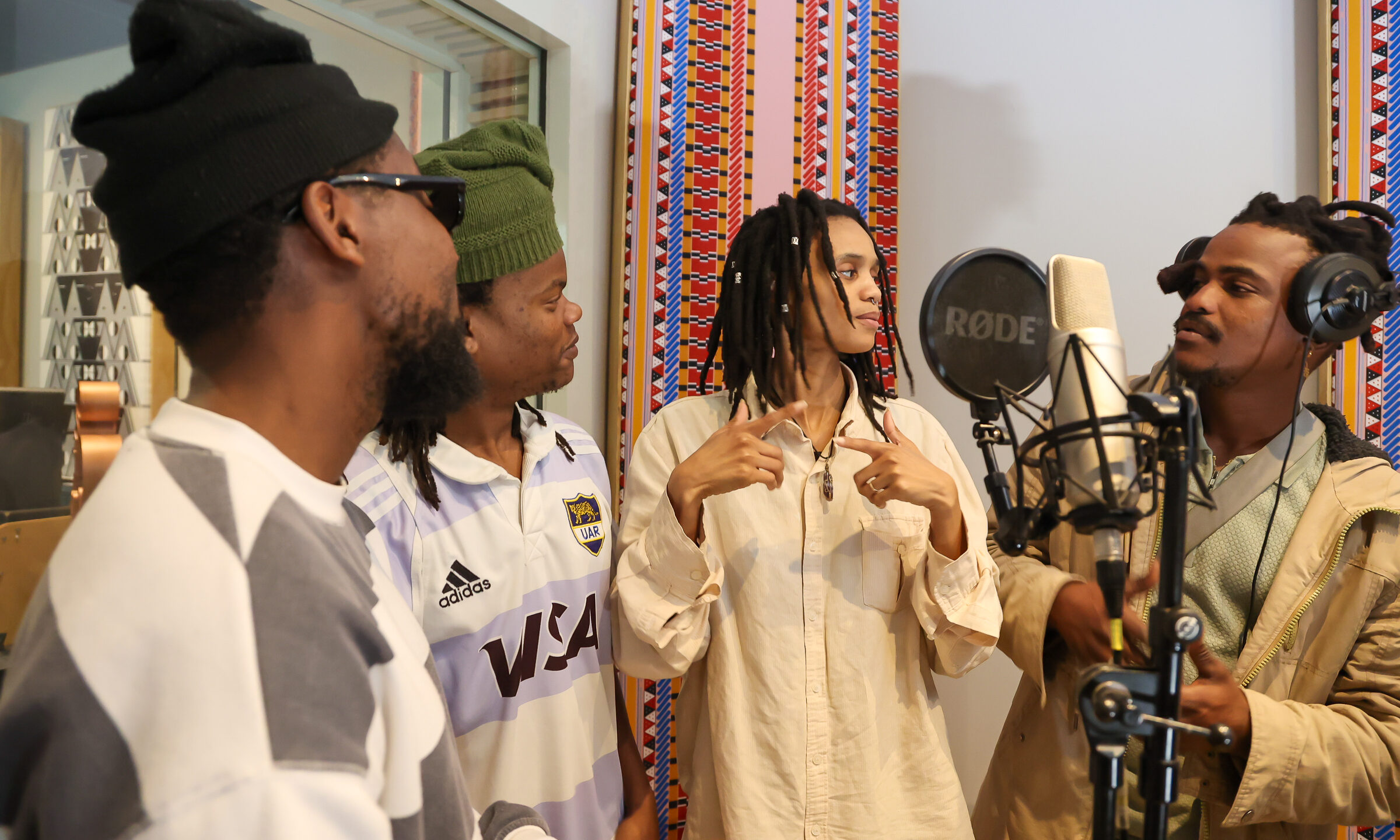
ACCES Conference and Showcase Festival is Africa's leading music industry gathering, bringing together the people shaping the future of the continent's music business. Artists, entrepreneurs, executives, investors, policymakers and cultural leaders from across Africa and around the world come to ACCES to build partnerships, exchange ideas, discover talent and create new business opportunities. Since its launch in 2017, ACCES has become the continent's premier platform for professional exchange and music market development. Combining a high-level conference with a curated showcase festival, networking, exhibitions and industry programmes, ACCES offers a unique space where creativity meets business and where African music connects with the global industry.

Gender@Work
Gender@Work

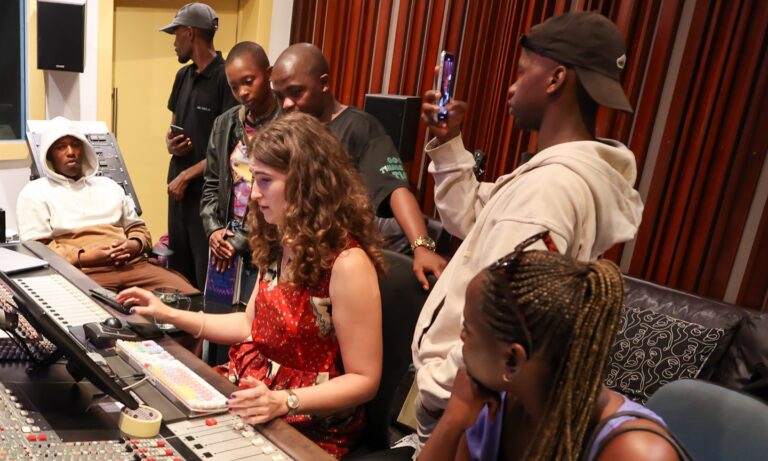
Music In Africa Gender @ Work is a three-year training programme aimed at upskilling and increasing the participation of female professionals in the African music sector. Launched by the Music In Africa Foundation (MIAF) in April 2019, the programme is connected to the MIAF’s ACCES music conference – a pan-African event held in a different African country every year. This connection enables the programme to reach new participants in a different African country every year. The programme marks the beginning of a more concerted effort by the Foundation to support the participation and inclusion of women in all facets of its programmes and the music sector in Africa as a whole. Over the three years, the programme will aim to address gender imbalances in the sector through training, lobbying, facilitating knowledge exchange and dialogues that foster the interest of women. The broader objectives of the programme are to: Provide industry training for women on critical music industry skills, focusing on: Stage management Electronic music production and recording Music business management Technical knowledge Provide an opportunity for both professional and aspiring women to benefit from the Music In Africa network and its broad range of activities in 2019, 2020 and 2021. Provide a solution-based platform in the form of a round table at ACCES with a view to identify challenges, discuss opportunities and lobby for the interests of female practitioners. Offer participants the opportunity to benefit from programmes offered by MIAF’s partners. Increase access to educational materials. Integrate participants in the broader ACCES programme to maximise experience and exposure to the industry. Record and present training materials on the www.musicinafrica.net, including but not limited to tutorials, templates and other best-practice materials. Communicate women-based themes that support the initiatives and messages of the programme. MAIN TRAINING ACTIVITIES Training in first country (Ghana): In the first year, participants will be trained on all aspects of stage management by a team of experienced stage managers from 10 to 17 November 2019. The programme will offer robust classroom training as well as practical, hands-on training in which participants will also be given the opportunity to manage various aspects of the ACCES performance programme. Training in second country: The second training iteration will take place at ACCES 2020 when the programme will diversify its course to include music production lessons and training on other music business topics. A round-table platform will also be introduced to coincide with the ACCES programme. Training in third country: The third training iteration will take place at ACCES 2021 in a different country, offering an advanced course. HOW DO YOU GET INVOLVED?  As a participant, facilitator or trainer: The programme enrolls up to 12 trainees every year. All opportunities are advertised publicly on this website, and will be added to this page. Please keep checking this page for new calls (below under UPDATES & CURRENT OPPORTUNITIES). As a partner Please contact Claire Metais at [email protected]. APPLY The call for applications for 2020 will be announced soon. The Music In Africa Gender @ Work programme is made possible with the support of the Prince Claus Fund, Siemens Stiftung and Goethe-Institut.

Sound Connects Fund
Sound Connects Fund

For cultural and creative practitioners and organisations operating in southern Africa, access to funding remains a major challenge. The COVID-19 pandemic has also had a massive impact on government policy, spending and the economy in general, and has seen spending on culture being moved further down the list of priorities. Further, the cultural and creative industries repeatedly cite four main areas where investment is needed for growth, which are increased visibility, mobility including access to new markets, finance and support structures.

Instrument Building And Repair Project

Experience the Vibrations African Instruments Exhibition online in 3D

Features

August Agboola Browne Nigerian pioneer of Jazz Music and World War 2 hero

29 May 2015 - 12:01

cc-img flag-img

August Agboola Browne is, unknown to most, probably the first West African to record a Jazz album. The same of which was released in Poland in 1928.
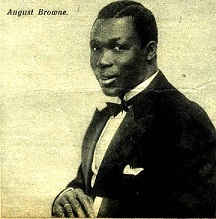
Image from album cover of August Browne's 1928 Jazz album

This landmark has its origin's in the story of a man who was born in Lagos, Nigeria in 1895 and who it is said, stowed away on a ship and travelled to Poland in 1922. He eked out a basic living as a labourer in the Warsaw docks, until the mid-1920's. By which time, he began to frequent the various cafe's and night-spots of 1920's Warsaw, which had a quite a vibrant entertainment scene at the time, with jazz and burlesque clubs, providing a modern adjunct to it's old world cultural charm. Warsaw was in fact described as 'the Paris of the north', for these reasons.

Browne taught himself to play the drums and shortly after, became one of Warsaw's most popular jazz drummers. He went on to record an album in 1928, making him the first Nigerian to achieve this, and arguably the first West African. Browne gained fame playing as part of a quartet in Warsaw's famous Ziemanska club, where his imposing height (6 feet plus), good looks and African origins set him apart.

He married a Polish woman Zofyja in 1927, and they had two kids, Ryszard and Aleksandra in 1928 and 1929 respectively. The mariage was not without drama. A notable incident being in 1931, when Browne left home after an argument with his wife, and stayed away, playing gigs for a few days. His wife not to be outdone, placed a missing persons ad in the Warsaw newspapers, of which poor Browne had to respond a few days later, sheepishly explaining that he had merely been out earning a living and pleading with his wife not to wash their dirty linen in public. This incident aside, Browne was widely acknowledged by friends and neighbours as a courteous, well-mannered gentleman, who was much loved and respected by most who knew him.

His life was to change radically, when the Second World War started in 1939. Poland was one of the first targets of the Nazi war machine and as was top be expected, a major exodus of its dwellers- especially its small African minority, who rather wisely decided not to test Hitler's tolerance, especially after reading his views on African's, in his book 'Mein kampf'. Warsaw was thus emptied of its African population, except one, August Agboola Browne.

Browne joined the Polish underground resistance movement and participated in the futile defence of Warsaw, where he was sighted by witnesses, fighting in the defence of the Ochota district alongside other members of the resistance. After the fall of Warsaw, Browne went virtually underground, but was on a number of occasions, seen around Warsaw, distributing the newsheet of the Polish resistance. To underscore the quantum of courage involved in this would be beyond the realm of a short online article, suffice to say that if he had been caught by the Nazi's, his fate would not have been pleasant.

This was not to be the end of his activities in this war. In the Polish uprising of 1944, in which the resistance came out from the underground, Browne fought actively as part of the Polish 2 Battalion led by Major Georg Antoczewiszka. This was confirmed by a resistance veteran Jan Radecki, who saw him at the headquarters of the Iwo Battalion at Ulica. The uprising lasted 63 days, till October 1944, of which Browne was an active participant. Though unsuccessful, Warsaw was shortly after liberated by the Allies in April 1945,

Browne submitted his claims to the new communist government for recognition of his war-time service, which was to be fully verified and he was accorded his full honours as a hero of the Polish resistance. He was then employed as a Cultural Officer by the communist government in 1949. He was however to tire of Poland, which he now felt to be a closed, colourless society, compared to its postwar vibrancy. He moved to England in 1958, where he lived till his death in 1976.

Inspite of his having passed away, almost 40 years ago, Browne's memory is rightly accorded commemoration in present-day Poland, for his war-time sacrifices and also for his status as Warsaw's first African jazz musician. However what is more concerning is that Browne does not have the same recognition of his pioneering status, as the first Nigerian to record a jazz album, where other pioneers like the Reverend Josiah Ransome-Kuti is recognised as the first to record an album(1922) and Ladipo Solanke and Justus Domingo were the joint first to record popular music albums (1925). Perhaps with this article and at least one other prior publication, this anomaly would go some way, to being redressed.

Please log in to post a comment.

Most popular

Disclaimer: Music In Africa provides a platform for musicians and contributors to embed music and videos solely for promotional purposes. If any track or video embedded on this platform violates any copyrights please inform us immediately and we will take it down. Please read our Terms of Use for more.

newsletter banner

Subscribe to our monthly Newsletter

Follow us on social media