

















































Ali Magobeni: Kenya’s ‘wandering pigeon’ returns home
02 Jun 2015 - 13:12


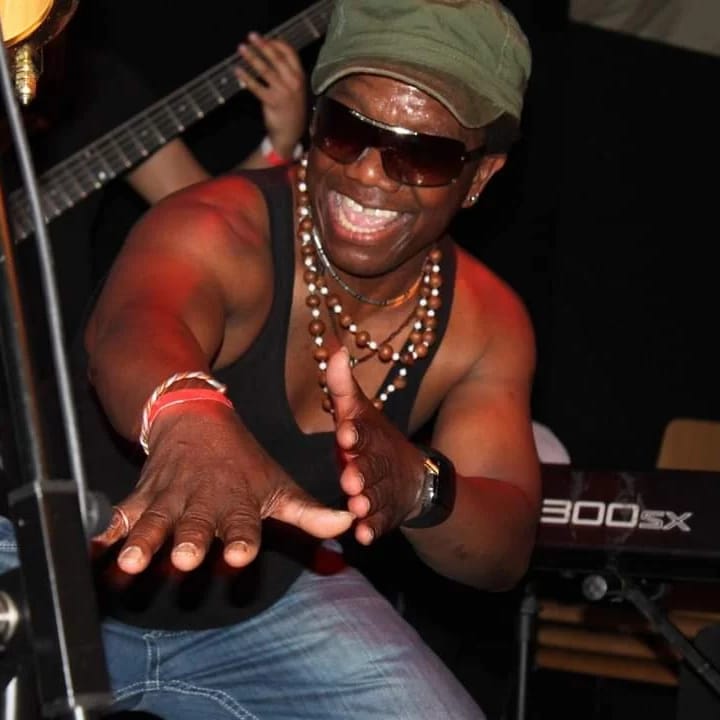
DR Congo’s musician of Angolan origin Sam Mangwana was once described as ‘le pigeon voyageur’ (wandering pigeon) for his musical sojourn that has straddled several musical cultures, seeing him sample the music of different nationalities in the course of his long career. The same may apply to Kenyan musician Ali ‘Rastaman’ Magobeni, who has traversed Kenya, Tanzania, Uganda, Europe and the United States in his long career, pitting his musical skills against the musicians he met along the way.
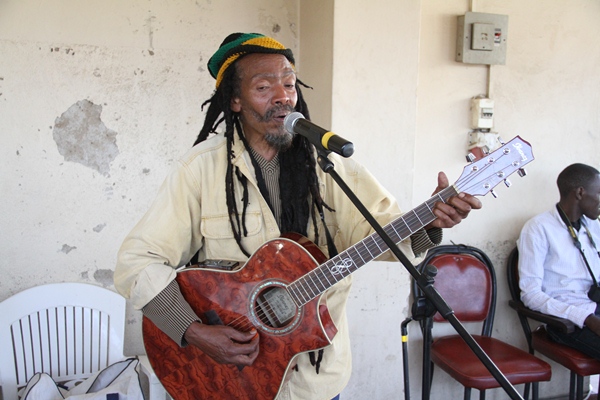
He has played with a vast array of influential bands in East Africa but is also one of the pioneer reggae DJs in Kenya. During his long stay in New York he was at the helm of a fine band made up of musicians from different nationalities, some of whom have gone on to play with big stars on the global music scene. After seeing it all he is now back home where it all started to craft a new musical ensemble through which he hopes to package all that he has soaked up in his long sojourn for the Kenyan audience.
Ali was born in Taveta at the Kenyan coast and spent his childhood partly in Kenya and Tanzania. He started music fairly early. “I taught myself how to play the guitar in primary school,” he said. “I started at Mahoho Primary school, where I was in the choir. Pretty soon I felt I had become a master of the guitar.”
His mother found work in Arusha Tanzania and when Ali went to visit her he learnt of a band called East African Community band, which he promptly joined. “I found them practicing and when one of them saw me watching he asked me ‘Can you play?’ and I said ‘Yes’. He then gave me a guitar and when I played he was so amazed he told me, ‘You know what? You must come and play with us.’ That is how I joined them.”
He played with the band for a while before he was spotted by some other musicians who were employees of Kilimanjaro Textiles, which had a band. They recruited him to the Kilimanjaro Textiles band in 1971, enticing him with a job offer.
It happened that Jamuhuri Jazz band, who were then playing in Tanga, broke up. The brothers Wilson Peter Kinyonga and George Peter Kinyonga, who had been with the defunct Jamuhuri Jazz came and joined them at Kilimanjaro Textile. After playing with the band for a while Ali and the Kinyonga brothers decided to leave to form Arusha Jazz.
“We decided to come to Nairobi where we felt there were better prospects. When we arrived we easily found work at Halian’s Club, Kongoni Club and a few other clubs around town.”
But the restlessness had not ended, for they soon left again for Mombasa the following year. Sportsman Bar had just opened in Tudor, and they were taken on as the resident band, the club buying them new instruments. They decided to change their name to Simba Wanyika, with George Peter playing bass, Wilson Peter the lead guitar and Ali the rhythm. George and Wilson collaborated on the vocals.
However, after playing there for a while Ali’s taste in music started changing. “I was getting tired of the music we were playing. I wanted to try out something new. I wanted to play western pop music, which was very popular with the tourists at the beach hotels.”
And so he left Simba Wanyika and joined the beach hotels’ circuit, playing western pop hits for tourists. He was replaced at Simba Wanyika by Professor Omari Shaaban, who became their new rhythm guitarist. It is at this time that he was spotted by a new Congolese band, the Hi-Fives, better known as Mpete wa Mpete, who recruited him into their ranks to replace a member who had left. They traveled back to Nairobi in 1973, where they soon landed a contract to perform in Kampala.
While they were in Kampala the Congolese band Boma Liwanza was ruling the roost in Nairobi, playing at the Starlight Club. But soon misunderstandings arose in Boma Liwanza and Frantal Tabu and Moni Mambo left to form their own group, Super Liwanza.
“Frantal and Moni Mambo had heard of the Kenyan musicians who was playing with the Hi-Fives in Kampala and they were keen on recruiting me,” said Ali. They persuaded him to leave Hi-Fives and come back to Nairobi to join them. They also enlisted Ugandan musician Sammy Kasule, a vocalist called Gode, and trumpet players Tula Waluthini and Mwepu.
“We started playing at the Bird Cage club near Ambassadeur Hotel. The owner, Radding Omolo, bought us new instruments and asked us to become his club’s resident band. At the time Radding was the chairman of Gor Mahia football club, and wherever the club went to play we accompanied them to entertain the fans.”
One day they turned up as usual for work and found the club closed. Apparently it had been auctioned by the property owner along with all their instruments for rent arrears going back several months. Fortunately, one of their fans at Bird Cage by name Edwin Achoch came to their rescue, offering to buy them new instruments. They continued playing as Special Liwanza, moving all over wherever gigs came up. In the meantime they were recording at Andrew Crawford Studio and Phonogram Studios.
After touring Mombasa, Kisumu, Nakuru and other major towns there was a feeling by the Kenyan musicians that their Congolese band-mates were increasingly paying themselves more money. “We decided to leave the band and formed our own band which we named Soma Jeko, coined from our names.”
Soma Jeko was made up of Ali, Sammy Kasule, Shabani Onyango, Elliot Adongo, a saxophonist called Kiwanuka and a vocalist called Mzungu. They played for a while before Taso Stephanou, a Greek national who had been born and raised in Tanzania, approached them with the idea of forming a new band. They agreed to disband Soma Jeko and team up with Taso, who wanted the new band named Makonde after the Makonde people of Tanzania.
Makonde was made up of Ali, Sammy Kasule, Shabani Onyango, Kazadi, Taso Stephano and keyboardist Francis Njoroge. They released two albums on the British label EMI Records. Their biggest chart single was ‘Mola, Are You There?’
In 1979 they went on tour in Europe where they played alongside Manu Dibango and Aswad, a British reggae band that had been sponsored to tour Kenya by the BBC. For the tour they recruited percussionist Job Seda, who initially played with the African Heritage band, to replace Kazadi, who didn’t have a passport. After their European tour they returned to Kenya.
“Our next tour was to be of the USA. Taso booked us into a hotel and left for America to arrange the details of the tour. He ended up staying for over a year. The hotel bill was mounting and the little money he had left us was all gone, we were not happy at all. We had to find a means to support ourselves.”
When musician Job Seda learnt of what had happened he approached Allan Donovan of African Heritage and asked thim if they could reconstitute the African Heritage band, which had by then broken up. Allan agreed and the remnants of Makonde were recruited into African Heritage band. The African Heritage musicians included Ali, Sammy Kasule, Job Seda, Gido Kibukosya, Jack Odongo, a Japanese saxophonist called Goro Kunii and Shabani Onyango. They went on another tour of Europe, playing in Switzerland, Germany, France and Belgium, where the tour ended in Luxembourg.
But African Heritage did not last long because soon after they returned home some of the members started leaving. “A new club had opened called Boomerang and Sammy Kasule and Francis Njoroge left to play there. The resident band at Starlight Club, Black Makali had also broken up. It was largely made up of Congolese musicians. I teamed up with some of their remaining members and we formed Makali Vibration. We started playing at Starlight.”
After sometime playing at the Starlight Ali decided he had had enough of playing at nightclubs. “We were playing long hours for very little pay. We were doing eight hours a night for six days a week. I found this too much. I was tired.”
He teamed up with a German journalist called Adrea Tapper, who had a huge collection of reggae albums, and they decided to open a reggae club at Starlight Club. They approached Starlight’s Louis Armstrong and he agreed to give them the space. And thus started the first reggae club in Kenya. Their disco shows were alternating with Orchestre Virunga, who were also playing at the club. The whole of Saturday and Sunday were reserved for reggae while the other days were reserved for Virunga.
In 1985 Ali got married to his American wife and he decided to relocate to the US. They settled in New York, where he promptly set up a band called Mau Mau band. “My band was an ensemble of musicians from different nationalities. There was Allen Cardinas and his brother Timur Cardinas who were half Cuban and half Jewish, a drummer called Jim Lake, and many others. They started playing the New York club circle, performing at CeeBee GeeBees, Sons of Brazil (SoB), Kilimanjaro Club, among others. They also performed at colleges and curtain-raised for many stars. It was one of Ali’s finest bands because of the mix of musical backgrounds and cultures that the band members brought in. Some of the former members of this band went on to play with Burning Spear, The Fugees, among other stars.
In 1997 he returned home to visit. He met with Zana Ziki Band, then made up of Suzanne Gachukia, Gido Kibukosya and Mercy Myra. They were in the midst of organizing the first edition of Beats of the Season festival, sponsored by Kenya Breweries. Ali formed his Mau Mau band right away, enlisting local musicians like Danger Shitaka, and they performed at the festival, sharing the stage with Shaggy, Coolio, Lost Boys, Papa Wemba and Awilo Longomba. After the festival he stayed for a while but decided to go back to the US the following year. He revamped his band and continued performing by night while working as a taxi driver by day. He stayed there until 2014 when he decided to come back home.
He is now in the process of forming a band called Voice of Kenya (VoK). He is assembling instruments and recruiting the musicians. Their compositions will be on the current politics in Kenya, corruption and other issues affecting Kenyans. He also plans to compose songs that can unify Kenyans and promote Kenyan culture to the world. He is currently recording new music at Ketebul Studio as his project takes shape.


Most popular

Call For Applications : ACCES seeks a UK-based performer
10 Sep 2026

Top amapiano songs of 2026
16 Feb 2026

Top Afrobeats songs of 2026
19 Mar 2026
AFRIMA 2026: All the winners
12 Jan 2026
Open call: Goethe-Institut grants for Southern African creatives
08 Sep 2026

Top Naija songs of 2026
31 Mar 2026
Open call: Ernst von Siemens Music Foundation 2026 funding programmes
04 Sep 2026
Disclaimer: Music In Africa provides a platform for musicians and contributors to embed music and videos solely for promotional purposes. If any track or video embedded on this platform violates any copyrights please inform us immediately and we will take it down. Please read our Terms of Use for more.

Subscribe to our monthly Newsletter
Follow us on social media


Please log in to post a comment.