














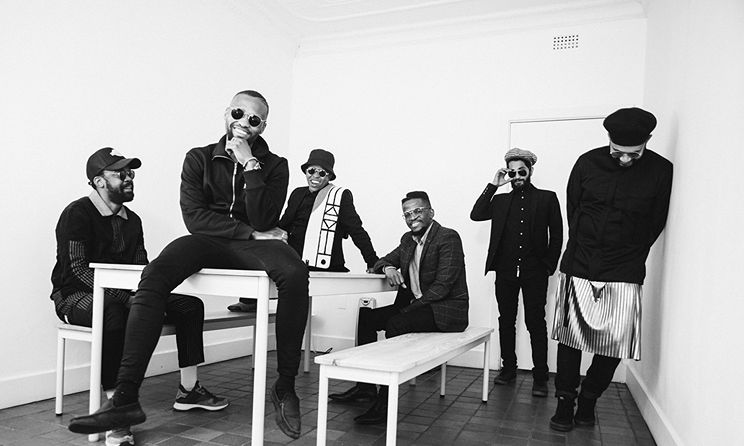




































African music pros talk about business in the time of coronavirus
24 Mar 2020 - 11:00


Last week, Music In Africa asked performing musicians on the continent to talk about the strategies they were putting in place to counter the negative effects of the coronavirus pandemic, including loss of revenue due to restrictions on gatherings like concerts.

To get more of a holistic idea on some of the thoughts floating around the music industry, we also spoke to some of the people and companies that operate behind the scenes about their concerns and plans going forward as lockdowns become commonplace.
Here's what they had to say:
Sevi Spanoudi (Black Major music agency, South Africa)
“Our release album dates for Bongeziwe Mabandla, DJ Doowap and DJ Lag are going ahead as planned and the challenge with that is to present and promote content during a time of distress. But we have decided not to change the releases over the next few days for many reasons. Fortunately, we have worked to diversify our income streams as a general strategy for a number of years. So we're able to keep our team employed, and our artists have access to some reserves that will carry them through this difficult time. We will try, however, to present the content with respect to the world but also with respect to our artists and teams who have worked very hard to create it.
"I would also like to see some mobilisation of industry professionals to lobby government for support those in real need – similar to how France is operating with support funds and assistance with tour cancellation-related expenses. It would also be an interesting case study when this crisis is over, to see how it affected people's consumption of live music. Live streaming will certainly empower artists by enabling them direct access to fans around the world, and to set-up ways of performing that bypass, to an extent, promoters, venues and associated costs.”
Jess White (Akum Agency director, South Africa)
“I am looking to run workshops, write for publications and consult in the financial industry, my previous profession, to soften the blow and weather the financial storm. I am remaining positive and supportive of my community, and reading, exercising and eating well to cope with the emotional stress. As an artist manager I am looking at options of artist membership packages, pay-per-view live performances and small corporate bookings to help my artists through this difficult time, until we can return to live performances.
"Booking agents and promoters earn 100% of their income from live performance and the majority of management income comes from live performance. This cannot be replaced by online or live streaming without a change in the current model used by the major platforms: YouTube, Spotify, Apple Music and so forth. People who continue to suggest live streaming concerts as a method to solve the problem from disappearing live performance income are either, 1. unaware of the dismal low royalty rate, which effectively means that you would need to have circa 1million streams for your royalties to equate to the performance fee of a mid-tier artist from one large music festival, or 2. do not have a thorough understanding of the importance of live performance to the music industry. Simply put, online streaming in its present model will never return the same value that a live performance does to an artist, manager or booking agent.”
Brad Holmes (managing director at Bassline Live, South Africa)
"If you’re working with anything that has to do with the public you kind of need to get innovative or go on holiday. People can expect something from Baseline’s perspective and it will be in streaming, obviously. It’s not rocket science. The thing here is to come up with cool ideas in the online space. I think the most successful so far has been Tiny Desk gigs in the US. So get online and get funded, either through sponsorship or the pay-per-view process.
"But the most important thing around being innovative is that there should be one principle and that is the musicians must make money. If the musicians are making money than you [other music professionals] will make money. Work your head around that. It would require some serious lateral thought where we need to get the kids involved. Like my 15-year-old son, he’s quite a lateral thinker and he’s coming up with the idea.
"Innovation is important because even post the lockdown period, people are going to be different. Think about how many people watch the rugby or soccer on TV versus those who watch it live. Compare that to how many watch live concerts on TV and how many people watch them live. There’s a very different way that people consume sport to the way they consume music. And I think that process is going to become a lot closer."
Jim Donnett (head of public relations and marketing at Sony Music West Africa, Nigeria)
“We’re taking precautionary measures: emphasis on regular hand washing, the use of sanitiser liquids and face masks. Besides that, it’s business as usual. Last week we were out for T-Classic’s video shoot. It was incredible. Davido came to support the young star and his presence added quite a bit of flair. The risk of an outbreak was discussed during our label meeting and the plan was to work remotely since our work thrives majorly on digits and we have a variety of platforms by which we handle and manage our communications."
Raphael Benza (Vth Season, South Africa)
“The first thing to do is to trim costs. Secondly, see what the government does to support small and vital businesses like ours. And thirdly, promote music streaming, branded campaigns, ambassador work, YouTube views, radio and TV plays. We have also asked our staff to constantly be online, remotely, and artists to stay at home. I think the idea of switching to live streaming is more to keep their fans temporarily entertained and engage them than to try and replace live music. I support it fully. However, it's not even close to covering up the lost income from performances.”
Garrick Van Der Tuin (sound engineer and owner of Playsound Productions, South Africa)
“I have been considering the way forward and it will require a shift in my outlook towards the kind of work to go after. Studio work is definitely something to push more of as it doesn’t require large gatherings of people. We will be doing some installations and offering more in-house maintenance and perhaps offer sound system alignment and optimisation deals for local churches and venues during the downtime they will be experiencing.
"My business most certainly can offer live streaming services on an intimate scale. The trick will of course be in delivering a high-quality product and keeping the costs extremely low. Thankfully technology now allows even enthusiasts to stream multi-camera events with cheap 4K webcams, which are portable and offer stunning quality.”
Howler (ticketing company, South Africa)
“COVID-19 is teaching us to think outside of the box and look at ways that we can keep businesses afloat. We are currently in communication with a number of event promoters and producers, sorting out ticket refunds for events that have been cancelled and planning for those that have been postponed. Many organisers have event cancellation insurance in place, but communicable diseases are not covered by these policies. So we’re basically at the mercy of South African eventgoers and we plead with them to not pull out their tickets, especially if the event has been postponed, as this will crash the events industry.”
Rebecca Corey (director at Nafasi Art Space, Tanzania)
“We don't know exactly how this situation will impact us in the long run but we're very worried that Nafasi and other arts organisations will be hit hard by these necessary measures. At the moment, everything feels quite uncertain. We will stay open as long as possible, but we're not sure how this will impact our funding, both self-generated revenue and external support."
Harsita Waters (head of cultural affairs, Alliance Française Kenya)
“Alliance Française, like all other institutions, is taking precautionary and safety measures to ensure the well-being of our team, our students and our public, following the directives of the government of Kenya to help contain the spread of the virus. These are unpredictable times, which will require extraordinary measures to ensure we stay safe and are able to resume normal activities as soon as possible.”


Most popular

Call For Applications : ACCES seeks a UK-based performer
10 Sep 2026

Top amapiano songs of 2026
16 Feb 2026

Top Afrobeats songs of 2026
19 Mar 2026
AFRIMA 2026: All the winners
12 Jan 2026
Open call: Goethe-Institut grants for Southern African creatives
08 Sep 2026

Top Naija songs of 2026
31 Mar 2026

Open call: Ernst von Siemens Music Foundation 2026 funding programmes
04 Sep 2026
Disclaimer: Music In Africa provides a platform for musicians and contributors to embed music and videos solely for promotional purposes. If any track or video embedded on this platform violates any copyrights please inform us immediately and we will take it down. Please read our Terms of Use for more.

Subscribe to our monthly Newsletter
Follow us on social media


Please log in to post a comment.