



















NEFCISA
NEFCISA

The Music In Africa Foundation (MIAF) is proud to announce its partnership with the Industrial Development Corporation (IDC) as a Strategic Implementing Partner (SIP) for its Social Employment Fund (SEF). Through this collaboration, MIAF is launching a new national programme designed to create jobs, address skills gaps, and strengthen South Africa’s creative industries — in line with the SEF’s overarching goal to generate work for the common good and build community value through employment, social contribution, and inclusive economic participation. Operating under the banner NEFCISA (National Employment Facility for Creative Industries in South Africa), the initiative will recruit and train participants, match them with host organisations, and place a minimum of 1 000 workers across the country. Key Objectives: Support employment and entrepreneurship in the creative industries. Offer skills development and training programmes. Foster partnerships between public and private creative sectors. Promote South African creativity at both provincial and national levels Foster community development through social contribution.

ACCES
ACCES

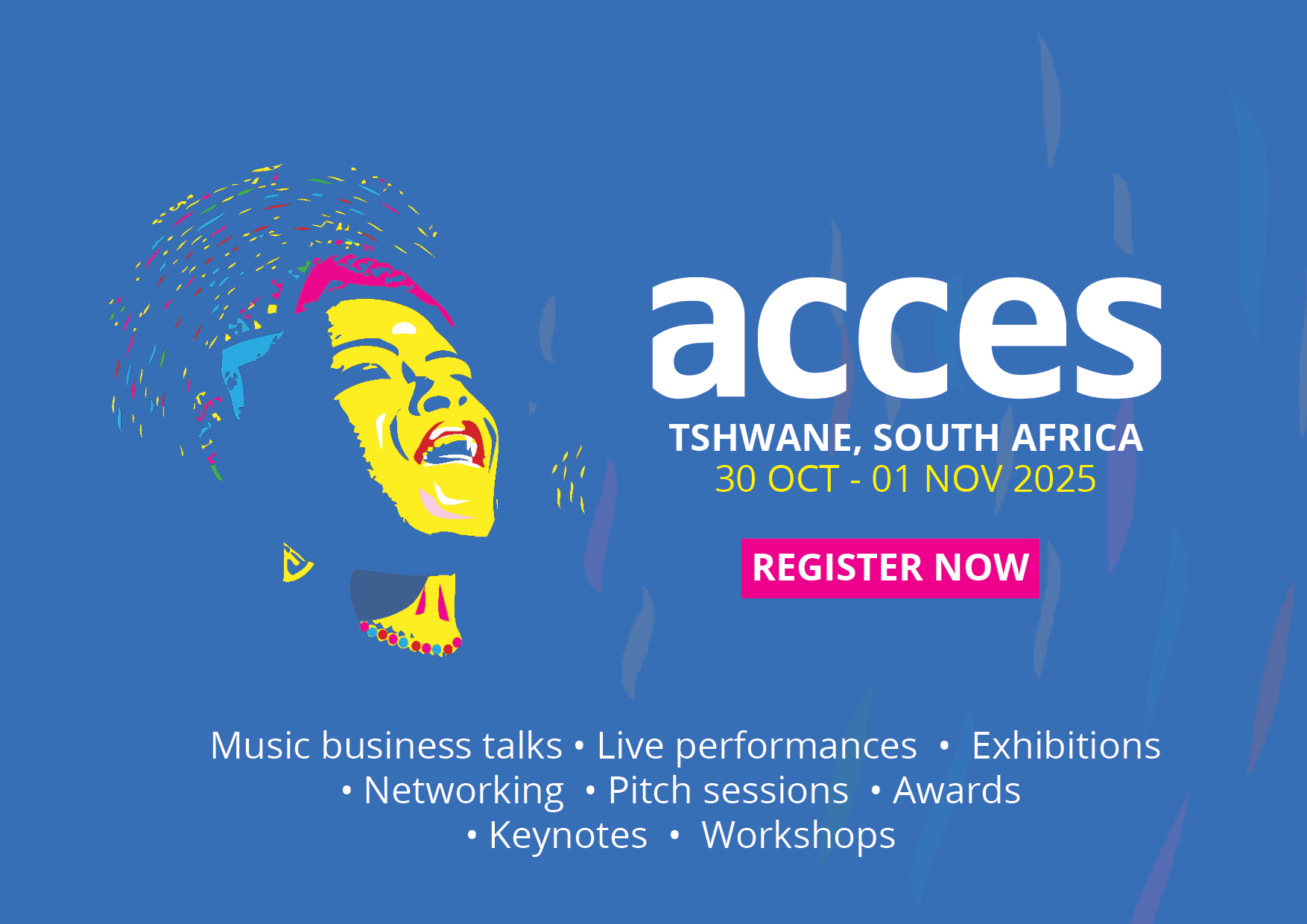
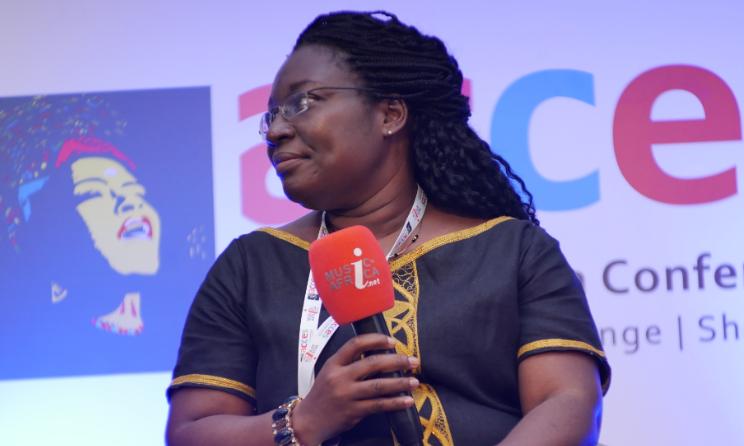
Chaque année, nous fournissons des informations générales afin de guider les participants dans la préparation de leur voyage. En plus de ce site, des mises à jour importantes seront envoyées par e-mail à tous les délégués inscrits. Assurez-vous de vous inscrire dès que possible. Pour plus d'informations, veuillez contacter [email protected] Continuez à consulter cette page pour plus d'information.  

Gender@Work
Gender@Work

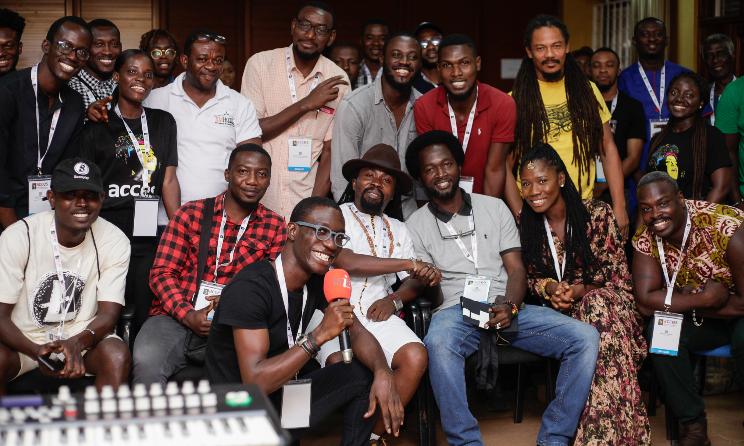
Music In Africa Gender @ Work is a three-year training programme aimed at upskilling and increasing the participation of female professionals in the African music sector. Launched by the Music In Africa Foundation (MIAF) in April 2019, the programme is connected to the MIAF’s ACCES music conference – a pan-African event held in a different African country every year. This connection enables the programme to reach new participants in a different African country every year. The programme marks the beginning of a more concerted effort by the Foundation to support the participation and inclusion of women in all facets of its programmes and the music sector in Africa as a whole. Over the three years, the programme will aim to address gender imbalances in the sector through training, lobbying, facilitating knowledge exchange and dialogues that foster the interest of women. The broader objectives of the programme are to: Provide industry training for women on critical music industry skills, focusing on: Stage management Electronic music production and recording Music business management Technical knowledge Provide an opportunity for both professional and aspiring women to benefit from the Music In Africa network and its broad range of activities in 2019, 2020 and 2021. Provide a solution-based platform in the form of a round table at ACCES with a view to identify challenges, discuss opportunities and lobby for the interests of female practitioners. Offer participants the opportunity to benefit from programmes offered by MIAF’s partners. Increase access to educational materials. Integrate participants in the broader ACCES programme to maximise experience and exposure to the industry. Record and present training materials on the www.musicinafrica.net, including but not limited to tutorials, templates and other best-practice materials. Communicate women-based themes that support the initiatives and messages of the programme. MAIN TRAINING ACTIVITIES Training in first country (Ghana): In the first year, participants will be trained on all aspects of stage management by a team of experienced stage managers from 10 to 17 November 2019. The programme will offer robust classroom training as well as practical, hands-on training in which participants will also be given the opportunity to manage various aspects of the ACCES performance programme. Training in second country: The second training iteration will take place at ACCES 2020 when the programme will diversify its course to include music production lessons and training on other music business topics. A round-table platform will also be introduced to coincide with the ACCES programme. Training in third country: The third training iteration will take place at ACCES 2021 in a different country, offering an advanced course. HOW DO YOU GET INVOLVED?  As a participant, facilitator or trainer: The programme enrolls up to 12 trainees every year. All opportunities are advertised publicly on this website, and will be added to this page. Please keep checking this page for new calls (below under UPDATES & CURRENT OPPORTUNITIES). As a partner Please contact Claire Metais at [email protected]. APPLY The call for applications for 2020 will be announced soon. The Music In Africa Gender @ Work programme is made possible with the support of the Prince Claus Fund, Siemens Stiftung and Goethe-Institut.

Sound Connects Fund
Sound Connects Fund

Pour les praticiens et les organisations culturels et créatifs opérant en Afrique australe, l’accès au financement reste un défi majeur. La pandémie de COVID-19 a également eu un impact massif sur les politiques gouvernementales, les dépenses et l’économie en général, et a vu les dépenses consacrées à la culture reléguées plus bas dans la liste des priorités. De plus, les industries culturelles et créatives citent régulièrement quatre domaines principaux où l’investissement est nécessaire pour la croissance : une visibilité accrue, la mobilité incluant l’accès à de nouveaux marchés, le financement et les structures de soutien.

Music In Africa Live

MUSIC IN AFRICA LIVE Lancé en 2020 pour une durée de 3 ans, Music In Africa Live est une initiative visant à soutenir l'écosystème de la musique africaine face aux contraintes imposées par la pandémie de COVID-19 ; le projet a été lancé par la Fondation Music In Africa (MIAF) en partenariat avec le ministère fédéral allemand des Affaires étrangères, Siemens Stiftung et le Goethe Institut. Plus de 30 aides sont disponibles dans le cadre de la troisième édition de Music In Africa Live, dans 3 catégories :  showcases, renforcement des compétences et plaidoyer, en conformité avec les modalités énoncées.

Instrument Building And Repair Project

The overarching objective of Music In Africa Foundation’s Instrument Building and Repair (IBR) project is to encourage the formalisation and professionalisation of instrument-making and repair in Africa, especially in relation to indigenous African instruments. Background In 2014, the Music In Africa Foundation (MIAF) identified as one of its focus areas for development the need to encourage young people from music and music-related sectors to consider instrument-making as a career. This need extended itself from the recognition that the making of traditional African instruments is not a widely practiced skill and seems to be limited to the older generation. Traditional African instrument makers are also few and far between, making communication and logistics between teachers and learners an obstacle. When instrument building workshops take place, budgetary constraints do not allow teachers or learners the time to explore the finer details of an instrument. Based on these observations, the MIAF designed and piloted the first IBR workshop at the Dhow Countries Music Academy (DCMA) in Zanzibar in February 2015. In 2016, the foundation received funding from the South African National Lotteries Commission to implement a much bigger version of the project in Johannesburg. The project drew participants from five African countries. 25 students from South Africa, Ghana, Senegal, Kenya and Ethiopia were trained on how to build and repair musical instruments. The instruments that they made were: Traditional Instruments: Umakhweyana and Marimba Conventional Instrument: Dulcimer guitar The workshop culminated in a traditional instruments concert at the Wits Theatre in Johannesburg. It is the MIAF’s aim to roll out similar workshops in as many African countries as possible over the next few years. Objectives Developing awareness of musical instrument makers in Africa with a view to promote their work to a wider global audience. Facilitating the sharing and transfer of skills in indigenous instruments between countries on the continent. Encouraging the formalisation and professionalisation of instrument-making and repair in Africa, especially in relation to indigenous instruments. Helping instrument makers develop their careers. Fostering the rapid monetisation and sustainable development of instrument-making and repair in Africa. Promoting constant exchange of ideas, expertise, experiences and know-how among instrument makers in Africa. Facilitating the identification of existing gaps in the field with a view to contribute new solutions. Facilitating the transfer of knowledge and skills of indigenous instruments between younger and older generations. 2020 edition The MIAF has also announced that multi-instrumentalist and instrument maker Joe Makhanza will facilitate one of the workshops on the building of the kamale ngoni instrument. Kamale ngoni is a kora-like, stringed instrument that originated in West Africa. The instrument contributed to the rise of Wassoulou music in the 1970s and 1990s. Makhanza was born in Giyani in South Africa's Limpopo province. He completed a bachelor of music degree and a post-graduate diploma in arts marketing from Wits University. He is currently completing his masters in ethnomusicology and is a part-time lecturer in African music studies at Rhodes University. He plays the kora, mbira, valiha, masenqo, xiwewe, ngoni ba and xizambi, among others. He also manufactures the aforementioned instruments. The MIAF will confirm more trainers who will join the workshops as well as the other instruments that will be featured in the 2020 IBR programme.  Apply to participate here. Connect with us on Twitter, Instagram and Facebook, and subscribe to our monthly newsletter. The Music In Africa Instrument Building and Repair project is funded by the National Lotteries Commission. It is implemented in partnership with Siemens Stiftung, Goethe-Institut, Wits Theatre and Kaya FM.

banner image

Grammys 2022: What Fela Kuti has to do with West Africa’s growing pop fame

Accueil/Non classé/Grammys 2022: What Fela Kuti has to do with West Africa’s growing pop fame

Most of these artists are also proponents of Afrobeat (Femi and Made Kuti, following the musical and political form defined by Fela Kuti) or new breed Afrobeats (Wizkid, Burna Boy and Tems). Kidjo, too, has admitted to being influenced by Fela.

As with Afrobeat, Afrobeats is music characterised by harmonic and melodic grooves, call and response choruses and intricately layered syncopation (disrupted rhythms). But Afrobeats is more commercial, radio-friendly and often politically vacuous – easily digestible by mass audiences.

There have been extensive conversations on the differences and similarities of Afrobeat and Afrobeats. But within this selection of Grammy nominees what is immediately obvious are the lines where the two genres come together.

It is interesting to observe the dissemination of Fela’s legacy in the form of the varied work of his numerous musical children many of whom pay direct homage to him by copious sampling and outright imitation.

The Kuti dynasty

Fela’s dominance of the music scene spanned the 1970s and 1980s. After he was incarcerated by the Nigerian military authorities in 1984, his son Femi steadily began to come into his own musically. Femi is still decidedly more old school Afrobeat than new school Afrobeats. He served a long musical tutelage under Fela, and struggled to carve his own artistic niche but would always be seen primarily as an Afrobeat musician.

Femi, visually and politically speaking, is a much more safer bet than his father. He has avoided needless controversy and partnered with a wide variety of globally accomplished US musicians such as pianist Randy Weston, rapper Mos Def and singer Macy Gray amongst other noted collaborations. Femi has received six Grammy nominations.

Fela had never fitted the Grammy mould due to his uncommercially lengthy compositions, controversial nature and outright rebelliousness. But none doubted his musical genius. In many ways, he is irrevocably fastened to the classical Afrobeat template in terms of lyrical acuity, political awareness, aesthetic definition and spiritual curiosity.

[video:https://www.youtube.com/watch?v=wyoAbMANuyc width:744 height:446 autoplay:0]

Initially, Femi may have been tempted to adopt the title of Afrobeat heir apparent and might have short-changed himself in the process. But it is never a wise proposition to try and imitate Fela. Instead what is possible and also judicious is to attempt to assimilate parts of his vast legacy rather than the whole of it. And this is precisely what the current Afrobeats stars are doing.

Made, Femi’s son and Fela’s grandson, is more removed from his domineering grandfather’s influence and so he is able to explore his vast musical heritage at his own pace and with much less external pressure. Yet still Made is closely linked to his father, and music and not controversial politics, is what essentially motivates him. Up for his first Grammy, he is more mellow and likeable than his fiery grandfather.

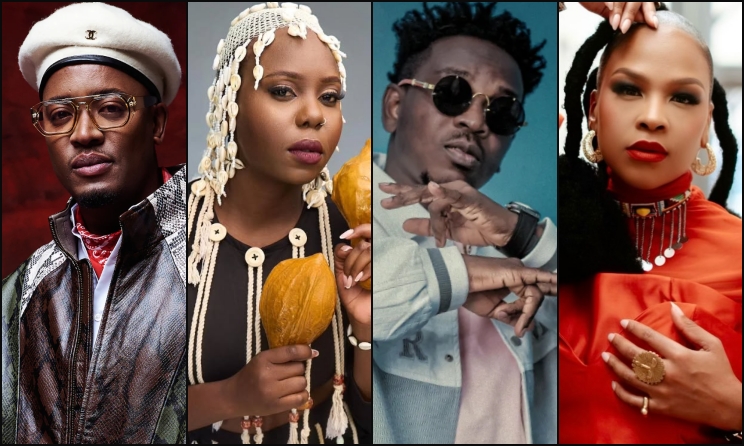
If Femi and Made represent the old guard of Afrobeat and a ever-growing legacy in Nigerian music then Wizkid, Burna Boy and Tems are the poster children of the now and the future.

The new school

Burna Boy’s connections to the Kuti dynasty also run deep. His maternal grandfather, Benson Idonije, the revered broadcaster and jazz aficionado, was Fela’s manager in the 1960s. Fela himself had been a broadcaster until he decided to cast his lot full time in the music industry. There is a raunchy video of Burna’s mother, Bose, dancing on stage beneath a bare-chested Fela, part of Fela’s sprawling entourage.

Burna has sampled numerous Fela songs – such as ‘Soke’ and Y’e’ – and he is open about his indebtedness to the maestro. Burna’s socio-political vision, cadences and musical flow are lifted straight from Fela.

Wizkid, on the other hand, is slightly more circumspect in his sampling of Fela tunes. But arguably his biggest hit, ‘Joro’, approaching 200 million views on YouTube, is derived from the “Joro jara joro” refrain in Fela’s famous incendiary song, ‘Zombie’. Wizkid also collaborated with Femi earlier in his career as if he were seeking an authentic Afrobeat imprimatur.

Tems, the youngest of the lot, is probably the least directly influenced by Fela’s Afrobeat. She is more indebted to US R&B and soul music. Her deep, sultry voice is combined with a style and vibe leaning towards the Afrocentric Afrobeat look. But there are many more artists in the wings, angling for the future Afrobeats spotlight – among them Rema, Buju, Joeboy, Omah Lay, Fireboy DML, Olakira, Ckay, Jaywillz and Asake.

Celebrity culture

Here is where Afrobeat differs from Afrobeats. Fela shunned crass materialism and he had an almost Robin Hood mentality in the dispensation of personal wealth. He avoided the consumerist flexing of today’s pop stars.

Burna Boy has finally come into his own as a mature artist. His politically conscious, Grammy-winning last album, Twice as Tall, rails against colonialism, global oppression and racism. But Burna’s lifestyle and personal values are saying something else. He is enthralled with large and flamboyant chains and necklaces, Lamborghinis and trophy girlfriends and other trappings of celebrity hip hop culture while also attempting to burnish his mystique as a serious artist. He was difficult to find when the youthful #EndSARS protesters in Nigeria recently needed local celebrity voices to aid their cause.

Wizkid has no lofty pretensions. His main concerns, also evident in his most recent album, Made In Lagos, are beautiful girls, matters of the heart, club dance floor domination and A-list celebrity status.

[video:https://www.youtube.com/watch?v=lPe09eE6Xio width:744 height:446 autoplay:0]

Massive crossover

Afrobeats is no longer confined to Nigeria, Ghana or West Africa alone. Artists from southern Africa, Rwanda, the UK and Europe have all been bitten by the bug.

The global acceptance of Afrobeats can be perceived at several levels. First of all, there are superstar Beyoncé’s collaborations with Wizkid, Burna, Tiwa Savage and Yemi Alade on her Black Is King album. Justin Bieber was quite happy to hop on the re-mix of Wizkid’s global hit, ‘Essence’. There are also Burna’s collaborations with Sam Smith, Stormzy, Pop Smoke and Jorja Smith to think about. Or Fireboy DML’s chart-storming collaboration, ‘Peru’, with Ed Sheeran.

Indeed these massive crossovers are telling an unambiguous story: Afrobeats has acquired global legitimacy because it brings a unique swag and flavour to an otherwise jaded music scene. It’s a swag that has roots all the way back to Fela Kuti.

Sanya Osha is a senior research fellow at the Institute for Humanities in Africa, University of Cape Town. This article first appeared on The Conversation.

newsletter banner

Abonnez-vous à notre newsletter

Retrouvez-nous sur les réseaux sociaux