



















NEFCISA
NEFCISA

The Music In Africa Foundation (MIAF) is proud to announce its partnership with the Industrial Development Corporation (IDC) as a Strategic Implementing Partner (SIP) for its Social Employment Fund (SEF). Through this collaboration, MIAF is launching a new national programme designed to create jobs, address skills gaps, and strengthen South Africa’s creative industries — in line with the SEF’s overarching goal to generate work for the common good and build community value through employment, social contribution, and inclusive economic participation. Operating under the banner NEFCISA (National Employment Facility for Creative Industries in South Africa), the initiative will recruit and train participants, match them with host organisations, and place a minimum of 1 000 workers across the country. Key Objectives: Support employment and entrepreneurship in the creative industries. Offer skills development and training programmes. Foster partnerships between public and private creative sectors. Promote South African creativity at both provincial and national levels Foster community development through social contribution.

ACCES
ACCES

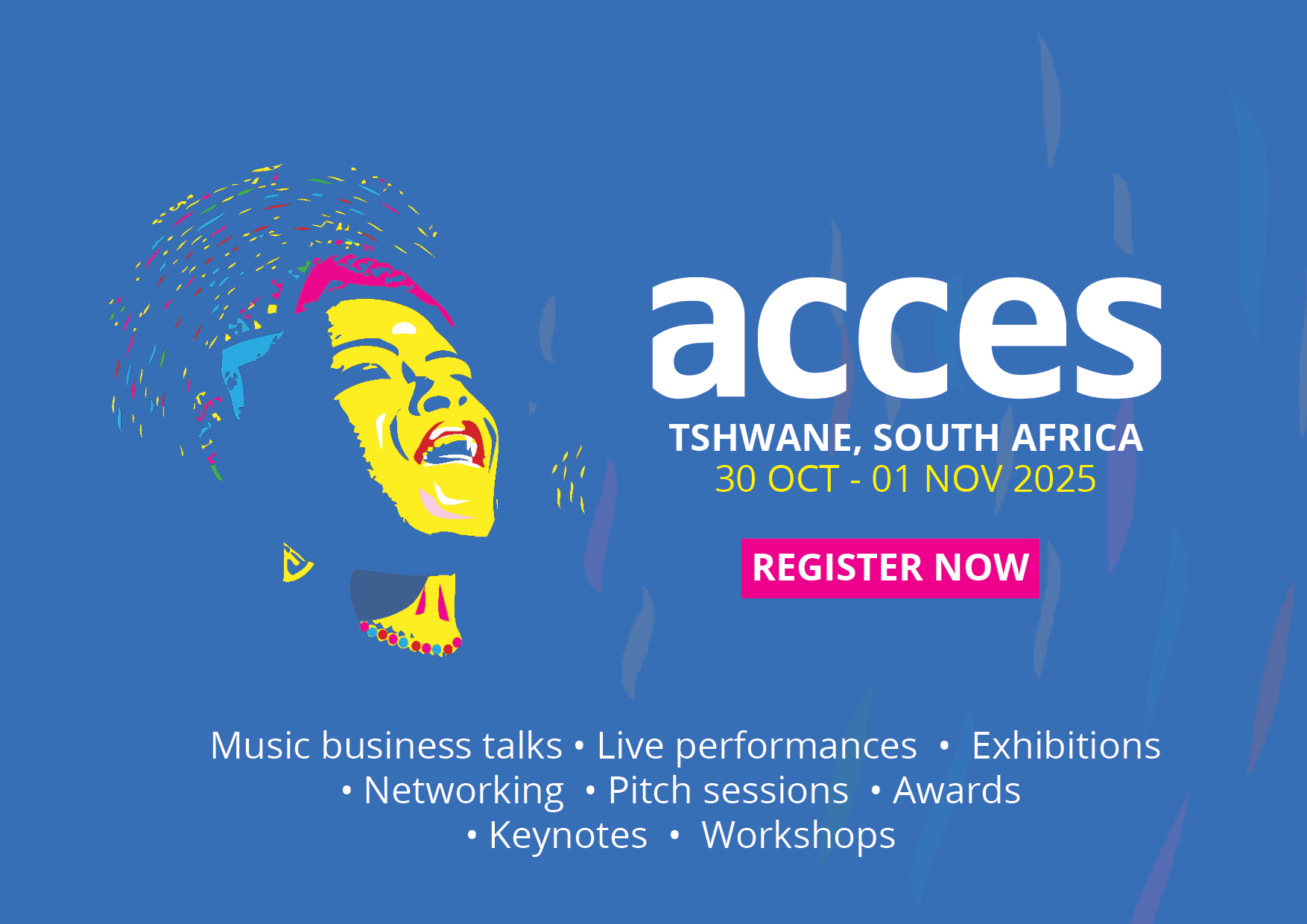
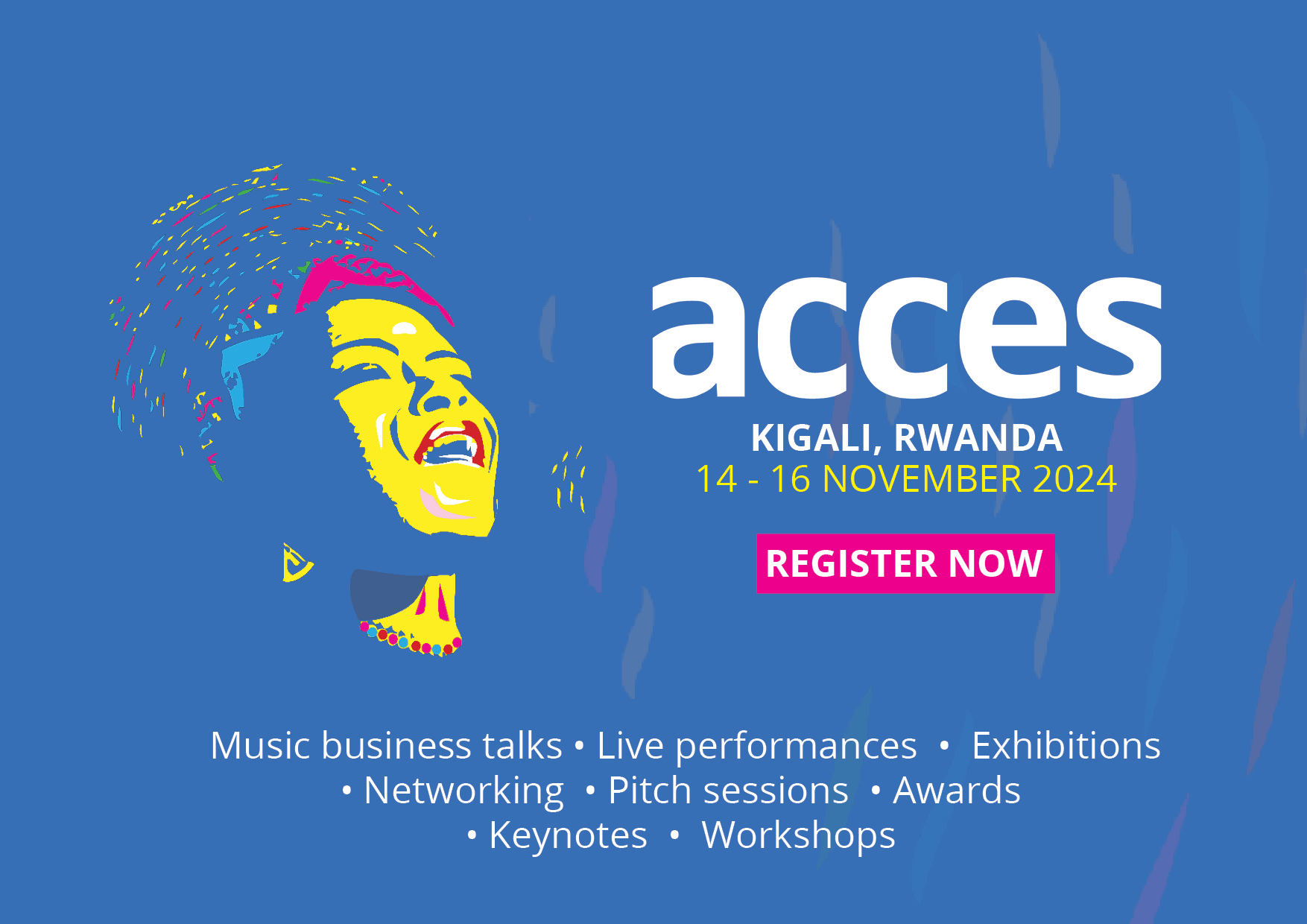
Chaque année, nous fournissons des informations générales afin de guider les participants dans la préparation de leur voyage. En plus de ce site, des mises à jour importantes seront envoyées par e-mail à tous les délégués inscrits. Assurez-vous de vous inscrire dès que possible. Pour plus d'informations, veuillez contacter [email protected] Continuez à consulter cette page pour plus d'information.  

Gender@Work
Gender@Work

Music In Africa Gender @ Work is a three-year training programme aimed at upskilling and increasing the participation of female professionals in the African music sector. Launched by the Music In Africa Foundation (MIAF) in April 2019, the programme is connected to the MIAF’s ACCES music conference – a pan-African event held in a different African country every year. This connection enables the programme to reach new participants in a different African country every year. The programme marks the beginning of a more concerted effort by the Foundation to support the participation and inclusion of women in all facets of its programmes and the music sector in Africa as a whole. Over the three years, the programme will aim to address gender imbalances in the sector through training, lobbying, facilitating knowledge exchange and dialogues that foster the interest of women. The broader objectives of the programme are to: Provide industry training for women on critical music industry skills, focusing on: Stage management Electronic music production and recording Music business management Technical knowledge Provide an opportunity for both professional and aspiring women to benefit from the Music In Africa network and its broad range of activities in 2019, 2020 and 2021. Provide a solution-based platform in the form of a round table at ACCES with a view to identify challenges, discuss opportunities and lobby for the interests of female practitioners. Offer participants the opportunity to benefit from programmes offered by MIAF’s partners. Increase access to educational materials. Integrate participants in the broader ACCES programme to maximise experience and exposure to the industry. Record and present training materials on the www.musicinafrica.net, including but not limited to tutorials, templates and other best-practice materials. Communicate women-based themes that support the initiatives and messages of the programme. MAIN TRAINING ACTIVITIES Training in first country (Ghana): In the first year, participants will be trained on all aspects of stage management by a team of experienced stage managers from 10 to 17 November 2019. The programme will offer robust classroom training as well as practical, hands-on training in which participants will also be given the opportunity to manage various aspects of the ACCES performance programme. Training in second country: The second training iteration will take place at ACCES 2020 when the programme will diversify its course to include music production lessons and training on other music business topics. A round-table platform will also be introduced to coincide with the ACCES programme. Training in third country: The third training iteration will take place at ACCES 2021 in a different country, offering an advanced course. HOW DO YOU GET INVOLVED?  As a participant, facilitator or trainer: The programme enrolls up to 12 trainees every year. All opportunities are advertised publicly on this website, and will be added to this page. Please keep checking this page for new calls (below under UPDATES & CURRENT OPPORTUNITIES). As a partner Please contact Claire Metais at [email protected]. APPLY The call for applications for 2020 will be announced soon. The Music In Africa Gender @ Work programme is made possible with the support of the Prince Claus Fund, Siemens Stiftung and Goethe-Institut.

Sound Connects Fund
Sound Connects Fund

Pour les praticiens et les organisations culturels et créatifs opérant en Afrique australe, l’accès au financement reste un défi majeur. La pandémie de COVID-19 a également eu un impact massif sur les politiques gouvernementales, les dépenses et l’économie en général, et a vu les dépenses consacrées à la culture reléguées plus bas dans la liste des priorités. De plus, les industries culturelles et créatives citent régulièrement quatre domaines principaux où l’investissement est nécessaire pour la croissance : une visibilité accrue, la mobilité incluant l’accès à de nouveaux marchés, le financement et les structures de soutien.

Music In Africa Live

MUSIC IN AFRICA LIVE Lancé en 2020 pour une durée de 3 ans, Music In Africa Live est une initiative visant à soutenir l'écosystème de la musique africaine face aux contraintes imposées par la pandémie de COVID-19 ; le projet a été lancé par la Fondation Music In Africa (MIAF) en partenariat avec le ministère fédéral allemand des Affaires étrangères, Siemens Stiftung et le Goethe Institut. Plus de 30 aides sont disponibles dans le cadre de la troisième édition de Music In Africa Live, dans 3 catégories :  showcases, renforcement des compétences et plaidoyer, en conformité avec les modalités énoncées.

Instrument Building And Repair Project

The overarching objective of Music In Africa Foundation’s Instrument Building and Repair (IBR) project is to encourage the formalisation and professionalisation of instrument-making and repair in Africa, especially in relation to indigenous African instruments. Background In 2014, the Music In Africa Foundation (MIAF) identified as one of its focus areas for development the need to encourage young people from music and music-related sectors to consider instrument-making as a career. This need extended itself from the recognition that the making of traditional African instruments is not a widely practiced skill and seems to be limited to the older generation. Traditional African instrument makers are also few and far between, making communication and logistics between teachers and learners an obstacle. When instrument building workshops take place, budgetary constraints do not allow teachers or learners the time to explore the finer details of an instrument. Based on these observations, the MIAF designed and piloted the first IBR workshop at the Dhow Countries Music Academy (DCMA) in Zanzibar in February 2015. In 2016, the foundation received funding from the South African National Lotteries Commission to implement a much bigger version of the project in Johannesburg. The project drew participants from five African countries. 25 students from South Africa, Ghana, Senegal, Kenya and Ethiopia were trained on how to build and repair musical instruments. The instruments that they made were: Traditional Instruments: Umakhweyana and Marimba Conventional Instrument: Dulcimer guitar The workshop culminated in a traditional instruments concert at the Wits Theatre in Johannesburg. It is the MIAF’s aim to roll out similar workshops in as many African countries as possible over the next few years. Objectives Developing awareness of musical instrument makers in Africa with a view to promote their work to a wider global audience. Facilitating the sharing and transfer of skills in indigenous instruments between countries on the continent. Encouraging the formalisation and professionalisation of instrument-making and repair in Africa, especially in relation to indigenous instruments. Helping instrument makers develop their careers. Fostering the rapid monetisation and sustainable development of instrument-making and repair in Africa. Promoting constant exchange of ideas, expertise, experiences and know-how among instrument makers in Africa. Facilitating the identification of existing gaps in the field with a view to contribute new solutions. Facilitating the transfer of knowledge and skills of indigenous instruments between younger and older generations. 2020 edition The MIAF has also announced that multi-instrumentalist and instrument maker Joe Makhanza will facilitate one of the workshops on the building of the kamale ngoni instrument. Kamale ngoni is a kora-like, stringed instrument that originated in West Africa. The instrument contributed to the rise of Wassoulou music in the 1970s and 1990s. Makhanza was born in Giyani in South Africa's Limpopo province. He completed a bachelor of music degree and a post-graduate diploma in arts marketing from Wits University. He is currently completing his masters in ethnomusicology and is a part-time lecturer in African music studies at Rhodes University. He plays the kora, mbira, valiha, masenqo, xiwewe, ngoni ba and xizambi, among others. He also manufactures the aforementioned instruments. The MIAF will confirm more trainers who will join the workshops as well as the other instruments that will be featured in the 2020 IBR programme.  Apply to participate here. Connect with us on Twitter, Instagram and Facebook, and subscribe to our monthly newsletter. The Music In Africa Instrument Building and Repair project is funded by the National Lotteries Commission. It is implemented in partnership with Siemens Stiftung, Goethe-Institut, Wits Theatre and Kaya FM.

banner image

Interview: SA legend Ray Phiri

Accueil/Non classé/Interview: SA legend Ray Phiri

When did you get sick?

Coming back from Azgo. But beside that, age is the common denominator. You can only do as much, so you need to be careful how you do it: preserve some energy and when the body says, ‘Hey, I need some rest,’ you gotta give it some rest. You’ll make more music next time [laughs].

You’ve been busy lately. You have a new management company [Black Major]. How is that going?

The new management are still on a probation period. We want to see what they’re bringing to the table. I’ve been in rock and roll for a long time, I know what management is all about. But people need to be given a chance to prove themselves. I’m responsible for all these young musicians I work with, so they look up to me to protect them, to carry them forward, to advise them, to be their psychologist. And I need them to be my energy and strength.

You have a new band, not Stimela…

I’m still with Stimela but this set-up gives me an opportunity to play the songs I can never play with Stimela. There’s so much music. Stimela is a cult band, although I have to be careful not to bring in new music that people might reject. I must introduce them with a retro of some of the Stimela music. That way they will see that there’s more music that can be shared with them.   

Are you writing music at the moment?

I am. The only problem is that I’m a coward. I have three unreleased albums, finished and mastered. But I don’t see any reason why I should release them. 

Why not?

I’m not in the business of making money, I’m in the business of archiving.

What about your fans? Maybe they’re expecting new music.

That’s why with this band I’m chronicling four decades of a growth of music. Four epochs, each of them representing a different period, a certain subject matter and a story to be told. Music is a communication tool. The money comes as a bonus for a job well done. I’m crazy. You know, you get more satisfaction when you teach and learn. If it’s all about making money, then get out of music, because you’re going to destroy the music for the sake of money.

That model seems to be working for some musicians.

I wonder if they will be in music for 53 years like I’ve been. That’s the difference. Young musicians nowadays blur the lines. They become a product, their art becomes tied up with the product. So it’s not art for art’s sake. If people are still enjoying the music I made four decades ago, then that means I’ve done the right thing.

Are you going to play music from Graceland tonight?

Graceland is a place of pain. Too many controversies, too many lies, too many shenanigans. The truth will come out someday. 

Do you think you got the credit you deserved after Graceland?

I just got credited for the songs I wrote, as an arranger [laughs], which is not fair.

Are you still in contact with the Graceland band?

I am. In 2012 we were celebrating the 25th anniversary of Graceland. It felt good but you cannot keep on going back to Graceland because there’s more music. Graceland was just the tip of the iceberg. If Paul Simon is a great composer and songwriter why does he not have another Graceland, or an album as successful as Graceland?

What are Paul Simon’s positive traits? Was he a good administrator, was he someone who could get people to work well together?

I don’t think so. He took a gamble. All he did was prey on the innocence of people who love making music. And it looked like he gave them an opportunity. He never did that. The music of South Africa gave him an opportunity to revive his career.

[video:https://www.youtube.com/watch?v=Hk7MCvCHNQA autoplay:0]

Let’s move away from the memories and talk about the now. What’s next? Is there an explosion coming from you?

There will be an explosion. The explosion will be accepting the fact that I have to tell the world, but tell the world what? That’s the trick.

Do you know what that is?

I don’t know. I’m honest about that. If I’m hurting I won’t say, ‘I hurt but only a little.’ I’ll say, ‘I’m hurting because of X, Y, Z, I’m happy because of X, Y, Z, I’m confused because of X, Y, Z.’ Can the world help me make sense of the nonsense? So the subject matter will be very wide. 

Let’s take as an example the subject matter of an Africa Day concert. We all know what it’s about – part ideology, part politics, part reality. What’s the new context, the new story that we can tell the world that it doesn’t know already?     

Spirituality and humanism. Spirituality hasn’t been lost yet. I’m a spiritual person.

Yes, but you’re 70. What about the young people out there?

You lead them to where the information is. You don’t push them away. If you save one you’d be saving multitudes of them. Let’s look at it this way: 51% of the world population is between the ages of 18 and 40. So where is the power? It lies within that age group.

Does it?

Yes. The actual power lies within that group. They can stop the heart of the world, they can transform the world.

Sure they can but are they doing it?

Too much information has little truth. That’s why at this point in time they haven’t found a reservoir where the information they are seeking can be found. The reservoir is spirituality. Once you’re satisfied as a spiritual being you don’t worry about a worry, because the worry will take care of itself. Your purpose as a human being, in life, is to protect, serve, educate and learn. The universe has so much for us but we haven’t touched even a little particle of it.

Do young people listen to what you have to say?

Yes. Easy. It’s because I become a child. When you talk to young people, be the child, let them teach you. Once their energy ebbs, you say, ‘Okay, let’s work together now.’ I work a lot with young people. But you see, society is sick. It has these little pockets of ideologies. ‘That’s old school and that’s new school.’ That just creates a vacuum that can be manipulated. We have to swallow our pride and reach out, and they will come. Wisdom and youth equals energy.

Let’s get down to the ground. How is today’s music industry different than the olden days?

During our youth we fought to regulate the music industry. Just like the recording industry, the music industry is equally important. Today in South Africa we have more of a recording industry than a music industry. The music industry is supposed to support the recording industry. The touring circuit, theatres, bars, clubs and so forth; I can’t take you to any club right now for you to experience it. There’s nothing. We’ve lost it. We should have thought.

During the apartheid days we became culturally strong because there were township halls, there were mining houses that had arenas, so we would go entertain the miners. We could easily advocate to the miners and the township. Programmes of activism became easier to carry through. We had a music industry. The varsities were manifesting grounds of positive thinkers. If you could get yourself inside a varsity and perform for a varsity audience, then you were performing for a class of opinion-makers of the future. The varsities are the barometer of seeing where the country is going. They see whether transformation is taking place. We cannot keep digressing and hiding behind the truth, saying ‘It’ll work someday.’ There’s no such thing.

If we have to change things, let’s change them radically now. If 71% of people in South Africa live below the poverty line, how can we level the playing field? Almost 65% of the country is very rural. Instead of saying ‘let’s urbanise’, why don’t we industrialise in poor areas so people can be productive without having to travel hundreds of kilometres to get to work? A working father away from his family destroys the socialisation of that family. We keep making the same mistakes generation after generation.

[video:https://www.youtube.com/watch?v=Qy9QPjUkvvM autoplay:0]

newsletter banner

Abonnez-vous à notre newsletter

Retrouvez-nous sur les réseaux sociaux