














NEFCISA
NEFCISA

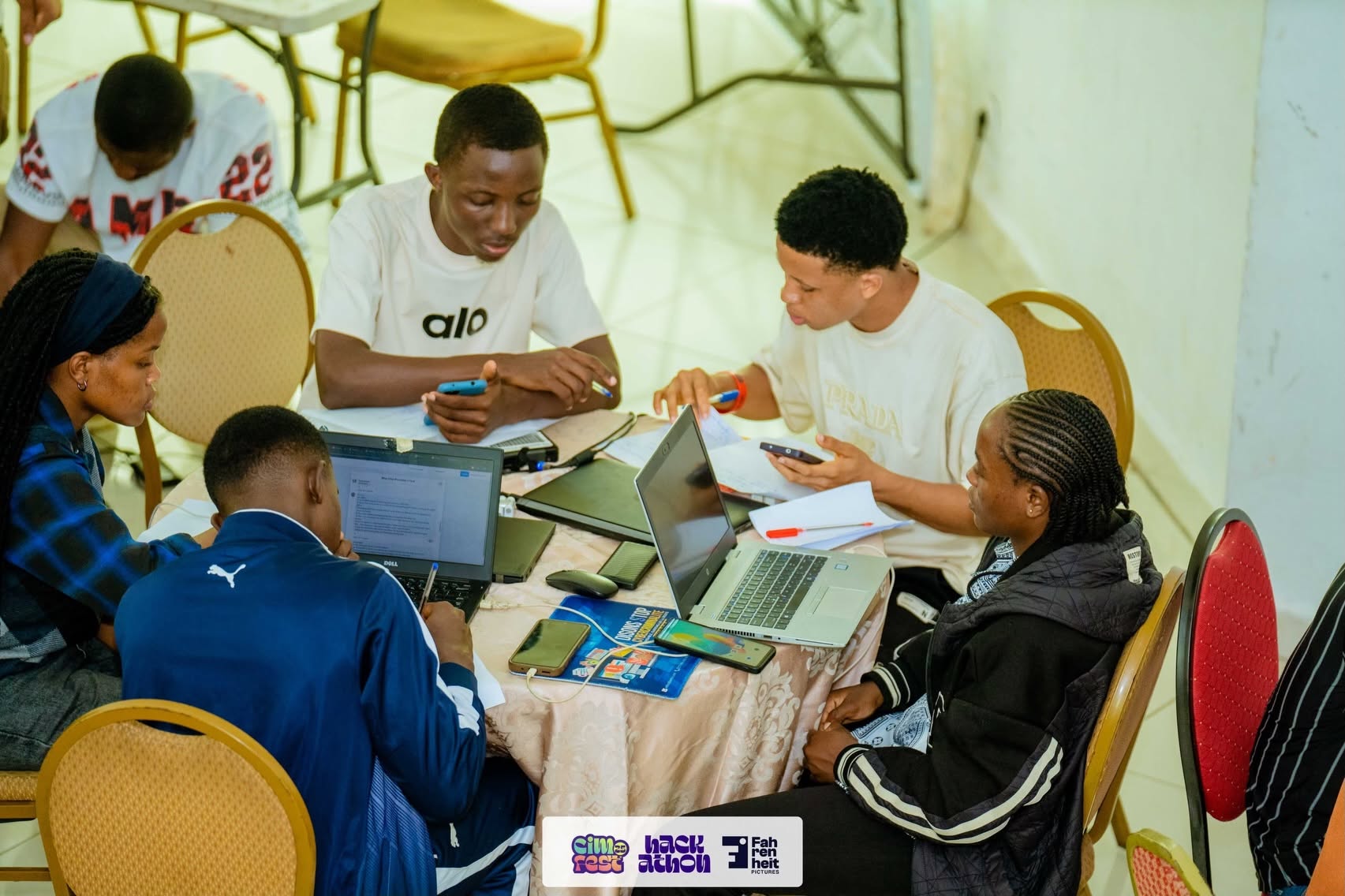
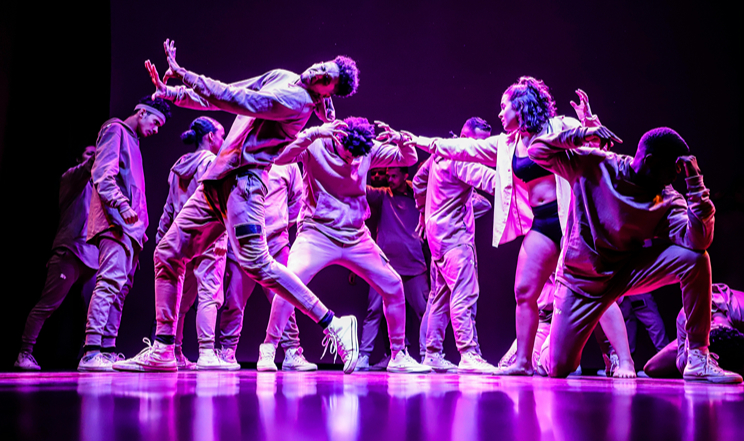
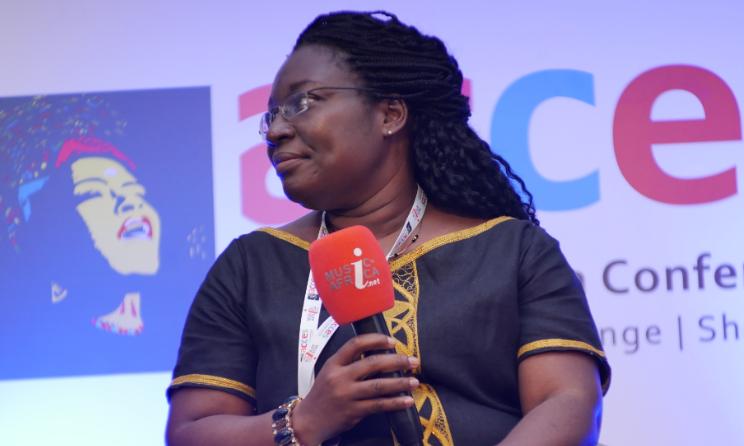
The Music In Africa Foundation (MIAF) is proud to announce its partnership with the Industrial Development Corporation (IDC) as a Strategic Implementing Partner (SIP) for its Social Employment Fund (SEF). Through this collaboration, MIAF is launching a new national programme designed to create jobs, address skills gaps, and strengthen South Africa’s creative industries — in line with the SEF’s overarching goal to generate work for the common good and build community value through employment, social contribution, and inclusive economic participation. Operating under the banner NEFCISA (National Employment Facility for Creative Industries in South Africa), the initiative will recruit and train participants, match them with host organisations, and place a minimum of 1 000 workers across the country. Key Objectives: Support employment and entrepreneurship in the creative industries. Offer skills development and training programmes. Foster partnerships between public and private creative sectors. Promote South African creativity at both provincial and national levels Foster community development through social contribution.

ACCES
ACCES

Chaque année, nous fournissons des informations générales afin de guider les participants dans la préparation de leur voyage. En plus de ce site, des mises à jour importantes seront envoyées par e-mail à tous les délégués inscrits. Assurez-vous de vous inscrire dès que possible. Pour plus d'informations, veuillez contacter [email protected] Continuez à consulter cette page pour plus d'information.  

Gender@Work
Gender@Work

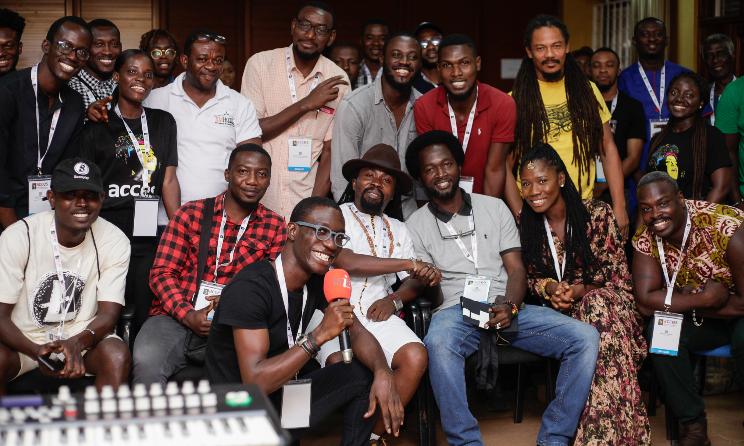
Music In Africa Gender @ Work is a three-year training programme aimed at upskilling and increasing the participation of female professionals in the African music sector. Launched by the Music In Africa Foundation (MIAF) in April 2019, the programme is connected to the MIAF’s ACCES music conference – a pan-African event held in a different African country every year. This connection enables the programme to reach new participants in a different African country every year. The programme marks the beginning of a more concerted effort by the Foundation to support the participation and inclusion of women in all facets of its programmes and the music sector in Africa as a whole. Over the three years, the programme will aim to address gender imbalances in the sector through training, lobbying, facilitating knowledge exchange and dialogues that foster the interest of women. The broader objectives of the programme are to: Provide industry training for women on critical music industry skills, focusing on: Stage management Electronic music production and recording Music business management Technical knowledge Provide an opportunity for both professional and aspiring women to benefit from the Music In Africa network and its broad range of activities in 2019, 2020 and 2021. Provide a solution-based platform in the form of a round table at ACCES with a view to identify challenges, discuss opportunities and lobby for the interests of female practitioners. Offer participants the opportunity to benefit from programmes offered by MIAF’s partners. Increase access to educational materials. Integrate participants in the broader ACCES programme to maximise experience and exposure to the industry. Record and present training materials on the www.musicinafrica.net, including but not limited to tutorials, templates and other best-practice materials. Communicate women-based themes that support the initiatives and messages of the programme. MAIN TRAINING ACTIVITIES Training in first country (Ghana): In the first year, participants will be trained on all aspects of stage management by a team of experienced stage managers from 10 to 17 November 2019. The programme will offer robust classroom training as well as practical, hands-on training in which participants will also be given the opportunity to manage various aspects of the ACCES performance programme. Training in second country: The second training iteration will take place at ACCES 2020 when the programme will diversify its course to include music production lessons and training on other music business topics. A round-table platform will also be introduced to coincide with the ACCES programme. Training in third country: The third training iteration will take place at ACCES 2021 in a different country, offering an advanced course. HOW DO YOU GET INVOLVED?  As a participant, facilitator or trainer: The programme enrolls up to 12 trainees every year. All opportunities are advertised publicly on this website, and will be added to this page. Please keep checking this page for new calls (below under UPDATES & CURRENT OPPORTUNITIES). As a partner Please contact Claire Metais at [email protected]. APPLY The call for applications for 2020 will be announced soon. The Music In Africa Gender @ Work programme is made possible with the support of the Prince Claus Fund, Siemens Stiftung and Goethe-Institut.

Sound Connects Fund
Sound Connects Fund

Pour les praticiens et les organisations culturels et créatifs opérant en Afrique australe, l’accès au financement reste un défi majeur. La pandémie de COVID-19 a également eu un impact massif sur les politiques gouvernementales, les dépenses et l’économie en général, et a vu les dépenses consacrées à la culture reléguées plus bas dans la liste des priorités. De plus, les industries culturelles et créatives citent régulièrement quatre domaines principaux où l’investissement est nécessaire pour la croissance : une visibilité accrue, la mobilité incluant l’accès à de nouveaux marchés, le financement et les structures de soutien.

Music In Africa Live

MUSIC IN AFRICA LIVE Lancé en 2020 pour une durée de 3 ans, Music In Africa Live est une initiative visant à soutenir l'écosystème de la musique africaine face aux contraintes imposées par la pandémie de COVID-19 ; le projet a été lancé par la Fondation Music In Africa (MIAF) en partenariat avec le ministère fédéral allemand des Affaires étrangères, Siemens Stiftung et le Goethe Institut. Plus de 30 aides sont disponibles dans le cadre de la troisième édition de Music In Africa Live, dans 3 catégories :  showcases, renforcement des compétences et plaidoyer, en conformité avec les modalités énoncées.

Instrument Building And Repair Project

The overarching objective of Music In Africa Foundation’s Instrument Building and Repair (IBR) project is to encourage the formalisation and professionalisation of instrument-making and repair in Africa, especially in relation to indigenous African instruments. Background In 2014, the Music In Africa Foundation (MIAF) identified as one of its focus areas for development the need to encourage young people from music and music-related sectors to consider instrument-making as a career. This need extended itself from the recognition that the making of traditional African instruments is not a widely practiced skill and seems to be limited to the older generation. Traditional African instrument makers are also few and far between, making communication and logistics between teachers and learners an obstacle. When instrument building workshops take place, budgetary constraints do not allow teachers or learners the time to explore the finer details of an instrument. Based on these observations, the MIAF designed and piloted the first IBR workshop at the Dhow Countries Music Academy (DCMA) in Zanzibar in February 2015. In 2016, the foundation received funding from the South African National Lotteries Commission to implement a much bigger version of the project in Johannesburg. The project drew participants from five African countries. 25 students from South Africa, Ghana, Senegal, Kenya and Ethiopia were trained on how to build and repair musical instruments. The instruments that they made were: Traditional Instruments: Umakhweyana and Marimba Conventional Instrument: Dulcimer guitar The workshop culminated in a traditional instruments concert at the Wits Theatre in Johannesburg. It is the MIAF’s aim to roll out similar workshops in as many African countries as possible over the next few years. Objectives Developing awareness of musical instrument makers in Africa with a view to promote their work to a wider global audience. Facilitating the sharing and transfer of skills in indigenous instruments between countries on the continent. Encouraging the formalisation and professionalisation of instrument-making and repair in Africa, especially in relation to indigenous instruments. Helping instrument makers develop their careers. Fostering the rapid monetisation and sustainable development of instrument-making and repair in Africa. Promoting constant exchange of ideas, expertise, experiences and know-how among instrument makers in Africa. Facilitating the identification of existing gaps in the field with a view to contribute new solutions. Facilitating the transfer of knowledge and skills of indigenous instruments between younger and older generations. 2020 edition The MIAF has also announced that multi-instrumentalist and instrument maker Joe Makhanza will facilitate one of the workshops on the building of the kamale ngoni instrument. Kamale ngoni is a kora-like, stringed instrument that originated in West Africa. The instrument contributed to the rise of Wassoulou music in the 1970s and 1990s. Makhanza was born in Giyani in South Africa's Limpopo province. He completed a bachelor of music degree and a post-graduate diploma in arts marketing from Wits University. He is currently completing his masters in ethnomusicology and is a part-time lecturer in African music studies at Rhodes University. He plays the kora, mbira, valiha, masenqo, xiwewe, ngoni ba and xizambi, among others. He also manufactures the aforementioned instruments. The MIAF will confirm more trainers who will join the workshops as well as the other instruments that will be featured in the 2020 IBR programme.  Apply to participate here. Connect with us on Twitter, Instagram and Facebook, and subscribe to our monthly newsletter. The Music In Africa Instrument Building and Repair project is funded by the National Lotteries Commission. It is implemented in partnership with Siemens Stiftung, Goethe-Institut, Wits Theatre and Kaya FM.

banner image

Gospel and religious music in Ethiopia

Accueil/Non classé/Gospel and religious music in Ethiopia

The Ethiopian Orthodox church, with a followership of about 44% of Ethiopia’s population, has a long tradition of gospel music. However, over the years its dominance has been challenged by the emergence of various other religious factions. Today Muslims make up an estimated 34% of the population and Protestants an estimated 18%. Nevertheless, any keen listener will notice that the music of the Ethiopian Orthodox church has an influence on most Christian music in the country. Though at times claiming to be “revolutionizing » local gospel music, the music of the largest Protestant denomination, namely the Ethiopian Evangelical (Mekane Yesus) church,  tends to be quite similar to that of the Orthodox church.

Background

While no one can say exactly when mezmur emerged in Ethiopia, according to Alemayehu Fanta, a deacon and teacher of Ethiopian traditional instruments at the country’s oldest music school Yared, Saint Yared who lived in the sixth century was the first documented case of a sacred musical tradition of the Ethiopian Orthodox Church and Ethiopia’s system of musical notation. Yared was born in Axum in northern Ethiopia, the seat of the Axumite Dynasty that lasted until the 10th century. This was the first kingdom in the region to accept Christianity, giving Saint Yared the opportunity to learn and document the musical tradition of the church, including chants recorded in the Geez language, which is considered to have given rise to two of Ethiopia’s most prominent languages: Amharic, Ethiopia’s official language and Tigirnya, a northern language related to Amharic.

The Italian invasion of Ethiopia and its subsequent occupation from 1935 to 1941 was a seminal moment for gospel music in Ethiopia. Gospel music was no longer confined only to the church. Instead gospel singers moved beyond the jurisdiction of church ceremonies and ventured into resistance songs Ethiopian patriots tried to drive out the foreign invaders, often with the encouragement of the gospel music of the time.

It wasn’t until the 1950s that gospel music started to be recorded. Alemayehu explains of the earliest gospel recordings: “The first ever case of recorded musical traditions of the Church only happened in the 1950s, by the Ethiopian Radio, with the assistance of an Orthodox priest named Mere Geta Lisanework.”

There are different accounts that attempt to trace the genesis of gospel music in Ethiopia. Addisu Worku, one of the early mezmur singers who used to sing on Misrach Voice Radio and in the Mulu Wongel church that began in Addis Ababa, is said to be among the pioneers of Amharic gospel music in the late 1960s. However, since the Mulu Wongel church didn’t have foreign support, it’s members often faced persecution. After the church was closed down by the government, members attending other churches influenced them not only in faith but also in music.[i]

Two choirs, the Mulu Wongel Choir and the Tsion Choir, continued to develop and sing uniquely Ethiopian songs across the county. Later, in the early 1970s, the Meserete Kristos Church Choir was established. Some members from the Mulu Wongel and Tsion Choirs joined this newly established choir and Meserete Kristos continued developing gospel songs in Ethiopian languages. Soon more gospel groups emerged, like the Bethel singers.

Gospel in Ethiopia today

The Mulu Wongel and Meserete Kristos choirs are regarded as two of the earliest gospel performers in Ethiopia. They had up to Choir E and F, with each releasing eight or more albums. Some of these church choirs in other cities stopped using single letters for choir names, and applied new names instead. Solo vocalists soon developed out of these and other church choirs. Addisu Worku, Dereje Kebede, Tesfaye Gabisso, Eyerusalem Teshome, Tamerate Haile, Tadesse Eshete, Gizachew Worku, Dr. Atalay Alem and Shewaye Damte are some of the Ethiopian gospel artists who started early.

Tewodros Tadesse, popularly known as Teddy Tadesse, has been a gospel singer for the past 10 years as well as a member of the Baptist church. He says when he started there were few artists performing gospel music and he had no established artists to give him direction. This has now changed, and he says he generally sees positive trends in Ethiopia’s gospel scene, with more singers emerging all the time.

However, Tadesse believe that Ethiopian gospel music still faces generational and cultural challenges, with gospel singers from the 1960s, 70s and 80s still utilizing musical instruments largely derived from traditional Ethiopian Orthodox Church music, including the sistrum, harps or drums. “At most these gospel singers used to utilize accordions, box guitars or grand piano, shunning synthesized music for fear that it would sound much more like popular music,” he explains, adding that believers who have deep roots in the Ethiopian Orthodox church (especially from northern Ethiopia) typcially frown on new musical innovations. In contrast, southern Ethiopia has had a longer history of evangelization and their music (both secular and religious) is typically more modern and uptempo.

Tadesse further notes that Ethiopia’s relative isolation from the rest of the world (compared to other African countries) and the country’s failure to see gospel music as a distinctive musical genre has been a challenge in promoting the local gospel scene.

Among Teddy’s recent releases are ‘Liyu New Selame’ (my peace is unique), ‘Alezengahutem’ (I haven’t forgotten it) and ‘Haleluya’.

[video:https://www.youtube.com/watch?v=8f0pcTeevA4 autoplay:0]


Millions of Ethiopians have in recent years converted to Protestantism, many of them coming from an Orthodox background and attracted by its comparatively less rigid and hierarchical structure. Some are also attracted by the music of the Protestant church, which typically uses modern musical instruments played by a full band.

Partly as a result of this, modern gospel music in Ethiopia has experienced a shift in perceptions. In the past, Ethiopian gospel artists were expected to live an austere life. Today this is slowly changing and it is no longer frowned upon for a gospel artists to earning from their craft. 

On the media front, however, the church in general stilll has some way to go. Religious groups are not allowed to own broadcast media houses. However, there are few satellite TV channels that broadcast religious sermons and music. Africa TV caters for an Islamic audience, while El Shaddai TV targets protestant churches. Religious groups are allowed to have their own print media and are therefore able to advertise new albums in public.   

One of the best-known gospel artists in Ethiopia at the moment is Sofia Shibabaw, the sister of popular singer Gigi Shibabaw. Loved by many for her extraordinary voice, to date Sofia has released two albums: Sema Belew (tell Him to hear) and Fikir Kemeqabir Belay (love beyond the grave). She has also collaborated with many Christian artists on their own albums. Many people laud Sofia for her unique approach to gospel music. For example, her 2015 hit ‘Zeraf Le Geta’ (hail to my lord) uses traditional battle cries (Shilela), war song melodies, traditional Ethiopian costumes and weapons to depict the war against the devil (in the video symbolized by young people smoking). While many appreciate Sofia’s creativity, critics of her work disapprove of the ‘battle’ analogy.

[video:https://www.youtube.com/watch?v=0rVzAnS4BjQ autoplay:0]


Another popular gospel act is Zema for Christ, a band founded in 2007 by four young Christians who attended the Mekane Yesus School of Jazz Music. They wanted to do something to contribute to Ethiopia’s gospel scene, instead of standing by and criticizing its shortcomings. In April 2012 the group hosted one of the largest open air gospel concerts at Misrak Meserete Kiristos Church compound. Their debut album is entitled Bemamene Bicha (only because I believe).

[video:https://www.youtube.com/watch?v=wg12KsibVFo autoplay:0]


Dagimawi Tilahun, popularly known as Dagi, is another popluar Ethiopian gospel artist whose music inspires many. He has released various albums, including Kalina Gebre in 2009 and Tichelhalehu (I’ve left all for you) in 2012. He has released singles such as ‘Yenee Geta Wodhalehu’ and ‘Yalef Yalefewo’ which are full of praise for the many wonderful things that God has done.

Dawit Getachew meanwhile infuses elements of jazz into his gospel songs. A singer, arranger and producer, Dawit is regarded as Ethiopia’s best and most influential artists in Christian jazz music. He not only sings but also teaches music at the Mekane Yesus School of Jazz Music. He is also a member of the Zema for Christ gospel band.  His album Ethibekehalehu (I will wait for you) has earned him a loyal following of fans.

Other prominent artists of gospel music in Ethiopia inclde Jossi (Yosef) Kassa, Hana Tekle and Rozi Kashay.

[video:https://www.youtube.com/watch?v=3bn9sAYQ-Ko autoplay:0]


Islamic music

Outside of Ethiopia’s Christian music scene, manzuma is the name given to a poetic chant often associated with Muslim artists[ii]. Currently the best-known manzuma performer and poet in Ethiopia is Mohammed Awwal Hamza. Born in Kombolcha in Wollo, he currently lives in Addis Ababa.  He performs in Amharic as well as Arabic.

[video:https://www.youtube.com/watch?v=hjq_yDAiD1I autoplay:0]


Mahammadnuur Mahammad is another manzuma performer who sings in Oromo, one of the biggest Ethiopian languages in terms of native speakers. Although there were other manzuma poets chanting in Oromo, Mahammadnuur’s popularity has in recent years grown beyond his own ethnic group.

The diversity of music on offer and the rise of new artists suggests that religious music of all kinds – Christian and Muslim – is on the rise in Ethiopia and shows little sign of slowing down.


newsletter banner

Abonnez-vous à notre newsletter

Retrouvez-nous sur les réseaux sociaux