






















NEFCISA
NEFCISA

The Music In Africa Foundation (MIAF) is proud to announce its partnership with the Industrial Development Corporation (IDC) as a Strategic Implementing Partner (SIP) for its Social Employment Fund (SEF). Through this collaboration, MIAF is launching a new national programme designed to create jobs, address skills gaps, and strengthen South Africa’s creative industries — in line with the SEF’s overarching goal to generate work for the common good and build community value through employment, social contribution, and inclusive economic participation. Operating under the banner NEFCISA (National Employment Facility for Creative Industries in South Africa), the initiative will recruit and train participants, match them with host organisations, and place a minimum of 1 000 workers across the country. Key Objectives: Support employment and entrepreneurship in the creative industries. Offer skills development and training programmes. Foster partnerships between public and private creative sectors. Promote South African creativity at both provincial and national levels Foster community development through social contribution.

ACCES
ACCES

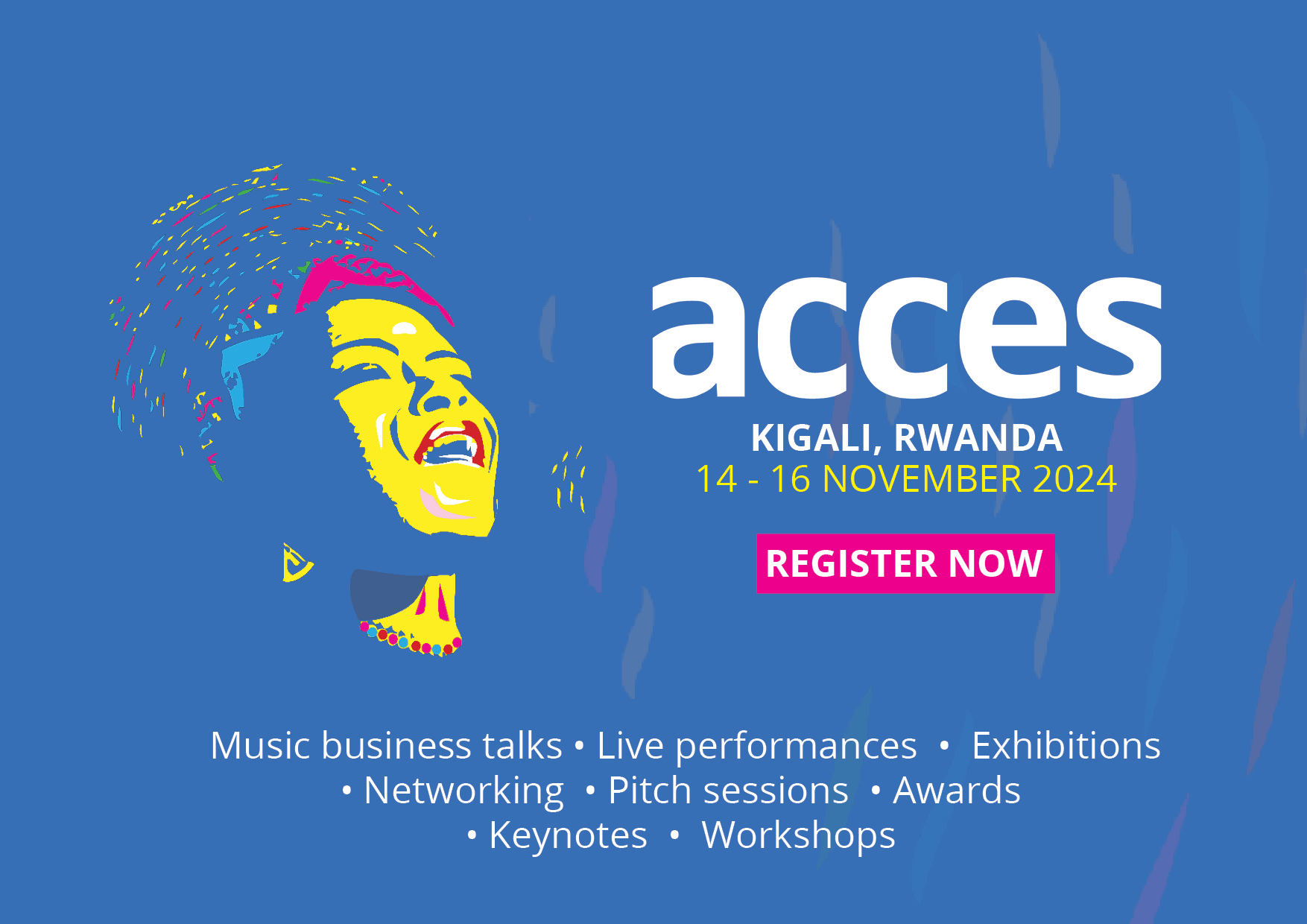
Chaque année, nous fournissons des informations générales afin de guider les participants dans la préparation de leur voyage. En plus de ce site, des mises à jour importantes seront envoyées par e-mail à tous les délégués inscrits. Assurez-vous de vous inscrire dès que possible. Pour plus d'informations, veuillez contacter [email protected] Continuez à consulter cette page pour plus d'information.  

Gender@Work
Gender@Work

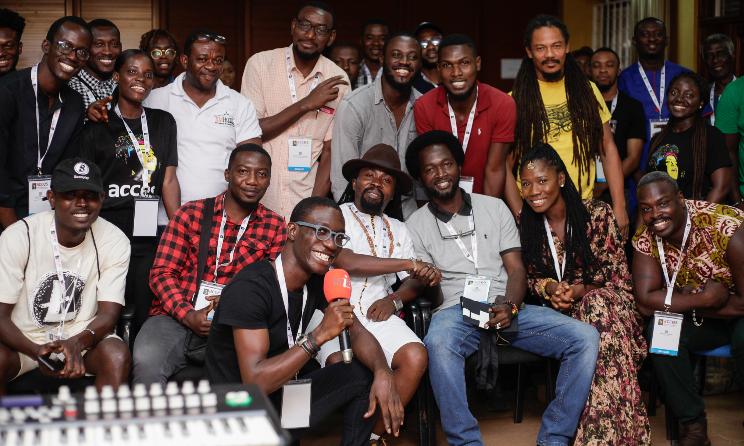
Music In Africa Gender @ Work is a three-year training programme aimed at upskilling and increasing the participation of female professionals in the African music sector. Launched by the Music In Africa Foundation (MIAF) in April 2019, the programme is connected to the MIAF’s ACCES music conference – a pan-African event held in a different African country every year. This connection enables the programme to reach new participants in a different African country every year. The programme marks the beginning of a more concerted effort by the Foundation to support the participation and inclusion of women in all facets of its programmes and the music sector in Africa as a whole. Over the three years, the programme will aim to address gender imbalances in the sector through training, lobbying, facilitating knowledge exchange and dialogues that foster the interest of women. The broader objectives of the programme are to: Provide industry training for women on critical music industry skills, focusing on: Stage management Electronic music production and recording Music business management Technical knowledge Provide an opportunity for both professional and aspiring women to benefit from the Music In Africa network and its broad range of activities in 2019, 2020 and 2021. Provide a solution-based platform in the form of a round table at ACCES with a view to identify challenges, discuss opportunities and lobby for the interests of female practitioners. Offer participants the opportunity to benefit from programmes offered by MIAF’s partners. Increase access to educational materials. Integrate participants in the broader ACCES programme to maximise experience and exposure to the industry. Record and present training materials on the www.musicinafrica.net, including but not limited to tutorials, templates and other best-practice materials. Communicate women-based themes that support the initiatives and messages of the programme. MAIN TRAINING ACTIVITIES Training in first country (Ghana): In the first year, participants will be trained on all aspects of stage management by a team of experienced stage managers from 10 to 17 November 2019. The programme will offer robust classroom training as well as practical, hands-on training in which participants will also be given the opportunity to manage various aspects of the ACCES performance programme. Training in second country: The second training iteration will take place at ACCES 2020 when the programme will diversify its course to include music production lessons and training on other music business topics. A round-table platform will also be introduced to coincide with the ACCES programme. Training in third country: The third training iteration will take place at ACCES 2021 in a different country, offering an advanced course. HOW DO YOU GET INVOLVED?  As a participant, facilitator or trainer: The programme enrolls up to 12 trainees every year. All opportunities are advertised publicly on this website, and will be added to this page. Please keep checking this page for new calls (below under UPDATES & CURRENT OPPORTUNITIES). As a partner Please contact Claire Metais at [email protected]. APPLY The call for applications for 2020 will be announced soon. The Music In Africa Gender @ Work programme is made possible with the support of the Prince Claus Fund, Siemens Stiftung and Goethe-Institut.

Sound Connects Fund
Sound Connects Fund

Pour les praticiens et les organisations culturels et créatifs opérant en Afrique australe, l’accès au financement reste un défi majeur. La pandémie de COVID-19 a également eu un impact massif sur les politiques gouvernementales, les dépenses et l’économie en général, et a vu les dépenses consacrées à la culture reléguées plus bas dans la liste des priorités. De plus, les industries culturelles et créatives citent régulièrement quatre domaines principaux où l’investissement est nécessaire pour la croissance : une visibilité accrue, la mobilité incluant l’accès à de nouveaux marchés, le financement et les structures de soutien.

Music In Africa Live

MUSIC IN AFRICA LIVE Lancé en 2020 pour une durée de 3 ans, Music In Africa Live est une initiative visant à soutenir l'écosystème de la musique africaine face aux contraintes imposées par la pandémie de COVID-19 ; le projet a été lancé par la Fondation Music In Africa (MIAF) en partenariat avec le ministère fédéral allemand des Affaires étrangères, Siemens Stiftung et le Goethe Institut. Plus de 30 aides sont disponibles dans le cadre de la troisième édition de Music In Africa Live, dans 3 catégories :  showcases, renforcement des compétences et plaidoyer, en conformité avec les modalités énoncées.

Instrument Building And Repair Project

The overarching objective of Music In Africa Foundation’s Instrument Building and Repair (IBR) project is to encourage the formalisation and professionalisation of instrument-making and repair in Africa, especially in relation to indigenous African instruments. Background In 2014, the Music In Africa Foundation (MIAF) identified as one of its focus areas for development the need to encourage young people from music and music-related sectors to consider instrument-making as a career. This need extended itself from the recognition that the making of traditional African instruments is not a widely practiced skill and seems to be limited to the older generation. Traditional African instrument makers are also few and far between, making communication and logistics between teachers and learners an obstacle. When instrument building workshops take place, budgetary constraints do not allow teachers or learners the time to explore the finer details of an instrument. Based on these observations, the MIAF designed and piloted the first IBR workshop at the Dhow Countries Music Academy (DCMA) in Zanzibar in February 2015. In 2016, the foundation received funding from the South African National Lotteries Commission to implement a much bigger version of the project in Johannesburg. The project drew participants from five African countries. 25 students from South Africa, Ghana, Senegal, Kenya and Ethiopia were trained on how to build and repair musical instruments. The instruments that they made were: Traditional Instruments: Umakhweyana and Marimba Conventional Instrument: Dulcimer guitar The workshop culminated in a traditional instruments concert at the Wits Theatre in Johannesburg. It is the MIAF’s aim to roll out similar workshops in as many African countries as possible over the next few years. Objectives Developing awareness of musical instrument makers in Africa with a view to promote their work to a wider global audience. Facilitating the sharing and transfer of skills in indigenous instruments between countries on the continent. Encouraging the formalisation and professionalisation of instrument-making and repair in Africa, especially in relation to indigenous instruments. Helping instrument makers develop their careers. Fostering the rapid monetisation and sustainable development of instrument-making and repair in Africa. Promoting constant exchange of ideas, expertise, experiences and know-how among instrument makers in Africa. Facilitating the identification of existing gaps in the field with a view to contribute new solutions. Facilitating the transfer of knowledge and skills of indigenous instruments between younger and older generations. 2020 edition The MIAF has also announced that multi-instrumentalist and instrument maker Joe Makhanza will facilitate one of the workshops on the building of the kamale ngoni instrument. Kamale ngoni is a kora-like, stringed instrument that originated in West Africa. The instrument contributed to the rise of Wassoulou music in the 1970s and 1990s. Makhanza was born in Giyani in South Africa's Limpopo province. He completed a bachelor of music degree and a post-graduate diploma in arts marketing from Wits University. He is currently completing his masters in ethnomusicology and is a part-time lecturer in African music studies at Rhodes University. He plays the kora, mbira, valiha, masenqo, xiwewe, ngoni ba and xizambi, among others. He also manufactures the aforementioned instruments. The MIAF will confirm more trainers who will join the workshops as well as the other instruments that will be featured in the 2020 IBR programme.  Apply to participate here. Connect with us on Twitter, Instagram and Facebook, and subscribe to our monthly newsletter. The Music In Africa Instrument Building and Repair project is funded by the National Lotteries Commission. It is implemented in partnership with Siemens Stiftung, Goethe-Institut, Wits Theatre and Kaya FM.

banner image

Cool cat diplomat strikes right chord

Accueil/Non classé/Cool cat diplomat strikes right chord

The first step he took was to collect 20 albums of Kenya’s finest artists across genres. After listening to their recordings, he selected those he considered the best and invited them to his residence for performances. That is how the Kikwetu Festival – one of East Africa’s biggest pop events – came into being.

“Most of these artists were not even aware I was an ambassador. All they knew was they had been called for a gig,” he recalls during an interview at his Waterkloof, Pretoria, residence.

The fact that most of the artists came from the country’s major ethnic groups – the Kikuyu, Luo and Kalenjins – was important for his peace-keeping endeavours. This initiative also marked his music partnership with Kenya’s biggest superstar, Eric Wainaina. The two subsequently recorded a single which became one of the most played hits on the country’s national radio stations. And that is how Lindner was introduced to African music on its home ground. Until then he had had a taste of pulsating African rhythms through Paul Simon’s groundbreaking 1986 Graceland album. At the time he was a senior law student majoring in political sciences at the University of Munich.

It was in this historic German city that as a youngster he discovered his passion and talent for music. The decade was the sixties and British rock was the rage. Like many young people at the time he idolised the Beatles and the Rolling Stones. At 12 he joined a teenage rock band, playing blues rock band Jethro Tull’s songbook on flute. He then enrolled at a local conservatoire where he took music lessons in classical flute. One of the conditions of passing his music exams was to take piano lessons which required him to practise eight hours daily. “My life was ordered in a strict and disciplined way. After two years as a classical pianist and flute player, it was time to move on, travel the world and learn different styles.”

His first overseas trip was to India and was motivated by Ravi Shankar’s popularity in the West. Shankar made his first concert appearances in the West in the late 1950s and early ’60s. His shows had a big impact on Western musicians, who at the time knew little of the rich traditions of Indian classical music. The master sitar player’s collaborations with the Beatles won him global stature and inspired a generation of European and American musicians to visit the East with the aim of learning Indian classical traditions.

During his travels in the East, Lindner was exposed to different musical styles and traditions – particularly the ragas whose sense of harmony and symmetry left a lasting imprint on his playing technique. “I also learnt it takes between two and three hours to tune a sitar; it’s a whole ritual on its own.”

His travels also took him to South America and the United States where he studied music at Berklee College of Music in Boston, Massachusetts. The institution exposed him to top jazz musicians like saxophonist Michael Brecker.

Lindner’s 1994 debut album Machuca was recorded in New York and recalled his times in South America, when he was deputy head of mission at the German embassy in Managua, Nicaragua. He had joined the diplomatic mission in 1988. “It was a successful album which enjoyed fair airplay. I guess technique was the secret to its success,” he explains.

The ambassador credits the Mahavishnu Orchestra and its leader and guitarist, John McLaughlin, for his ability to transition from rock to jazz. He says the jazz-rock quintet’s seminal 1971 album The Inner Mounting Flame left a huge impression on him. Its Jimi Hendrix-style approach, Indian classical music influences and funk appealed to Lindner’s eclectic approach. Listen to Lindner’s sophomore offering, Gramercy Park South, to understand his appreciation and mastery of American soul and R&B. Dedicated to his daughter, Samira – a World Bank employee in Berlin – it was released in 1999.

The album introduces the voice of New York soul singer Grace Campbell and includes R&B/soul classics made popular by famous African American musicians such as Stevie Wonder, Randy Crawford and George Benson. Its combination of smooth jazz, urban funk and soulful ballads with a spice of salsa makes it a pleasant listening experience. Campbell’s lucid voice is like a clear stream after the summer rains. She also features on Lindner’s third album, B’wana, He No Home (2001), a tribute album to one of his favourite musicians, Michael Franks (American jazz pianist Keith Jarrett being another one).

Lindner says the album is also a tribute to the art of great songwriting as it is reflected in the laid-back but sparkling music of Michael Franks. “Since the early seventies, Franks has pioneered the exploration of jazz, pop, R&B and bossa nova, working with a legendary all-star line-up of world-class session musicians in New York, Los Angeles and Rio de Janeiro,” he recalls. “It had always been a dream of mine to record and produce an album dedicated to Michael’s music.

“The results are 14 sparkling compositions containing melodies and lyric lines which have been on my mind and soul for over 20 years, and which have accompanied me through all continents and chapters of my life.”

He rewinds to his early years on his latest album, The Chacao Sessions – another tribute offering that recalls his classical training. The 2014 recording pays homage to the musical genius of Claus Ogerman, a German-born American composer/conductor/ arranger whose orchestrations appear on the music of outstanding talents such as Frank Sinatra, Antonio Carlos Jobim, Bill Evans, George Benson, David Sanborn and Joe Sample. “He’s one of the most prolific and musically versatile 20th century symphonic masters,” Lindner says.

Born in 1956 in Munich, the ambassador entered the diplomatic service in 1988 as an attaché in the legal division at the Federal Foreign Office in Bonn. His first posting was in 1990 when he was appointed officer for press and political affairs at the German Embassy in Ankara, Turkey. Since then he has travelled extensively across the world, including visiting 40 African countries and being involved in hostage negotiations with terror groups like al-Qaeda. Until recently he was Chancellor Angela Merkel’s special representative for the Ebola crisis in West Africa and director for sub-Saharan Africa in the German Foreign Office.

Lindner arrived in South Africa this year on the eve of Nelson Mandela Day and started working the following day doing volunteer work in Soweto with his Italian-born wife Laura Sustersic. On Heritage Day (September 24) he shared the stage with Sipho “Hotstix” Mabuse at the Sacred Heart Music Festival in Johannesburg in a fund-raising drive for the education of refugee children.

One thing is clear about ambassador Walter J Lindner – he has developed a real passion for the continent and its people – not to mention its music which he believes can be a catalyst for creating a better world.


* Originally published on 29 September 2015 in JazzLife and on 8 October 2015 in the African Independent.

newsletter banner

Abonnez-vous à notre newsletter

Retrouvez-nous sur les réseaux sociaux