
















NEFCISA
NEFCISA

The Music In Africa Foundation (MIAF) is proud to announce its partnership with the Industrial Development Corporation (IDC) as a Strategic Implementing Partner (SIP) for its Social Employment Fund (SEF). Through this collaboration, MIAF is launching a new national programme designed to create jobs, address skills gaps, and strengthen South Africa’s creative industries — in line with the SEF’s overarching goal to generate work for the common good and build community value through employment, social contribution, and inclusive economic participation. Operating under the banner NEFCISA (National Employment Facility for Creative Industries in South Africa), the initiative will recruit and train participants, match them with host organisations, and place a minimum of 1 000 workers across the country. Key Objectives: Support employment and entrepreneurship in the creative industries. Offer skills development and training programmes. Foster partnerships between public and private creative sectors. Promote South African creativity at both provincial and national levels Foster community development through social contribution.

ACCES
ACCES

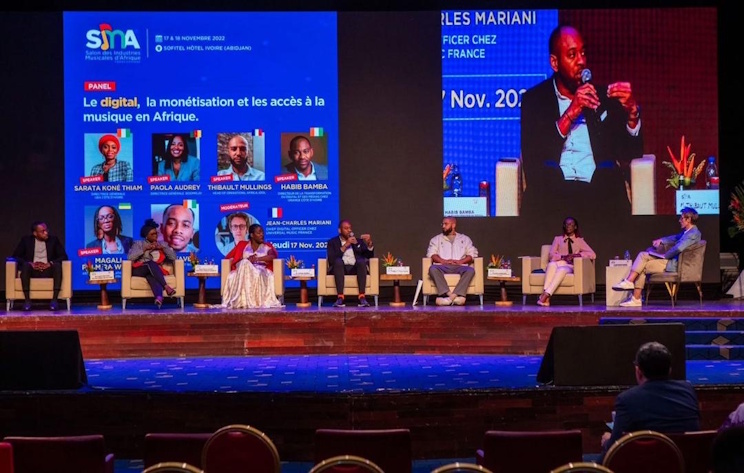
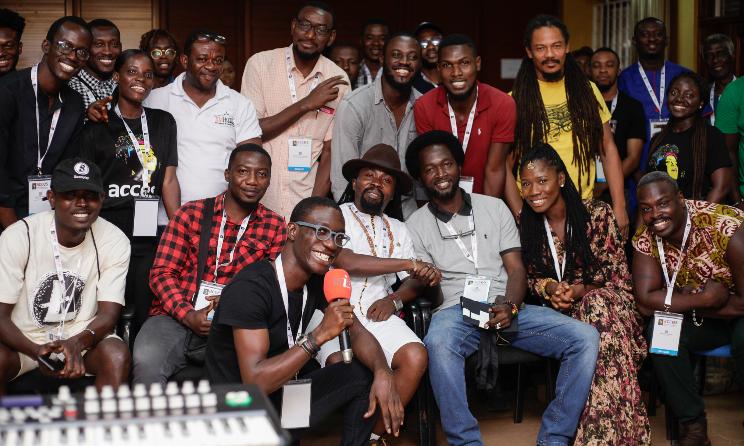
Chaque année, nous fournissons des informations générales afin de guider les participants dans la préparation de leur voyage. En plus de ce site, des mises à jour importantes seront envoyées par e-mail à tous les délégués inscrits. Assurez-vous de vous inscrire dès que possible. Pour plus d'informations, veuillez contacter [email protected] Continuez à consulter cette page pour plus d'information.  

Gender@Work
Gender@Work

Music In Africa Gender @ Work is a three-year training programme aimed at upskilling and increasing the participation of female professionals in the African music sector. Launched by the Music In Africa Foundation (MIAF) in April 2019, the programme is connected to the MIAF’s ACCES music conference – a pan-African event held in a different African country every year. This connection enables the programme to reach new participants in a different African country every year. The programme marks the beginning of a more concerted effort by the Foundation to support the participation and inclusion of women in all facets of its programmes and the music sector in Africa as a whole. Over the three years, the programme will aim to address gender imbalances in the sector through training, lobbying, facilitating knowledge exchange and dialogues that foster the interest of women. The broader objectives of the programme are to: Provide industry training for women on critical music industry skills, focusing on: Stage management Electronic music production and recording Music business management Technical knowledge Provide an opportunity for both professional and aspiring women to benefit from the Music In Africa network and its broad range of activities in 2019, 2020 and 2021. Provide a solution-based platform in the form of a round table at ACCES with a view to identify challenges, discuss opportunities and lobby for the interests of female practitioners. Offer participants the opportunity to benefit from programmes offered by MIAF’s partners. Increase access to educational materials. Integrate participants in the broader ACCES programme to maximise experience and exposure to the industry. Record and present training materials on the www.musicinafrica.net, including but not limited to tutorials, templates and other best-practice materials. Communicate women-based themes that support the initiatives and messages of the programme. MAIN TRAINING ACTIVITIES Training in first country (Ghana): In the first year, participants will be trained on all aspects of stage management by a team of experienced stage managers from 10 to 17 November 2019. The programme will offer robust classroom training as well as practical, hands-on training in which participants will also be given the opportunity to manage various aspects of the ACCES performance programme. Training in second country: The second training iteration will take place at ACCES 2020 when the programme will diversify its course to include music production lessons and training on other music business topics. A round-table platform will also be introduced to coincide with the ACCES programme. Training in third country: The third training iteration will take place at ACCES 2021 in a different country, offering an advanced course. HOW DO YOU GET INVOLVED?  As a participant, facilitator or trainer: The programme enrolls up to 12 trainees every year. All opportunities are advertised publicly on this website, and will be added to this page. Please keep checking this page for new calls (below under UPDATES & CURRENT OPPORTUNITIES). As a partner Please contact Claire Metais at [email protected]. APPLY The call for applications for 2020 will be announced soon. The Music In Africa Gender @ Work programme is made possible with the support of the Prince Claus Fund, Siemens Stiftung and Goethe-Institut.

Sound Connects Fund
Sound Connects Fund

Pour les praticiens et les organisations culturels et créatifs opérant en Afrique australe, l’accès au financement reste un défi majeur. La pandémie de COVID-19 a également eu un impact massif sur les politiques gouvernementales, les dépenses et l’économie en général, et a vu les dépenses consacrées à la culture reléguées plus bas dans la liste des priorités. De plus, les industries culturelles et créatives citent régulièrement quatre domaines principaux où l’investissement est nécessaire pour la croissance : une visibilité accrue, la mobilité incluant l’accès à de nouveaux marchés, le financement et les structures de soutien.

Music In Africa Live

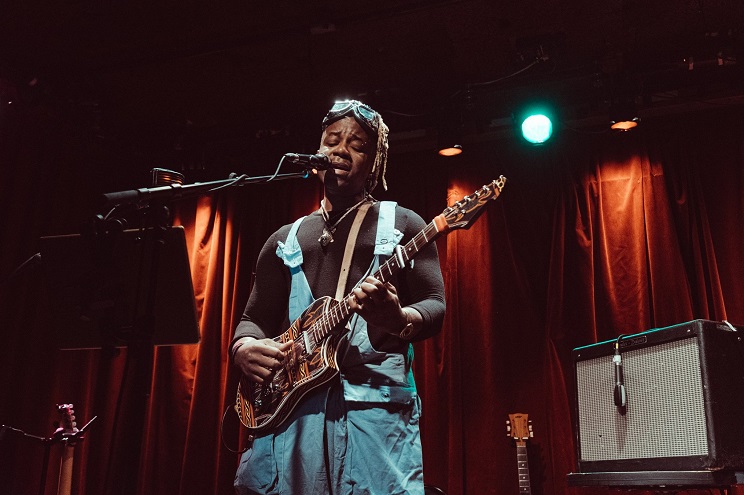
MUSIC IN AFRICA LIVE Lancé en 2020 pour une durée de 3 ans, Music In Africa Live est une initiative visant à soutenir l'écosystème de la musique africaine face aux contraintes imposées par la pandémie de COVID-19 ; le projet a été lancé par la Fondation Music In Africa (MIAF) en partenariat avec le ministère fédéral allemand des Affaires étrangères, Siemens Stiftung et le Goethe Institut. Plus de 30 aides sont disponibles dans le cadre de la troisième édition de Music In Africa Live, dans 3 catégories :  showcases, renforcement des compétences et plaidoyer, en conformité avec les modalités énoncées.

Instrument Building And Repair Project

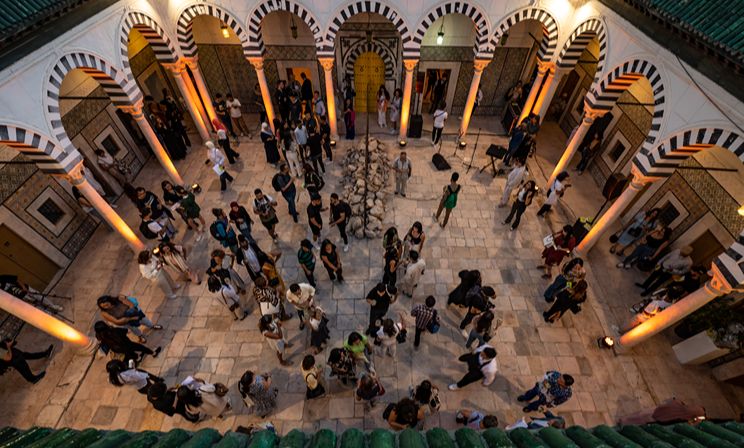
The overarching objective of Music In Africa Foundation’s Instrument Building and Repair (IBR) project is to encourage the formalisation and professionalisation of instrument-making and repair in Africa, especially in relation to indigenous African instruments. Background In 2014, the Music In Africa Foundation (MIAF) identified as one of its focus areas for development the need to encourage young people from music and music-related sectors to consider instrument-making as a career. This need extended itself from the recognition that the making of traditional African instruments is not a widely practiced skill and seems to be limited to the older generation. Traditional African instrument makers are also few and far between, making communication and logistics between teachers and learners an obstacle. When instrument building workshops take place, budgetary constraints do not allow teachers or learners the time to explore the finer details of an instrument. Based on these observations, the MIAF designed and piloted the first IBR workshop at the Dhow Countries Music Academy (DCMA) in Zanzibar in February 2015. In 2016, the foundation received funding from the South African National Lotteries Commission to implement a much bigger version of the project in Johannesburg. The project drew participants from five African countries. 25 students from South Africa, Ghana, Senegal, Kenya and Ethiopia were trained on how to build and repair musical instruments. The instruments that they made were: Traditional Instruments: Umakhweyana and Marimba Conventional Instrument: Dulcimer guitar The workshop culminated in a traditional instruments concert at the Wits Theatre in Johannesburg. It is the MIAF’s aim to roll out similar workshops in as many African countries as possible over the next few years. Objectives Developing awareness of musical instrument makers in Africa with a view to promote their work to a wider global audience. Facilitating the sharing and transfer of skills in indigenous instruments between countries on the continent. Encouraging the formalisation and professionalisation of instrument-making and repair in Africa, especially in relation to indigenous instruments. Helping instrument makers develop their careers. Fostering the rapid monetisation and sustainable development of instrument-making and repair in Africa. Promoting constant exchange of ideas, expertise, experiences and know-how among instrument makers in Africa. Facilitating the identification of existing gaps in the field with a view to contribute new solutions. Facilitating the transfer of knowledge and skills of indigenous instruments between younger and older generations. 2020 edition The MIAF has also announced that multi-instrumentalist and instrument maker Joe Makhanza will facilitate one of the workshops on the building of the kamale ngoni instrument. Kamale ngoni is a kora-like, stringed instrument that originated in West Africa. The instrument contributed to the rise of Wassoulou music in the 1970s and 1990s. Makhanza was born in Giyani in South Africa's Limpopo province. He completed a bachelor of music degree and a post-graduate diploma in arts marketing from Wits University. He is currently completing his masters in ethnomusicology and is a part-time lecturer in African music studies at Rhodes University. He plays the kora, mbira, valiha, masenqo, xiwewe, ngoni ba and xizambi, among others. He also manufactures the aforementioned instruments. The MIAF will confirm more trainers who will join the workshops as well as the other instruments that will be featured in the 2020 IBR programme.  Apply to participate here. Connect with us on Twitter, Instagram and Facebook, and subscribe to our monthly newsletter. The Music In Africa Instrument Building and Repair project is funded by the National Lotteries Commission. It is implemented in partnership with Siemens Stiftung, Goethe-Institut, Wits Theatre and Kaya FM.

banner image

Burundi musicians menaced, silenced and fleeing the country

Accueil/Non classé/Burundi musicians menaced, silenced and fleeing the country

Burundian artists are confronted with ever-shrinking possibilities for open and free political speech. Since April 2015, the central African country has been going through political turmoil. Well-known singers and band members are being targeted and, if possible, manipulated to change their artistic or political style. Several musicians have fled the country.

President Pierre Nkurunziza was to leave office at the end of his second term as enshrined in Burundi’s Constitution. However, Nkurunziza disputed and overruled both the constitution and the Arusha agreements of year 2000, which had brought peace to the country that has been through more than three decades of civil war. In July 2015, he won a new term in office after a contested election which was boycotted by the opposition.

The last months since then have showed acts of violence and harsh repression against opposition members and civil society actors as well as media practitioners. Freedom of expression has been extremely limited, especially when five of the most popular private radio and television stations were attacked and burned during the month of May 2015.

 With the closing down of these stations, the new and upcoming generation of Burundian artists lost their outlets. Some of the artists were also engaged in the campaign against the third term of the president, mainly through songs that informed and sensitized the people of Burundi in their local language. Some of these songs have been considered examples of expressions of hate speech, because they openly accuse and denounce the “others”.

Reggae band threatened

Apart from losing their main access to the airwaves, more is at stake for the musicians. Mentioning specific artists’ names poses danger under these circumstances. This article therefore has left out names of most artists at risk. 

The story about the famous and popular reggae band Lion Story is already out there, though, in numerous articles, blog posts and YouTube video interviews. Long before the elections, in early 2015, Lion Story received regular threats because of the sharpness and openness of their lyrics.

Some of their well-known songs dealt – in a symbolic, but highly understandable way – with issues such as corruption, political killings and harassments of members of political parties and civil society members. Some of their songs were used as the soundtrack of the May and June protests that were organized by the youths in the urban suburbs of the capital Bujumbura, where most street protests took place.

On the other hand, it needs to be said that other songs also praised the president for all his results achieved during the last 10 years in power. With the political situation declining, week by week, the Burundian artists have been confronted with ever shrinking possibilities for open and free political speech. Due to the crisis almost no public concerts are being organized anymore, and in several areas, well-known singers and band members are being targeted and, if possible, manipulated to change their artistic or political style.

Those who participated and supported the president did profit financially, but were on the other hand looked upon as “enemies” of the opposition and civil society and as a consequence dropped from playlists at private radio stations.

[video:https://www.youtube.com/watch?v=siIkFM6jM04 autoplay:0]


Artists as vessels of truth

For most of the youngsters involved in artistic, musical expressions, fear has taken over their lives. They fear the ruling political party will engage its youth members against them, using violence to silence the critics. Why? Their songs could be seen as carriers of messages that inform about malpractices by the political parties.

By using a specific national youth language, the songs “deconstruct” the political narratives used by political spearheads, and they denounce manipulators at nation-wide level. By doing so, these songs have the potential to warn and sensitize rural, young, and vulnerable citizens about the psychological and manipulative narrative which politicians use to engage them upon acts of belonging to “us”, and acts of violence against “them” – the others, the traitors.

Fleeing to Uganda and UK

By the end of August 2015, the situation had evolved to a point that almost all artists are menaced in one way or another. Several musicians have fled abroad. Lion Story is probably the most famous one – “the prophet’s voice”, as they are often called, literally, in the local dialect.

Several of their songs are directly targeting the party in power, CNDD-FDD. All band members have fled Burundi. Seven members found refuge in Uganda. According to International Business Times, one of the members is currently seeking for political asylum in the United Kingdom.

Fleeing to the US and Kenya

Another artist has been declared an “enemy of the people” mainly because his most famous songs are openly denouncing the assassinations and act of corruption of the political leaders in Burundi. He survived three attacks already and is at present in the United States with no security if he returns home.

Authorities are allegedly searching for the man who organised a concert with a controversial singer in the Muramvya province during the month of March 2015.

An award-winning musician is currently being searched by the “Documentation”, which is the Burundian secret service, and this only for his song in which he refers to the need for politicians to first of all ask rural peasants their opinion before making any political decisions that are of concern to them. The singer recently fled to Kenya’s capital Nairobi.

Another singer, who is well-known for his cultural songs and expressions, used to perform in a karaoke type of bar in Bujumbura. He has several times been refused to perform within his own bar that is extremely close to the place where the Burundian president plays football on a daily basis.

Rumours go that they won’t let him perform anymore because he refused to sings songs of glory for the CNDD-FDD, the party of the president. He is also known for a very popular activist song in which he refers to some members of political parties who are “engaged in eating a lot themselves and never think of other that are hungry as well”. This particular singer was given the opportunity to participate in a musical festival in the United States, and he decided not to return to Burundi.

Engaged in political propaganda

More singers have been confronted with problems for refusing to sing for political parties or joining campaigns. In 2010, a singer, who currently lives in Canada, performed almost all the songs for the presidential campaign. He refused to engage in favour of the president in the recent campaign, as he felt deceived by the politics of recent years.

A similar story goes for a band which is known for their performances in the different karaoke bars of Bujumbura. Some members claim the band was obliged to perform songs in favour of president Nkurunziza. After having refused to perform, their bar was ordered to be closed down and some of the band members barely escaped personal attacks on them.

Since late August 2015, the two artists have been back in Burundi. “We did not flee,” they said, stating that they only went to Rwanda to “broaden their horizons.”

Fear of becoming a target

Yet another award-winning singer confirmed that he received threats, even without having composed songs with political connotations. He is related to a young movement leader of a coalition of youngsters that were campaigning against the third term of the president. The youth leader is currently in hiding in Rwanda.

Five more known artists as well as an unnumbered amount of singers that are performing profane and gospel music are travelling back and forth between Bujumbura and neighbouring Kigali, the capital of Rwanda. Although they are not menaced in Burundi, they leave their country mainly out of fear of what is going to happen in the near future.

A general fear has spread all over Burundi, and most musicians see themselves as one of the first that might become targets as the situation seem to be deteriorating and becoming increasingly dangerous. Most of them are in Rwanda, others in Uganda, and some are in the Democratic Republic of Congo or Tanzania.

To round off this long list of persecuted musicians, the most recent one that fell out of grace with the president is a composer and the singer of a hymn praising the political party CNDD-FDD. Opposed to the third candidature of the president, he as well has had to leave the country and is currently living in Holland.


Originally published on 28 September 2015 at Freemuse.org. Republished with permission.

newsletter banner

Abonnez-vous à notre newsletter

Retrouvez-nous sur les réseaux sociaux