














NEFCISA
NEFCISA

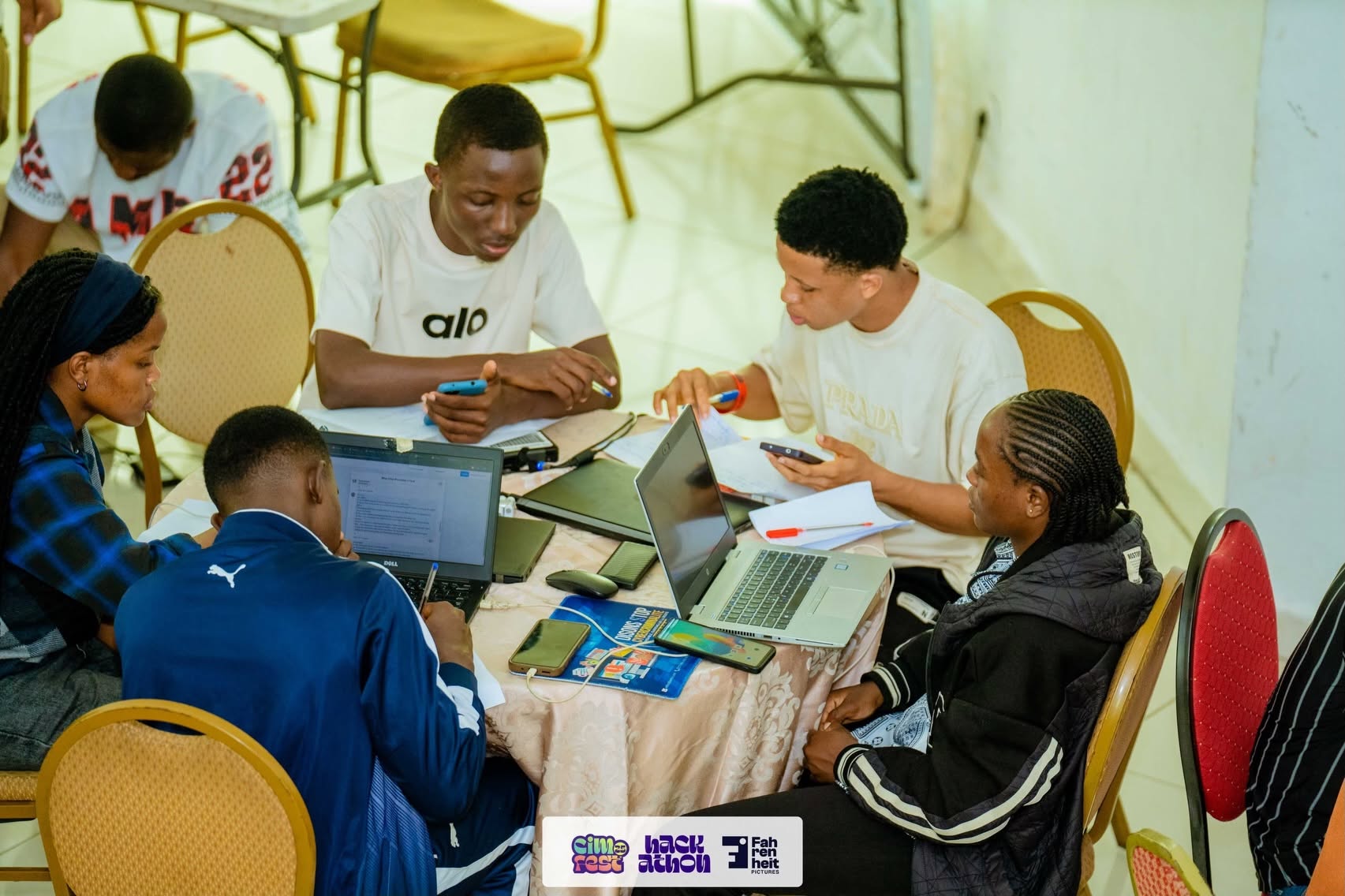
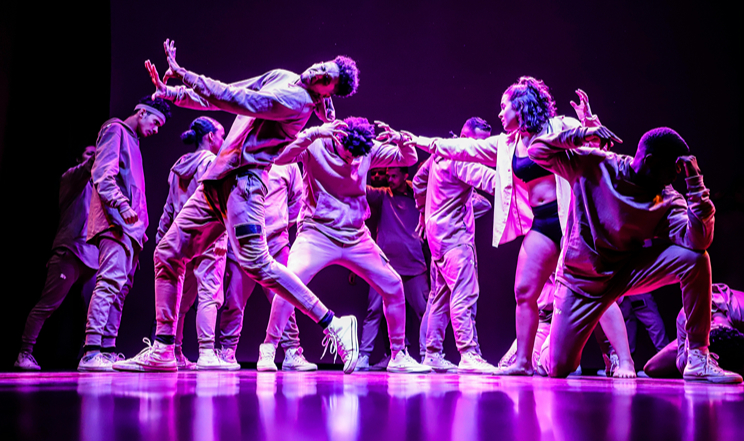
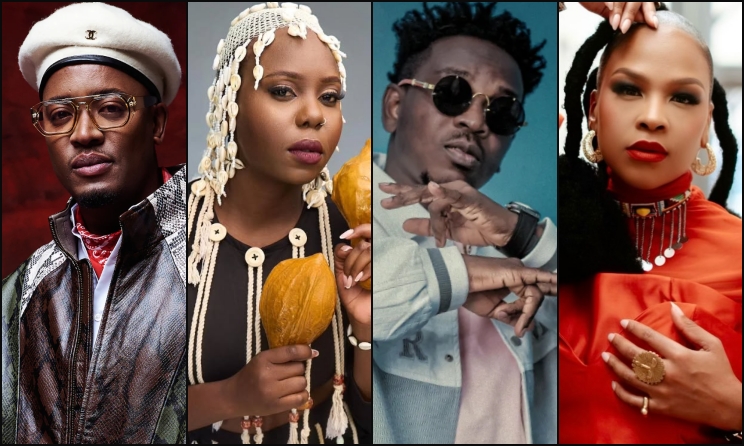
The Music In Africa Foundation (MIAF) is proud to announce its partnership with the Industrial Development Corporation (IDC) as a Strategic Implementing Partner (SIP) for its Social Employment Fund (SEF). Through this collaboration, MIAF is launching a new national programme designed to create jobs, address skills gaps, and strengthen South Africa’s creative industries — in line with the SEF’s overarching goal to generate work for the common good and build community value through employment, social contribution, and inclusive economic participation. Operating under the banner NEFCISA (National Employment Facility for Creative Industries in South Africa), the initiative will recruit and train participants, match them with host organisations, and place a minimum of 1 000 workers across the country. Key Objectives: Support employment and entrepreneurship in the creative industries. Offer skills development and training programmes. Foster partnerships between public and private creative sectors. Promote South African creativity at both provincial and national levels Foster community development through social contribution.

ACCES
ACCES

Chaque année, nous fournissons des informations générales afin de guider les participants dans la préparation de leur voyage. En plus de ce site, des mises à jour importantes seront envoyées par e-mail à tous les délégués inscrits. Assurez-vous de vous inscrire dès que possible. Pour plus d'informations, veuillez contacter [email protected] Continuez à consulter cette page pour plus d'information.  

Gender@Work
Gender@Work

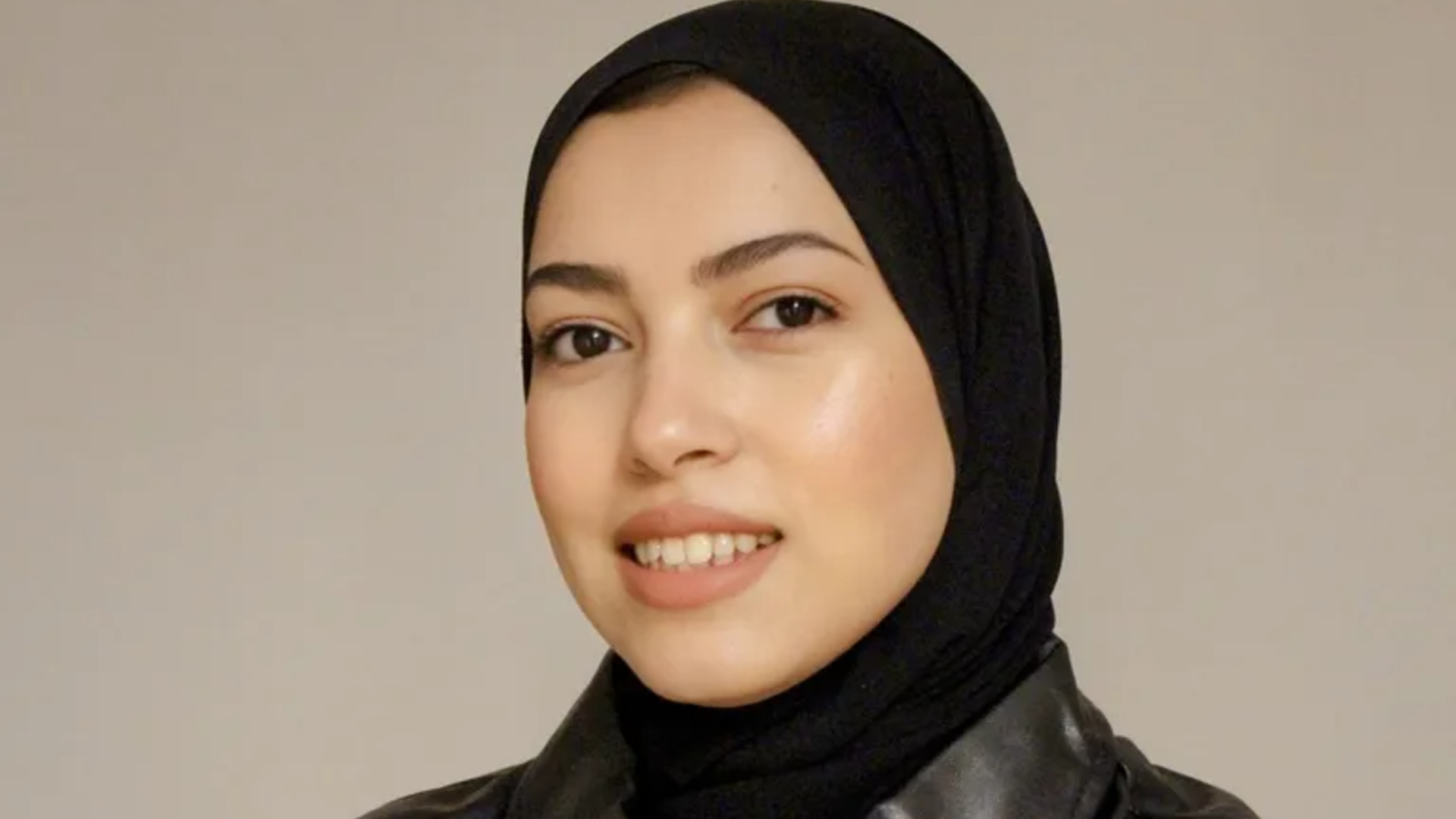
Music In Africa Gender @ Work is a three-year training programme aimed at upskilling and increasing the participation of female professionals in the African music sector. Launched by the Music In Africa Foundation (MIAF) in April 2019, the programme is connected to the MIAF’s ACCES music conference – a pan-African event held in a different African country every year. This connection enables the programme to reach new participants in a different African country every year. The programme marks the beginning of a more concerted effort by the Foundation to support the participation and inclusion of women in all facets of its programmes and the music sector in Africa as a whole. Over the three years, the programme will aim to address gender imbalances in the sector through training, lobbying, facilitating knowledge exchange and dialogues that foster the interest of women. The broader objectives of the programme are to: Provide industry training for women on critical music industry skills, focusing on: Stage management Electronic music production and recording Music business management Technical knowledge Provide an opportunity for both professional and aspiring women to benefit from the Music In Africa network and its broad range of activities in 2019, 2020 and 2021. Provide a solution-based platform in the form of a round table at ACCES with a view to identify challenges, discuss opportunities and lobby for the interests of female practitioners. Offer participants the opportunity to benefit from programmes offered by MIAF’s partners. Increase access to educational materials. Integrate participants in the broader ACCES programme to maximise experience and exposure to the industry. Record and present training materials on the www.musicinafrica.net, including but not limited to tutorials, templates and other best-practice materials. Communicate women-based themes that support the initiatives and messages of the programme. MAIN TRAINING ACTIVITIES Training in first country (Ghana): In the first year, participants will be trained on all aspects of stage management by a team of experienced stage managers from 10 to 17 November 2019. The programme will offer robust classroom training as well as practical, hands-on training in which participants will also be given the opportunity to manage various aspects of the ACCES performance programme. Training in second country: The second training iteration will take place at ACCES 2020 when the programme will diversify its course to include music production lessons and training on other music business topics. A round-table platform will also be introduced to coincide with the ACCES programme. Training in third country: The third training iteration will take place at ACCES 2021 in a different country, offering an advanced course. HOW DO YOU GET INVOLVED?  As a participant, facilitator or trainer: The programme enrolls up to 12 trainees every year. All opportunities are advertised publicly on this website, and will be added to this page. Please keep checking this page for new calls (below under UPDATES & CURRENT OPPORTUNITIES). As a partner Please contact Claire Metais at [email protected]. APPLY The call for applications for 2020 will be announced soon. The Music In Africa Gender @ Work programme is made possible with the support of the Prince Claus Fund, Siemens Stiftung and Goethe-Institut.

Sound Connects Fund
Sound Connects Fund

Pour les praticiens et les organisations culturels et créatifs opérant en Afrique australe, l’accès au financement reste un défi majeur. La pandémie de COVID-19 a également eu un impact massif sur les politiques gouvernementales, les dépenses et l’économie en général, et a vu les dépenses consacrées à la culture reléguées plus bas dans la liste des priorités. De plus, les industries culturelles et créatives citent régulièrement quatre domaines principaux où l’investissement est nécessaire pour la croissance : une visibilité accrue, la mobilité incluant l’accès à de nouveaux marchés, le financement et les structures de soutien.

Music In Africa Live

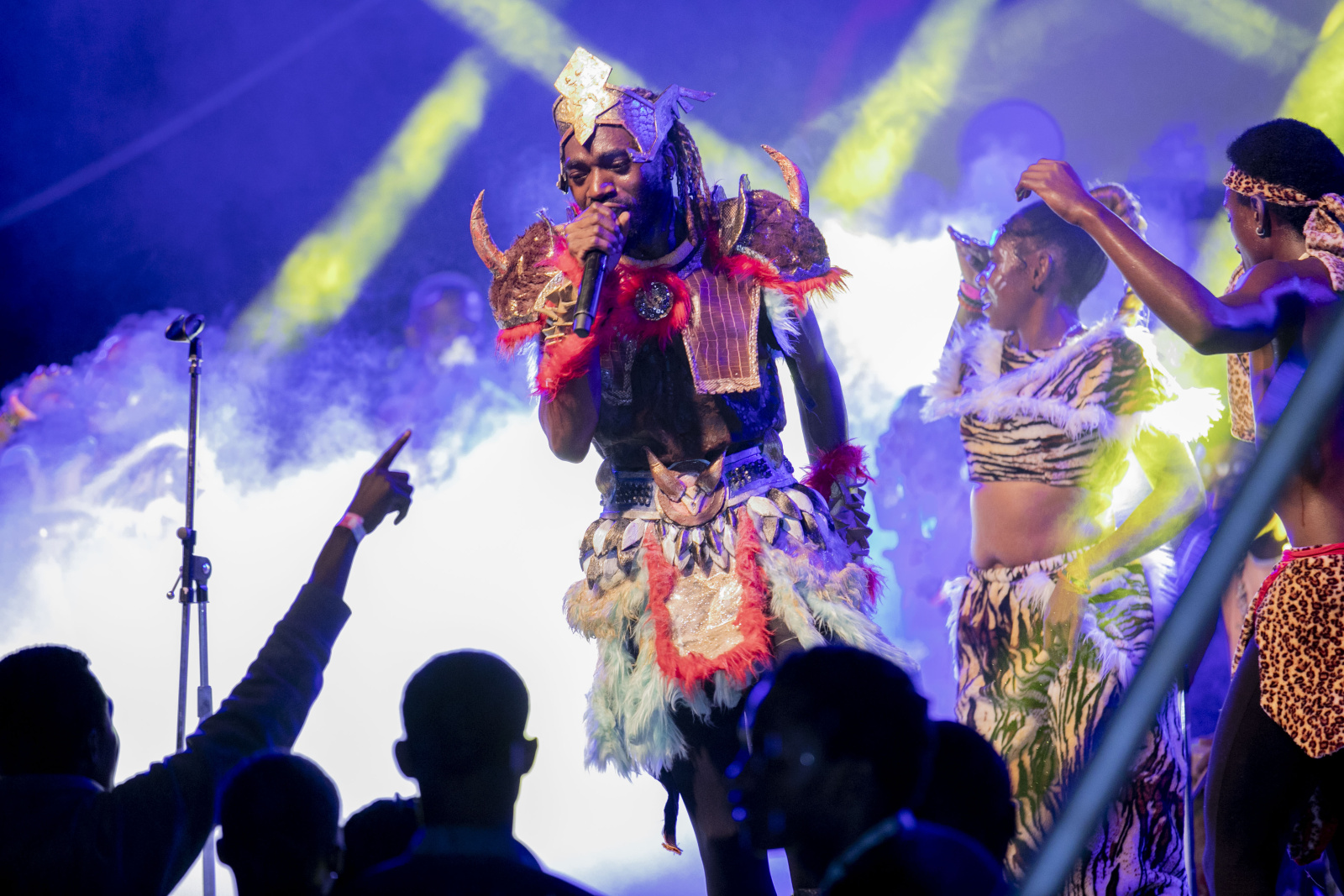
MUSIC IN AFRICA LIVE Lancé en 2020 pour une durée de 3 ans, Music In Africa Live est une initiative visant à soutenir l'écosystème de la musique africaine face aux contraintes imposées par la pandémie de COVID-19 ; le projet a été lancé par la Fondation Music In Africa (MIAF) en partenariat avec le ministère fédéral allemand des Affaires étrangères, Siemens Stiftung et le Goethe Institut. Plus de 30 aides sont disponibles dans le cadre de la troisième édition de Music In Africa Live, dans 3 catégories :  showcases, renforcement des compétences et plaidoyer, en conformité avec les modalités énoncées.

Instrument Building And Repair Project

The overarching objective of Music In Africa Foundation’s Instrument Building and Repair (IBR) project is to encourage the formalisation and professionalisation of instrument-making and repair in Africa, especially in relation to indigenous African instruments. Background In 2014, the Music In Africa Foundation (MIAF) identified as one of its focus areas for development the need to encourage young people from music and music-related sectors to consider instrument-making as a career. This need extended itself from the recognition that the making of traditional African instruments is not a widely practiced skill and seems to be limited to the older generation. Traditional African instrument makers are also few and far between, making communication and logistics between teachers and learners an obstacle. When instrument building workshops take place, budgetary constraints do not allow teachers or learners the time to explore the finer details of an instrument. Based on these observations, the MIAF designed and piloted the first IBR workshop at the Dhow Countries Music Academy (DCMA) in Zanzibar in February 2015. In 2016, the foundation received funding from the South African National Lotteries Commission to implement a much bigger version of the project in Johannesburg. The project drew participants from five African countries. 25 students from South Africa, Ghana, Senegal, Kenya and Ethiopia were trained on how to build and repair musical instruments. The instruments that they made were: Traditional Instruments: Umakhweyana and Marimba Conventional Instrument: Dulcimer guitar The workshop culminated in a traditional instruments concert at the Wits Theatre in Johannesburg. It is the MIAF’s aim to roll out similar workshops in as many African countries as possible over the next few years. Objectives Developing awareness of musical instrument makers in Africa with a view to promote their work to a wider global audience. Facilitating the sharing and transfer of skills in indigenous instruments between countries on the continent. Encouraging the formalisation and professionalisation of instrument-making and repair in Africa, especially in relation to indigenous instruments. Helping instrument makers develop their careers. Fostering the rapid monetisation and sustainable development of instrument-making and repair in Africa. Promoting constant exchange of ideas, expertise, experiences and know-how among instrument makers in Africa. Facilitating the identification of existing gaps in the field with a view to contribute new solutions. Facilitating the transfer of knowledge and skills of indigenous instruments between younger and older generations. 2020 edition The MIAF has also announced that multi-instrumentalist and instrument maker Joe Makhanza will facilitate one of the workshops on the building of the kamale ngoni instrument. Kamale ngoni is a kora-like, stringed instrument that originated in West Africa. The instrument contributed to the rise of Wassoulou music in the 1970s and 1990s. Makhanza was born in Giyani in South Africa's Limpopo province. He completed a bachelor of music degree and a post-graduate diploma in arts marketing from Wits University. He is currently completing his masters in ethnomusicology and is a part-time lecturer in African music studies at Rhodes University. He plays the kora, mbira, valiha, masenqo, xiwewe, ngoni ba and xizambi, among others. He also manufactures the aforementioned instruments. The MIAF will confirm more trainers who will join the workshops as well as the other instruments that will be featured in the 2020 IBR programme.  Apply to participate here. Connect with us on Twitter, Instagram and Facebook, and subscribe to our monthly newsletter. The Music In Africa Instrument Building and Repair project is funded by the National Lotteries Commission. It is implemented in partnership with Siemens Stiftung, Goethe-Institut, Wits Theatre and Kaya FM.

Franck Biyong
linkedin

Profil ajouté par In-House DRC on 03 Avr 2015

Revendique ce profil

flag-img

Yaoundé, Cameroon

En service depuis :

2013

Personne de contact:

Franck Biyong

BIO

FRANCK BIYONG

The creator of the hybrid Afrolectric sound in pan-global pop.
(Artist Biography by Thom Jurek)

Franck Biyong grew up in Gabon, Nigeria and Ivory Coast. Franck and his siblings attended the National Institute of Arts in Abidjan, Ivory Coast. He originally studied piano but dropped it in favour of drums, percussion and eventually, guitar. Franck credits African-American Jazz guitarist, Wes Montgomery’s “Canadian Sunset” as the song that piqued his interest in electric guitar.
At age 14, Franck moved to the United Kingdom where he started recording demos influenced by his musical heroes William Onyeabor, King Crimson, Sun Ra, Francis Bebey and Frank Zappa.

By 1996, the Lumen label had picked him up and Franck began working as a session man and back up guitarist in Brighton. However, Fela’s death in 1997 spurred Franck’s return to France. He formed a twelve-piece band called Massak —a Basaa (Cameroonian tongue and tribe) word that means music, trance and enjoyment through rhythms and sounds—to pay homage to the legendary musician and his Africa 70 and Egypt 80 ensembles.

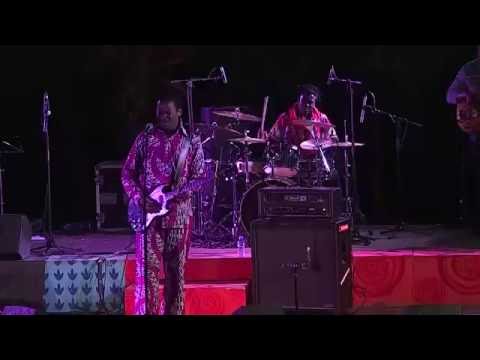
This would mark the beginning of Franck’s career and musical experimentation. With his 4-piece horn section, drummer, percussionist, bass player, keyboardist, rhythm guitarist and female backing vocalists, Franck began to tour several clubs and
festivals including SOB’s in New York, Jazz Café in London, Montréal Jazz Festival, Hothouse in Chicago and Floydfest in Virginia.

Franck Biyong & Massak were then considered one of the best-kept secrets within the international Afrobeat Diaspora. Franck’s first official single, B.L.A (which stands for Brain Liberation Army) was released as a 7’inch vinyl on Lenar/Soul Fire Records. The two-part jam greatly appealed to gritty funk and Afrobeat lovers across the globe.

B.L.A’s success hailed Franck Biyong as frontrunner in the Afrobeat revival scene. This led to new partnerships with independent labels and the release of a string of singles: Live! (2003), We Shall Overcome (2004), Power of Brain (2005), E.P (2006) and Afrofunkydance (2007). With German label Melting Pot Music, Franck released T&C / Junglectric, a medley of two popular songs that were an integral part of Massak's show. This special rendition was recorded in October 2002 in Dijon where Massak opened for Tony Allen (Franck dedicated this song to the legendary Afrobeat drummer).

Ranging from Egypt 80-inspired Afro sound to new-age music pastoral pieces, REALMS OF ATLANTIS would become Franck’s first full-length album. Released on September 2006, it was a collection of moods and atmospheres exploring a more relaxed and spiritual dimension of Massak’s music. Franck Biyong & Massak expanded their repertoire with the November 2007 sophomore release, HAITI MARKET. The album was an Afro pop trip to the underground world with generous doses of funk, jazz, folk, soul and lyrics sung in English, French, Pidgin English and Portuguese.

In 2007, Franck wrote an Afro-Opera called KNOWLEDGE IDENTITY RECONSTRUCTION in honor of the great late West Indian poet Aimé Césaire. It was based on the history of African Diasporas living in France. It’s Paris premiere created a great deal of controversy, while addressing the issues of French colonial history and the shapes of African Art forms to come. From that point on, Franck was releasing a new album every year. 2008 brought SPIRITS INTO SOUNDS, an exploration of futuristic sounds in a unique blend leaning towards jazz-fusion grooves. Franck’s 2009 album, RHYTHMS OF OUR MEMORY was based on the first official celebration of the abolition of slavery in France. It featured fine orchestrations combined with the spirit of black jazz, and outer space improvised music.

Franck Biyong his band Massak travelled to Cameroon in 2010 to record fifth album, VISIONS OF KAMERUN that told the history and linkages of the African nation with France. It was an interrogative and perplexed glance over the present state of things. Franck’s sixth album, VOODOOLECTRIC GROUND whose grooves spanned from the polyrhythm of Central Africa to the swinging beats of Congo Square, was shrouded in mystery and released in November.Massak disbanded soon after the album’s release with Franck going on
to form new band comprising of young Cameroonian musicians living in Paris. The next album wove together Biyong's deep love of Jimi Hendrix, Davis, and modal jazz. The score JAZZ & AFRICA was issued in 2011 and came out an album filled with highly original renditions of songs by James Brown, Sun Ra, Manu Dibango, Ornette Coleman, among others.

Later in the same year, Franck released MEETING THE BASIC NEEDS OF THE PEOPLE, an album that kept to his trademark sound with
a soft touch of progressive jazz arrangements, both backward and forward into electronic music, hardwiring it to modern Afro Jazz
and raw urban funk. The eighth album KI i YE YI was a combined tribute to the great Manu Dibango and Cameroonian singer and trombonist Francis Ndom, with a variety of music styles and moods similar to the 1982 “Fleurs Musicales du Cameroon”
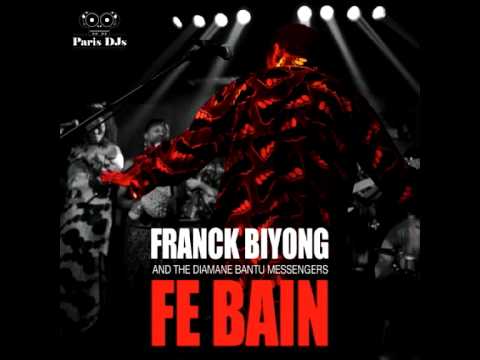
compilation. KI i YE YI was billed to Biyong and the Diamane Bantu Messengers, issued with many long time collaborators
in a wide variety of personnel settings with assistance from Paris Djs, who co-produced the album with Afrolectric Music.

Franck’s final dalliance into Afrolectric was released in 2013: the 21.12.2012 (Truth or Lies?) album, a pinball between classy Afro jams, psychedelic ambient sounds, avant-jazz, prowling beats and blissfully weeping guitar solos. Biyong then issued a 12" single cover of Fela Anikulapo Kuti’s classic I.T.T. (International Thief Thief) and made it available on his website as a free download.

Franck Biyong believes that music is spiritual food for the soul. In 2015, he served a new offering with the release of single LIYOMBA CHURCH. The song heralds Franck’s Crossover Music with Swahili lyrics over a rock and electro beats. Franck’s 10th studio release, MOONWATCHING was an experiment in Electronic Music, Rock, Trap, Afro-House and Psychedelics. More releases followed ever since: the dreamlike soundscape traditional fusion of IBOLO INI plus the raw live Afro beat of AFRO BIKUTSI LIVE! in 2017 and the cosmic 70's jazz of EVENING PRAYER in 2018. In 2019, Franck released a surprise tribute EP to Carlos Santana THE LAMP, LIGHT AND EYE OF GOD recorded live in Nairobi as well as the highly acclaimed AFRO GALACTIC SPACEWAY playlisted on Gilles Peterson's BBC6 Radio Show as well as on Worldwide FM in London.

The highly energized troubadour launched two bands between 2015 and 2018. The duo is borne out of Franck’s sincere commitment to the original African sound and aesthetic. Conceived as a Congolese rumba revival, the ORCHESTRE LIPOMBE JAZZ will hearken back to the great African orchestras of the late 60's and 70's in fashion and musicality. This band shall fuse Franck’s electric guitar genius with horns, dynamic rhythm sections as well as drums and percussion. It’ll also expand into the territory of Afro-Caribbean grooves and Spiritual Jazz. The second band, AFROBRAINZ, will explore Central African, Bantu and Basaa music with a focus on collaborations with progressive electronic African music. The goal is to simultaneously modernize and preserve these authentic sounds.

Franck is currently signed to the Paris based music distribution company, BELIEVE DIGITAL. As Music Director for the first two
seasons of the Pan-African Music TV show COKE STUDIO AFRICA, Franck worked with Wyclef Jean, as well as Salif Keita, King Sunny Ade, Burna Boy, Yemi Alade, Olamide, Waje, Phyno, Omawumi, Diamond Platnumz, Flavour N'abania and Seyi Shay.

Réseaux sociaux et sites web

Disclaimer: Music In Africa provides a platform for musicians and contributors to embed music and videos solely for promotional purposes. If any track or video embedded on this platform violates any copyrights please inform us immediately and we will take it down. Please read our Terms of Use for more.

newsletter banner

Abonnez-vous à notre newsletter

Retrouvez-nous sur les réseaux sociaux