










































By Bamuturaki Musinguzi
Live music has long played a central role in Uganda’s entertainment industry. This overview text tracks its origins and considers its key features.
History/background
The roots of the modern music industry in East Africa date back to the early 1900s (Collins, 1985). Ugandan recorded popular music began in 1929 with the British Odeon label, and by the 1950s there were several labels operating in the country, recording a variety of traditional music for release on 78rpm such as The Young Baganda Singers’ Party, Kibirige and Budo Party, Nanyoga and Party, and a number of school and cathedral choirs.
Closely related to the recording industry, live music has long been a popular form of entertainment for Ugandans. In the 1940s and 50s, Uganda adopted the waltzes and foxtrots but more especially the dansi style (ballroom music played in East Africa at the time) accompanied by accordion, or guitar, banjo, mandolin, or violin with the guitar being the most popular instrument already at the time. At this time, Uganda produced stars like Mengo African Orchestra, Jimmy Sajabbi, the Sanyu Sesame Band, and Joseph Bukenya who founded one of the oldest bands called Buye Kigowa Galimasani (BKG), and John Ssebirumbi, who played the accordion piano and later formed the Kasanga Music Party in 1943, based in Kasanga in Kampala. Also around the time emerged Kadongokamu (one-man guitar band) as one of the unique genres of Ugandan pop music mainly performed in theatre halls and which produced a host of stars like Willy Mukabya, Dan Mugula, Acholi-speaking blind guitarist and singer, Faustino Okello, Bernard Kabanda (RIP), Christopher Ssebaduka (RIP), Martia Luyima, and Paul Kafeero (RIP), among others.
Later, in the 1960s, Uganda did not escape the Congolese rumba rhythms that still influence much of the region. According to Ronnie Graham, “During the 1960s Kampala rocked to imported Zairean rumba” (Graham, 1992). Like other countries in central Africa, the Congolese influence on popular music dominated to the extent that most of the groups playing at dances or social events were either Zairean nationals or imitators of that style. In the north east, the Luo benga influence could also be heard (Graham, 1989). Roberts ascribes the Congolese influence partly to the Congolese political crises of the early 1960s, which meant that “Uganda was full of Congolese musicians looking for peace and quite and a job. As a result, the Congo band style swamped Kampala’s night clubs” (Roberts, 1973). Some of the stars of the 1960s included the late Eclas Kawalya, Samuel Wamala, Gerald Mukasa, Israel Magembe with his Kampala City Six Band, Moses Katazza, Elly Wamala, Eva Nanyonga, Edmond Hannington Batte, Charles Guinaro, Freddie Kigozi, Martin Munyenga, Mary Nattima (RIP), Orchestra Melo Success, the Equator Sound band, Super Volcano band, and the siblings Charles Sonko (RIP) and the late Frida Sonko and The Cranes band, among others.
The period from the 1970s to the 2000s produced stars like Peterson Tusubira Mutebi, Jimmy Katumba and The Ebonies, Sammy Kasule, Frank Mbalire, Tony Ssenkebejje, Maria Wandaka, Geoffrey Oryema, Philly Bongoley Lutaaya, Freddy Kanyike and Samite Mulondo, among others. President Idi Amin loved music and supported a number of local bands. Top musicians had to travel to Nairobi, Kenya to record with international labels. Today, there are numerous local record companies.
Venues
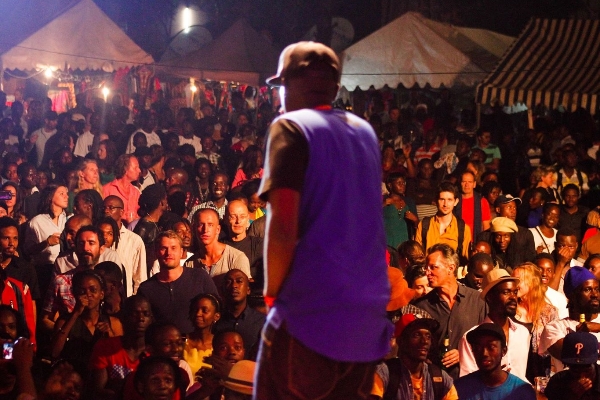
Today, Uganda‘s live music is mainly concentrated in Kampala around several clubs and hotels. There are a few bands in Entebbe and Jinja Towns. The live gig spots in Kampala are: Club Obligato, the Bubbles O’Leary Irish Pub, Uganda National Theatre, the Goethe-Zentrum Kampala/Ugandan German Cultural Society and Alliance Française de Kampala gardens in Nakasero and the Great Lakes Restaurant at Kampala Serena Hotel.
Other popular venues include: Grand Imperial Hotel, Ange-Noir Discotheque, The Rocks at Speke Hotel, Paradise Terrace Restaurant and Rhino Pub at Sheraton Kampala Hotel, Emin Pasha Hotel in Nakesero, Kampala Casino, Gatto Matto in Bugolobi, Fas Fas in Bugolobi, Jazz Ville in Bugolobi and Labamba Club in Nansana.
Festivals
Black Roots Unlimited in partnership with Nile Breweries Limited under its Nile Gold Crystal Malt Lager brand organise the annual Nile Gold Jazz Safari at the Kampala Serena Hotel every October. The Grammy nominated international R&B superstar Joe Thomas and Grammy winner, guitarist Norman Brown headlined the 7th Annual Nile Gold Jazz Safari in October 2014. The five-man jazz super-group, Tizer, was also added to the star-studded line-up[i].
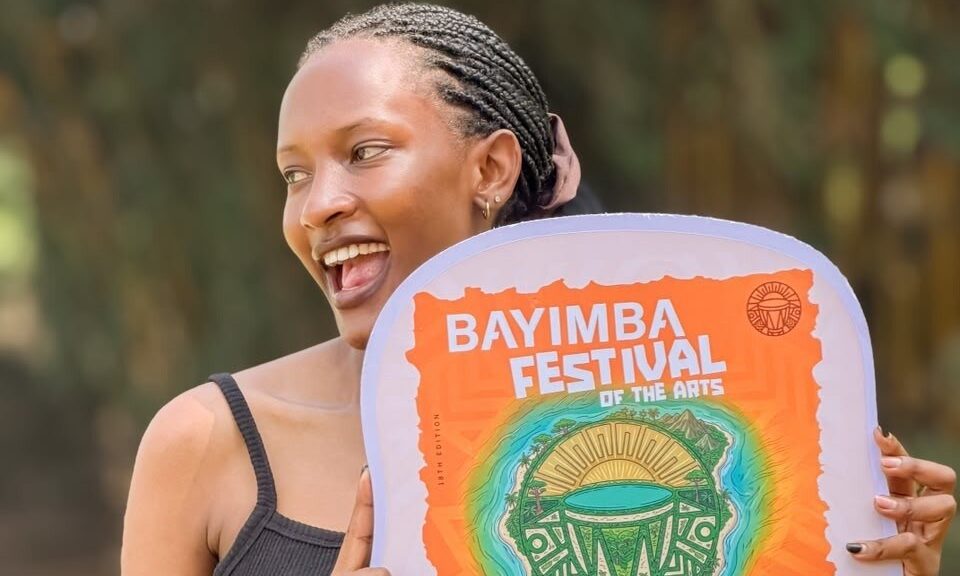
The annual Bayimba International Festival of the Arts is organised by the Bayimba Foundation. Held at the National Theatre in Kampala the festival’s programme includes live music, dance, fashion, film screenings, art exhibitions and fashion, debates and discussions on the creative economy. Since its first edition in 2008, a wide variety of known and upcoming artists from Uganda, East Africa and beyond have performed at the Bayimba festival. The 7th edition of the Bayimba International Festival took place in September 2014 in Kampala[ii].
The Club Guvnor’s Legends Ball held at the Ange-Noir Discotheque every quarter is one of the most awaited nights where Uganda’s live music legends take to the stage and play their favourite hits of yester-years. The legends include: Sammy Kasule, Eddy Ganja, Moses Matovu, Herman Ssewanyana, Frank Mbalire, Tony Ssenkebejje, Dan Sseninde Kaggwa and Charles Busulwa Ssekamate, among others.
La Fête de la Musique is a festival that celebrates all kinds of music by all kinds of musicians (children, adults, amateurs and professionals). Created in France on June 21, 1982 to celebrate the first day of summer, La Fête de la Musique/World Music Day has been celebrated since then every year in more than 100 countries. The main objective of this event is not only to attract musicians of all genres on the same platform, but also to encourage peace and friendship among people, exchange experiences between upcoming and renowned musicians as well as mutual appreciation of artistic values from the different cultures. Artists play for free, for the happiness of being together at Alliance Française de Kampala[iii].
Nile Breweries Limited under its Club Pilsener brand organised the inaugural Club Pilsener Music Megafest on 20 September 2014 in Kampala. Jamaican-American dancehall reggae star Shaggy, South Africa’s popular duo Mafikizolo, Nigerian dancehall star Burna Boy, Jamaican dancehall artist Patra, and a select-few local stars who include Jose Chameleone, Bebe Cool, Radio and Weasel, and Cindy, were among the international and local musicians to share the stage at the fest. The concert is part of Club Pilsener’s greater support to the music industry, growing and supporting several local artistes through various music sponsorships and partnerships including but not limited to album launches, street jams, club DJ awards and the monthly unplugged shows. It is a platform where Uganda's best can perform together with other artists from other parts of the world.
The main promoters of live music events in Uganda are: Black Roots Unlimited[iv], the Goethe-Zentrum Kampala/Ugandan German Cultural Society[v], Alliance Française de Kampala[vi], Nile Breweries Limited[vii] and Bayimba Foundation[viii].
International Artists Touring Uganda
Uganda has in recent times become a popular destination for iinternational artists. Some stars who have performed in Kampala include American musicians like Howard Hewitt (of R&B group Shalamar), Gerald Albright, Paul Jermaine, Chuck Loeb, Eric Marienthal, Oscar Seaton, Matt Cooper, Tony Braxton and Keith Sweat, as well as British reggae group UB40. Numerous African stars have also performed in the country, including award-winning Namibian singer-songwriter and guitarist G.R. Mosimane Elemotho, Franco Luambo Makiadi with his TPOK Jazz and Tabu Ley Rochereau from the Congo, South African stars such as Ladysmith Black Mambazo, Hugh Masekela, Yvonne Chaka Chaka, Jonathan Butler and the late Lucky Dube, as well as Mzungu Kichaa from Tanzania, among others.
Challenges
Currently, the music industry lacks a proper structure and professionals. Touring circuits, for example, have not been properly developed or exploited in Uganda. The local industry also has to contend with issues of quality, marketing, promotion, re-branding, piracy, packaging, distribution, globalization and digitalization. The Uganda Musicians Union is not very prominent on these matters, while the government has not initiated conducive policies to support the creative industry in general.
Some critics note the decline in production quality and musicianship. According to one of the country’s female musicians, Sarah Tshila: “There aren’t any top quality sound engineers in the country in the first place. And those that have the equipment just want to make money out of them. Why should I learn to play an instrument when I can walk into a studio, pay money and my song is recorded? Incidentally this has led to the decline in musical instrument playing…. And people have not had time to put a cap on the quality of music. It’s costly to maintain a music band, so musicians prefer to pay for studio produced music. Why go organic? Radio stations are recycling music faster and music is becoming shallow. Everybody can now sing because he/she can pay a few shillings in a studio without having any background in music.”
At the same time, however, the “CD musicians” who perform with backing tracks rather than live bands have stolen the show, as evidenced by the large crowds that turn up for their shows. They make a lot of money on a very good day, as they do not have to pay or transport full bands to live events. This trend frustrates the more experienced instrumentalists and has implications on the live scene and the music industry as a whole. For example, Moses Matovu, the leader of Afrigo band, suggests: “Our young and upcoming artists should at least learn to play a musical instrument that is when we shall have our originality… If you don’t know how to play any musical instrument how are you going to compose a song and arrange it? Otherwise you will end up going to computer producers whom I call computer programmers. Eventually you will have songs without an intro, bridge, chorus and full of monotony. A good composer is the one who does 60% of the song.”
Despite the above challenges, however, the Ugandan live music circuit remains vibrant and popular, with an increase in the number of bands putting up regular gigs, albeit mainly in the capital city, Kampala. This has been informed by the resurgence in the demand for live band performances by the locals, tourists and the expatriate community. Guitarist Sarah Tshila observes: “Lately, the CD musicians (hip-hop artists) in Uganda have exhausted their talents and are looking for bands to perform with. I am optimistic that live music is picking up because the people have started to realize that there is alternative to CD musicians by paying to watch live music.”
Provided the right policy and infrastructure are put in place including implementation of copyright protection, live music can attain even greater heights because there is plenty of talent, determination and energy to propel the industry further.
Bibliography
- Collins, John. 1985. African Pop Roots: The Inside Rhythms of Africa. London: W. Foulsham & Co. Ltd.
- Graham, Ronnie. 1989. Stern’s Guide to Contemporary African Music, Vol. 1. London: Pluto Press.
- Graham, Ronnie. 1992. The World of African Music: Stern’s Guide to Contemporary African Music, Vol. 2. London: Pluto Press.
- Roberts, John Storm. 1973. Black Music of Two Worlds. Londo





Disclaimer: Music In Africa provides a platform for musicians and contributors to embed music and videos solely for promotional purposes. If any track or video embedded on this platform violates any copyrights please inform us immediately and we will take it down. Please read our Terms of Use for more.

Subscribe to our monthly Newsletter
Follow us on social media


Please log in to post a comment.